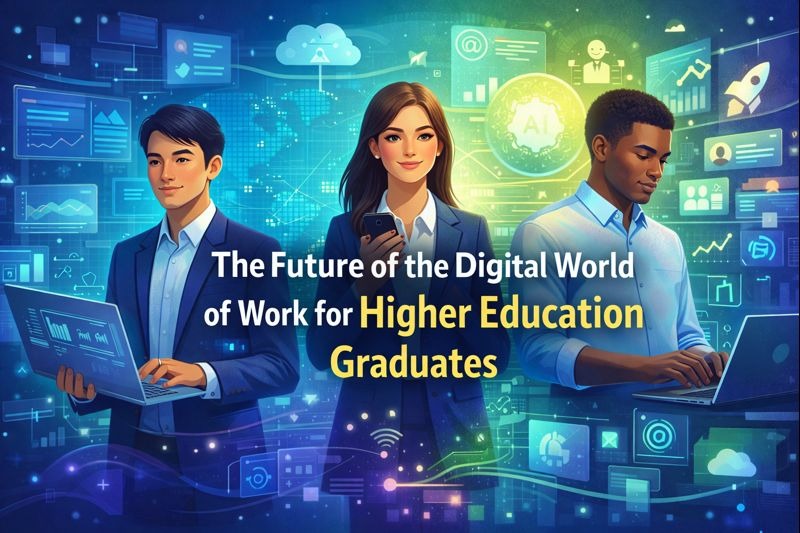
The development of digital technology has significantly transformed the world of work. Digitalization not only affects how companies operate but also determines the types of competencies required in the workforce. For higher education graduates, understanding the future direction of the digital workplace is an important step to adapt and remain relevant amid rapid changes.
Transformation of the World of Work in the Digital Era
The world of work is increasingly moving toward more flexible and technology-based systems. Automation, artificial intelligence, and big data usage have replaced some conventional jobs. However, this transformation has also created many new professions that did not previously exist.
Higher education graduates are required not only to master theoretical knowledge but also to apply technology in professional practice. Adaptability has become a key factor in facing the dynamics of the digital workplace.
Competencies Required for Higher Education Graduates
In the future, the digital world of work will prioritize skills over formal educational background alone. Digital literacy, data analysis skills, and an understanding of information technology are essential competencies that higher education graduates must possess.
In addition to hard skills, soft skills such as creativity, problem-solving, and the ability to collaborate virtually are also highly valued. This combination of technical and non-technical skills will determine graduates’ competitiveness in the digital job market.
Digital Career Opportunities for Higher Education Graduates
The future of the digital workplace offers vast career opportunities. Professions in technology, digital creative industries, and online-based services continue to grow. Higher education graduates can pursue diverse career paths, whether as employees, remote workers, or independent professionals.
Technological advancements also allow graduates to work across regions and even countries. By utilizing digital platforms, global career opportunities are becoming increasingly accessible.
Challenges and Strategies in Facing the Digital World of Work
Despite offering many opportunities, the digital world of work also presents significant challenges. Rapid technological changes require graduates to continuously learn and upgrade their competencies. Without adaptability, higher education graduates risk falling behind.
Effective strategies include participating in continuous training, building a digital portfolio, and actively expanding professional networks. With the right approach, graduates can face the challenges of the digital workplace with greater confidence.
Conclusion
The future of the digital world of work for higher education graduates is filled with both opportunities and challenges. Digitalization has reshaped competency standards and work patterns entirely. With adequate skills, an adaptive mindset, and optimal use of technology, higher education graduates can achieve success and contribute meaningfully in the digital era.
Tentang Penulis
Gusti Ayu Tita
Penulis — Universitas STEKOM
Penulis aktif yang berfokus pada isu-isu akademik, teknologi pendidikan, dan pengembangan sumber daya manusia di lingkungan kampus.