
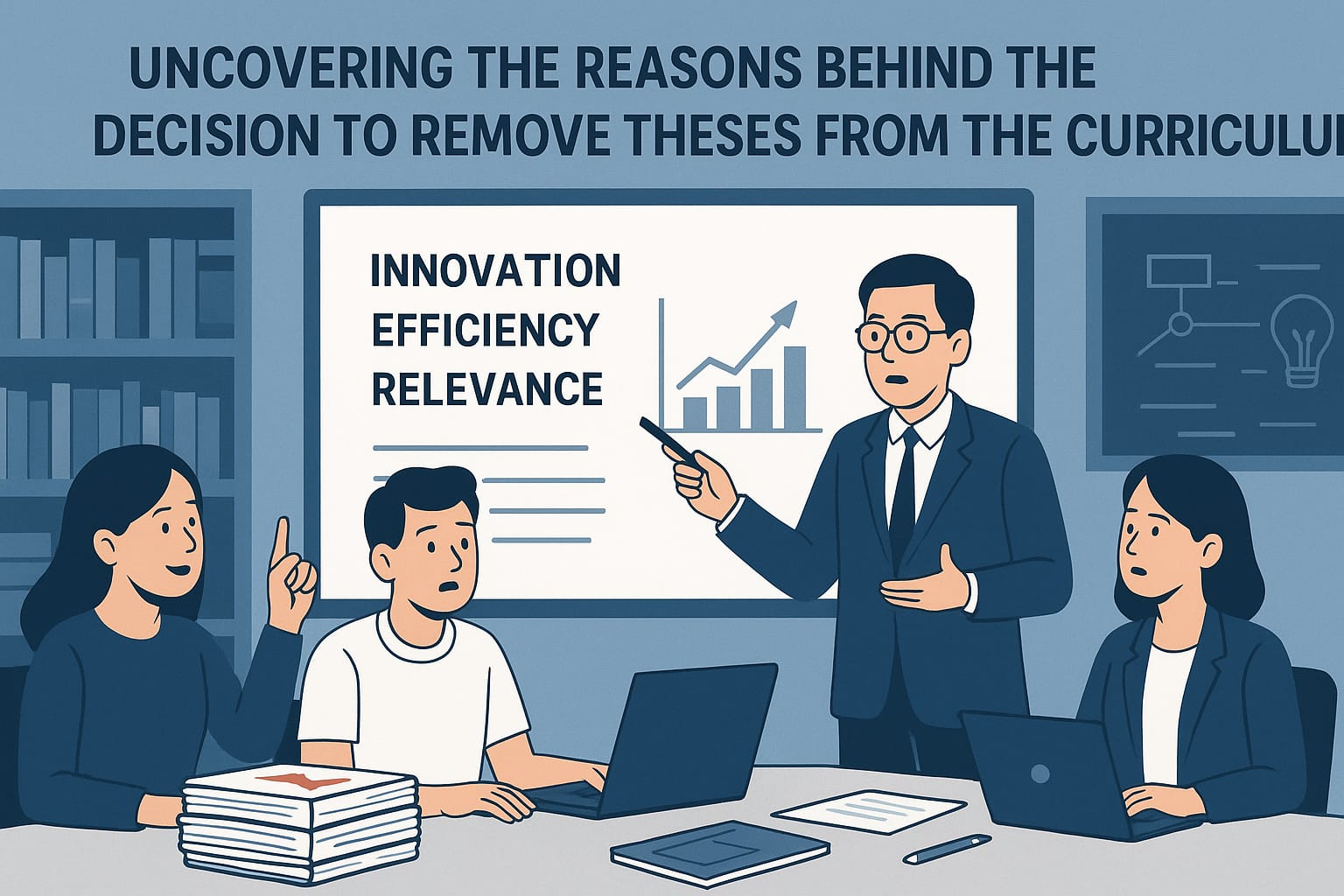
Why Was the Thesis Removed from the Curriculum? Here Are the Reasons and Implications
The removal of the thesis as a graduation requirement at several universities has sparked various reactions from academics, students, and the general public. This move reflects a paradigm shift in higher education, which is increasingly focused on relevance and workforce readiness.
📚Table of Contents
Reasons for Removing the Thesis from the Curriculum
1.1. Focus on Practical Skills
1.2. Reducing Students’ Academic Burden
1.3. Encouraging Innovation and Creative Ideas
1.4. Strengthening Collaboration with Industry
1.5. Accelerating the Application of Knowledge in the Real World
Conclusion
1. Reasons for Removing the Thesis from the Curriculum
Here are some main reasons behind the decision to remove the thesis as a form of final student evaluation:
1.1. Focus on Practical Skills
One of the primary motivations is the desire to equip students with practical skills that can be directly applied in the workforce. Practice-based projects, fieldwork, and industry simulations are considered more representative in measuring graduates’ professional readiness.
1.2. Reducing Students’ Academic Burden
Writing a thesis is often a major source of mental and time pressure. By removing the thesis, students have more space to engage in productive activities such as internships, case studies, or project portfolios, without being burdened by rigid academic formatting requirements.
1.3. Encouraging Innovation and Creative Ideas
Without being bound by the traditional thesis structure, students have more freedom to create innovative solutions in various fields. This promotes problem-based learning that is more relevant to today’s dynamic environment.
1.4. Strengthening Collaboration with Industry
The removal of the thesis opens opportunities to expand collaboration between universities and the business world. Students can participate more actively in real projects with industry partners, which not only provides experience but also builds professional connections early on.
1.5. Accelerating the Application of Knowledge in the Real World
Without the lengthy thesis process, students can more quickly see how their knowledge can be applied in real-world contexts. This approach strengthens understanding of theory and builds confidence when entering the workforce.
2. Conclusion
The removal of the thesis is part of a higher education transformation aimed at increasing relevance, efficiency, and graduates’ readiness for the professional world. Although it departs from the conventional academic model, this policy holds great potential in promoting more practical and adaptive learning. However, it is important for universities to continue providing alternatives for developing research skills and critical thinking, so that students maintain a strong academic foundation. With proper planning, removing the thesis can become a pathway to a more modern and effective education system.
Oke, berikut 3 **SEO keywords (3 kata)** dari kesimpulan di atas:
1. **Thesis Removal Policy**
2. **Higher Education Reform**
3. **Practical Learning Approach**
Mau saya buatkan juga **meta description SEO** singkat (1–2 kalimat) untuk artikel ini supaya lebih siap dipublikasikan?
Tentang Penulis
Gusti Ayu Tita
Penulis — Universitas STEKOM
Penulis aktif yang berfokus pada isu-isu akademik, teknologi pendidikan, dan pengembangan sumber daya manusia di lingkungan kampus.



