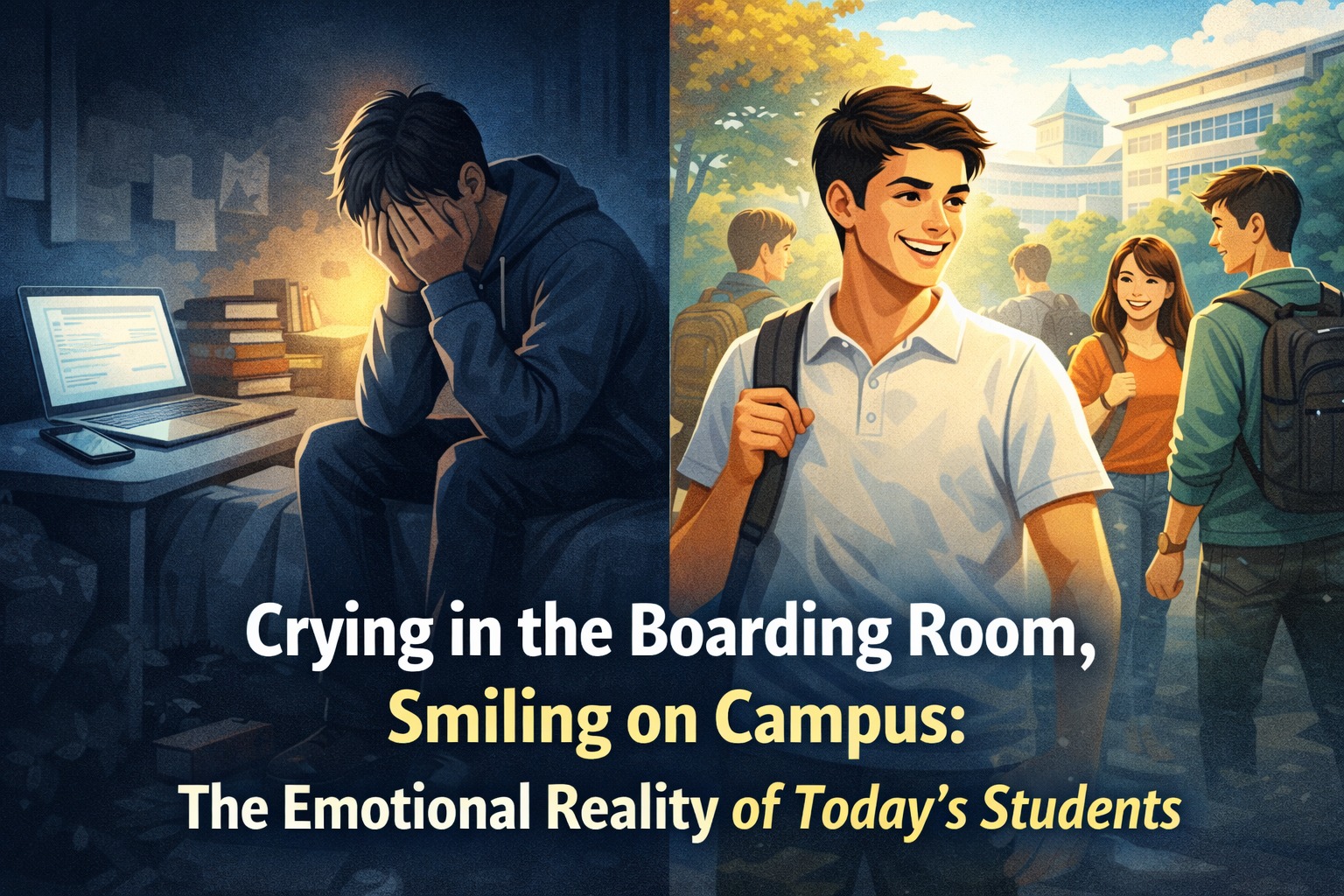
Student life often looks enjoyable from the outside. Smiles on campus, active involvement in organizations, and social media posts full of achievements make many people think that college is the freest phase of life. However, behind that image, many students quietly cry in their boarding rooms, struggling with pressures that are rarely discussed openly.
This phenomenon is not merely personal drama, but the emotional reality of today’s students, which has become increasingly complex alongside academic, social, and future-related demands.
THE DOUBLE FACE OF STUDENT LIFE
On campus, students are expected to appear confident, active in discussions, and “doing fine.” Smiles become a mask that must be worn to remain socially accepted. Yet when they return to their rooms, many feel mentally exhausted, overthink, and question their own life direction.
The gap between public image and inner condition creates emotional fatigue that often goes unnoticed—even by the students themselves.
SOURCES OF PRESSURE THAT ARE OFTEN OVERLOOKED
Student pressure today does not only come from coursework and exams. There are demands to graduate on time, achieve non-academic accomplishments, stay active in organizations, and be ready to face a competitive job market. In addition, there are financial problems, family expectations, and social comparisons on digital media.
When all these pressures accumulate without a safe space to talk, suppressed emotions often explode in the form of tears, anxiety, or mental exhaustion.
THE “HAVE TO BE STRONG” CULTURE AND ITS IMPACT
Many students grow up in cultures that view complaining as a sign of weakness. Phrases like “just enjoy the process” or “everyone is tired” often make their feelings seem invalid.
As a result, students choose to suppress their emotions. In the long term, this habit can trigger prolonged stress, loss of motivation, and feelings of emptiness—even when they appear academically successful.
THE IMPORTANCE OF SAFE SPACES TO SPEAK UP
Realizing that feeling tired and sad is normal is an important first step. Students need safe spaces—whether friends, communities, or campus environments—that can listen without judgment.
Talking about emotional conditions does not mean being weak; it is an act of courage to take care of oneself amid real pressures.
LEARNING TO BALANCE LIFE AND EXPECTATIONS
Today’s students need to learn that life does not always have to be productive all the time. Resting, knowing personal limits, and accepting imperfection are part of the growth process.
Crying in a boarding room is not a sign of failure, and smiling on campus should not be an obligation. When students can be honest with themselves, they will be better prepared to face both academic challenges and life after graduation.
CONCLUSION
The emotional reality of students is not as simple as it appears on the surface. Behind smiles and achievements, there are inner struggles that deserve understanding and appreciation. By opening spaces for discussion and empathy, higher education can become a place that nurtures not only intellectual intelligence but also emotional well-being.
Tentang Penulis
Gusti Ayu Tita
Penulis — Universitas STEKOM
Penulis aktif yang berfokus pada isu-isu akademik, teknologi pendidikan, dan pengembangan sumber daya manusia di lingkungan kampus.