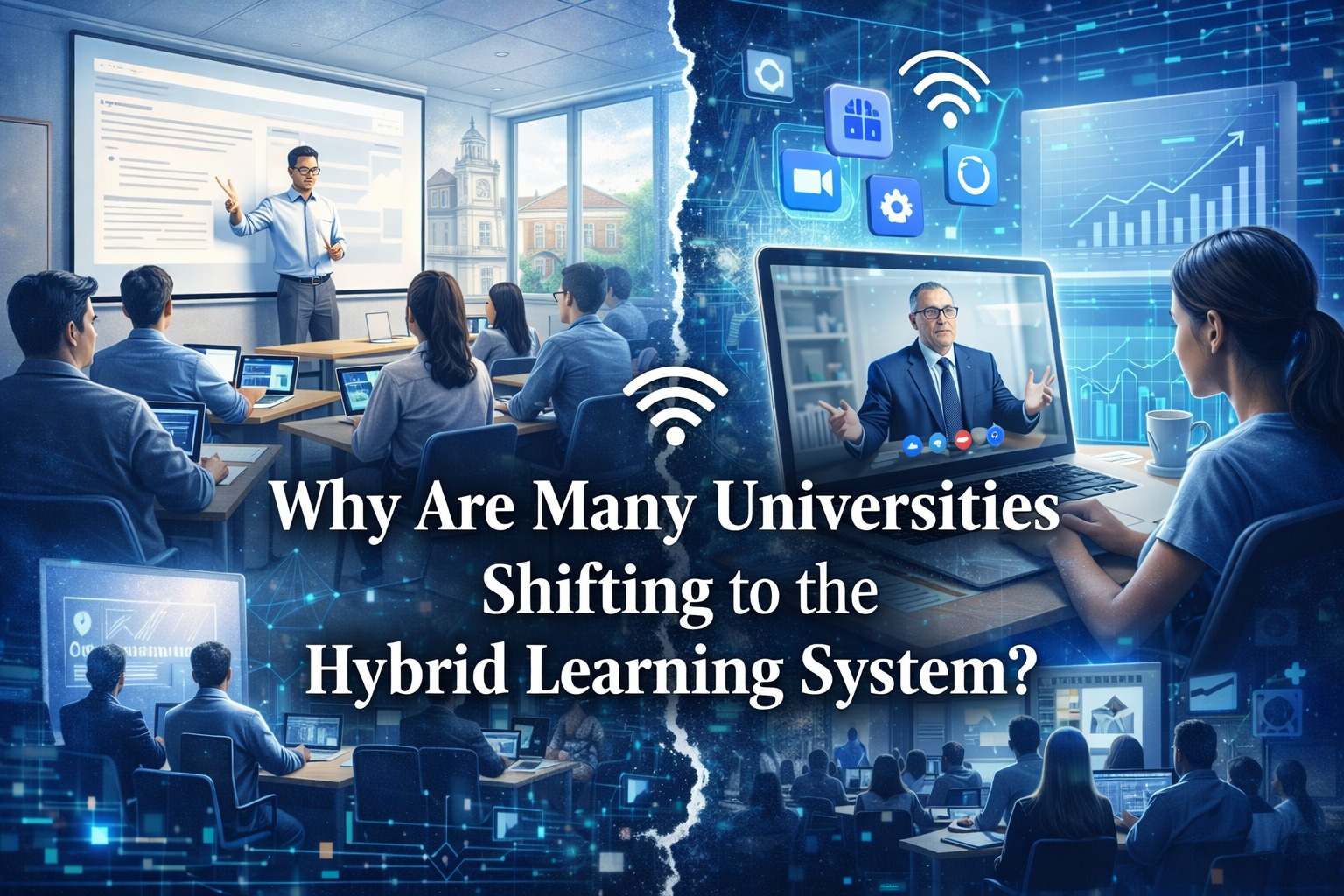
Introduction: A Changing Educational Landscape
Technological advancements have transformed many aspects of life, including education. After the COVID-19 pandemic, online learning became unavoidable. As face-to-face classes resumed, universities began seeking the best way to combine the strengths of online and offline learning.
This is where **hybrid learning** emerges as a flexible and effective solution.
What Is Hybrid Learning?
Hybrid learning combines face-to-face (offline) instruction with online learning.
In this system, some students attend classes on campus, while others participate remotely through platforms such as Zoom, Google Meet, or Learning Management Systems (LMS). Universities no longer rely solely on physical classrooms but leverage technology to expand reach and learning effectiveness.
Reasons Universities Are Adopting Hybrid Learning
a. Flexibility for Students and Lecturers
Students can learn based on their circumstances—on campus or from home. Lecturers can manage schedules more efficiently without being limited by physical space.
b. Cost and Resource Efficiency
Hybrid systems reduce operational costs such as electricity, classroom usage, and facility maintenance. Recorded lectures can also be reused as learning materials.
c. Expanding Access to Education
Students from remote areas can pursue higher education without relocating to major cities, improving educational equity in Indonesia.
d. Adapting to the Digital Workplace
The modern workplace is increasingly digital and collaborative. Hybrid learning trains students to use technology, communicate virtually, and manage time independently—essential skills for today’s workforce.
Challenges in Implementing Hybrid Learning
Despite its potential, hybrid learning faces challenges such as:
- Unequal internet quality,
- Limited technological readiness of lecturers and students,
- Initial investment costs for digital platforms and devices.
With proper training and infrastructure support, these challenges can be gradually addressed.
Effectiveness of Hybrid Learning in Higher Education
Many studies show that hybrid learning enhances learning outcomes when implemented correctly. Students become more active, independent, and able to review materials as needed.
Face-to-face interaction remains intact, allowing meaningful discussions between lecturers and students.
Conclusion: A Smart Step Toward the Future of Education
The shift toward hybrid learning is not merely a trend but part of educational evolution. Universities adopting this system are preparing students for a flexible, digital future.
With effective management, hybrid learning bridges the convenience of online education and the depth of face-to-face interaction.
**Keywords:**
Tentang Penulis
Gusti Ayu Tita
Penulis — Universitas STEKOM
Penulis aktif yang berfokus pada isu-isu akademik, teknologi pendidikan, dan pengembangan sumber daya manusia di lingkungan kampus.