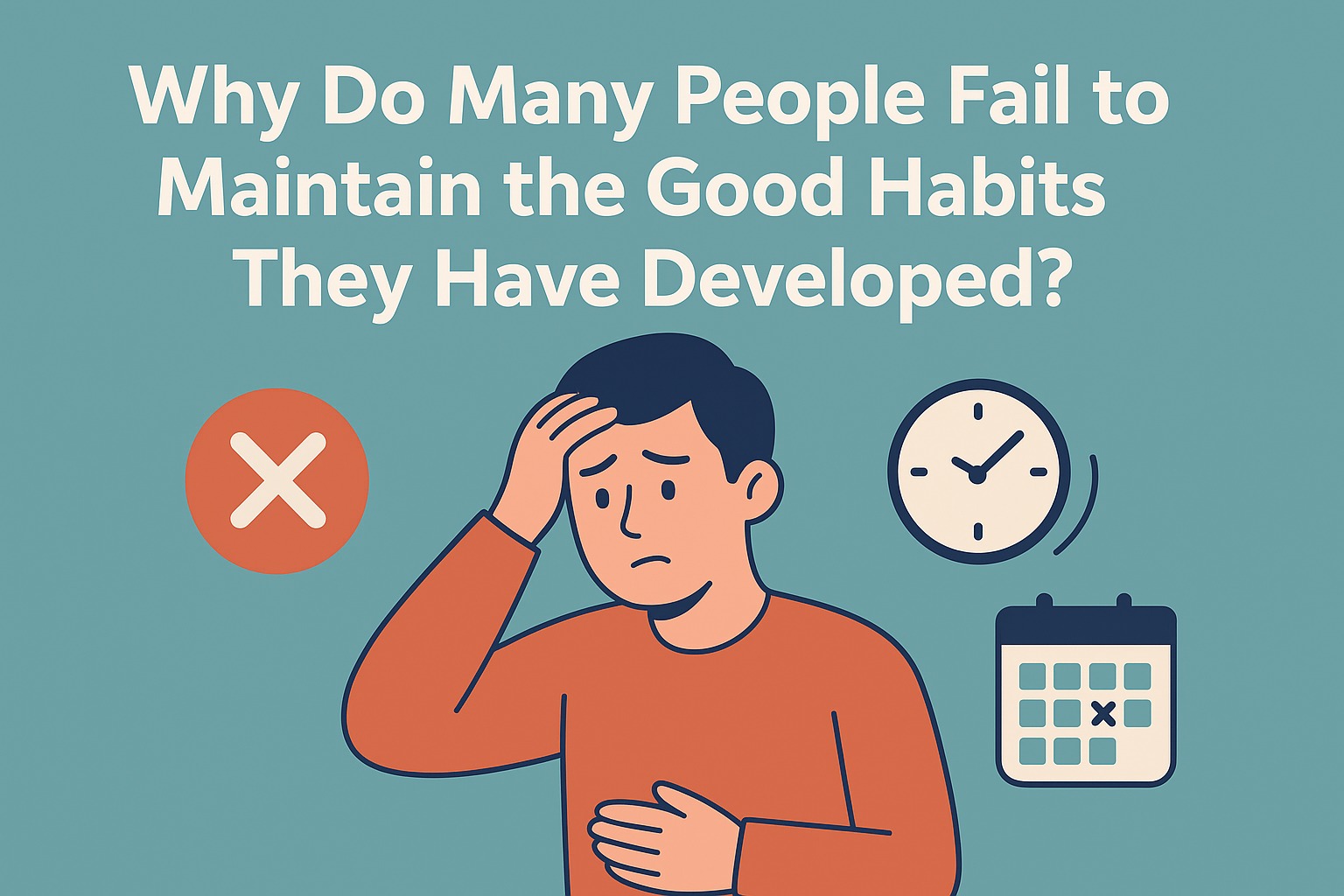
Building good habits often feels easy at the beginning—high enthusiasm, strong motivation, and everything seems achievable. However, maintaining them in the long run is a completely different challenge. Many people stop halfway without even realizing why. So, what actually makes good habits hard to sustain?
DECLINING MOTIVATION
In the beginning, people usually move based on emotion—new excitement, inspiration from others, or external pressure. Unfortunately, motivation is unstable. When the emotional drive fades, habits weaken as well if they are not supported by discipline and a structured routine.
SETTING GOALS TOO BIG AT THE START
Another common mistake is setting goals that are too ambitious. For example, committing to exercise for one hour every day even though you’ve never practiced consistently before. Unrealistic targets often lead to exhaustion and eventually make someone give up.
LACK OF SYSTEM AND SUPPORTIVE ENVIRONMENT
Habits cannot survive on intention alone. They need structure. Without reminders, scheduling, or a supportive environment, new habits are easily overshadowed by old habits that are stronger and more familiar.
NO PLAN TO HANDLE OBSTACLES
Every habit will encounter obstacles—laziness, busy days, bad mood, and more. Many people fail because they do not prepare a backup plan for difficult moments, such as a simplified version of the habit when time is limited.
BEING TOO HARD ON YOURSELF
When a single day is missed, many people instantly feel like a complete failure. The mindset of *“one slip means everything is ruined”* causes them to quit entirely. In reality, habits are built through long-term consistency, not perfection.
Tentang Penulis
Gusti Ayu Tita
Penulis — Universitas STEKOM
Penulis aktif yang berfokus pada isu-isu akademik, teknologi pendidikan, dan pengembangan sumber daya manusia di lingkungan kampus.