Work stress is a mental and emotional pressure that occurs when job demands do not match a worker’s abilities, resources, or needs. Many employees experience stress due to heavy workloads, strict deadlines, or pressure from supervisors and work environments. If not managed properly, work stress can affect physical health, mental well-being, and productivity.
In many industries, this phenomenon is increasing due to fierce competition, changing work systems, and technological development. This is why understanding the causes and challenges of stress management is crucial for workers.
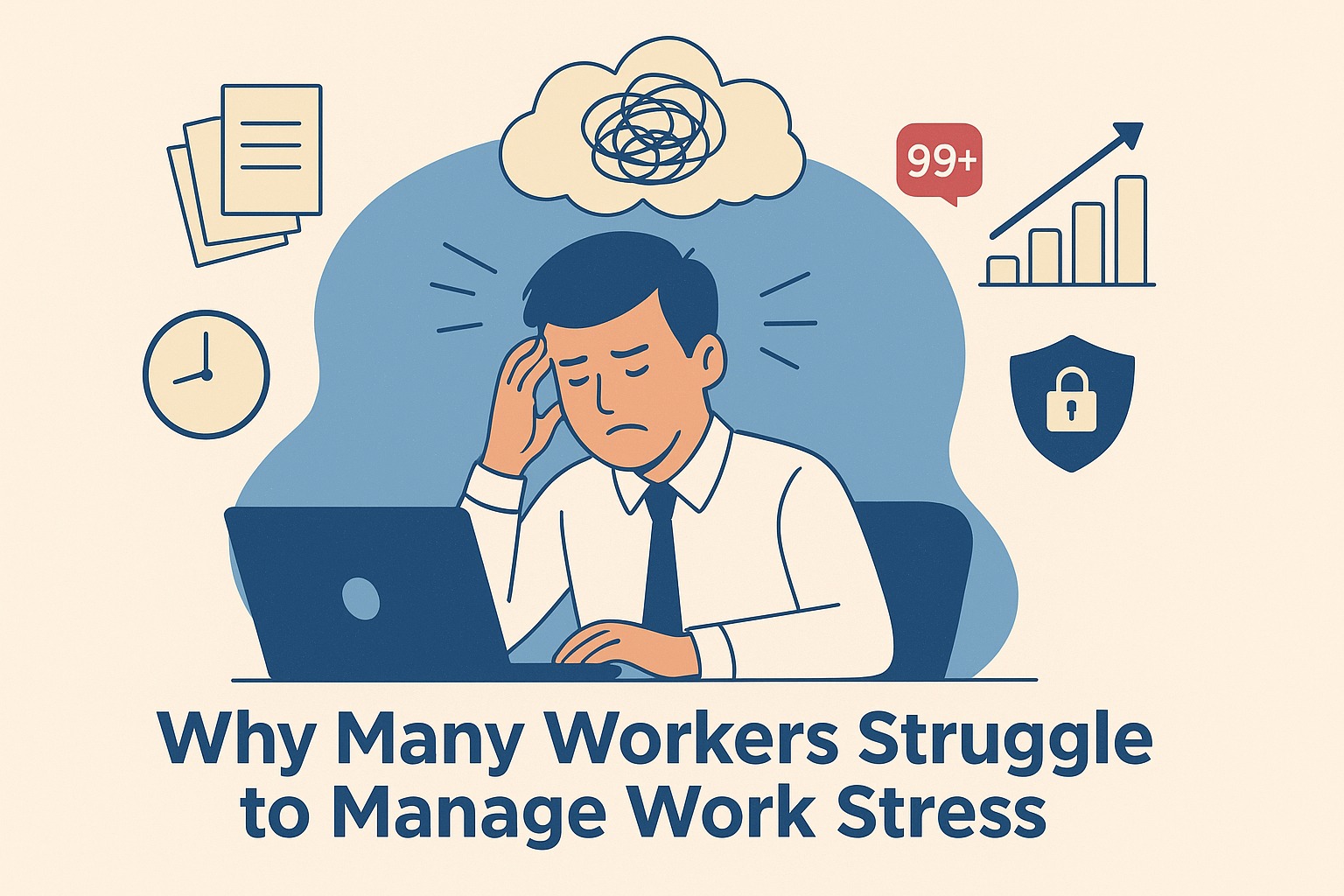
WHY MANY WORKERS STRUGGLE TO MANAGE WORK STRESS
1. Excessive Workload
Piled tasks, tight deadlines, and long working hours overwhelm workers. When tasks come continuously, time and energy become limited, making stress difficult to handle.
2. Pressure from Supervisors or Work Environment
Unsupportive environments, high demands from superiors, or conflicts among coworkers increase emotional tension. This makes it harder to focus and feel comfortable at work.
3. Poor Work–Life Balance
Many workers struggle to allocate time for rest, family, and personal activities. This imbalance leads to physical and emotional fatigue, lowering stress-management ability.
4. Lack of Stress-Management Skills
Not everyone has skills such as relaxation techniques, time management, or prioritization. As a result, incoming stress is not handled effectively.
5. Technological Changes & Adaptation Demands
Digital transformation forces workers to constantly learn and adapt. Rapid changes cause pressure and anxiety, especially for those who struggle to keep up.
6. Lack of Organizational Support
Employee well-being programs, counseling, or flexible work systems are still limited. Without organizational support, workers more easily feel burdened.
STRATEGIES TO MANAGE WORK STRESS
- Manage time and prioritize important tasks.
- Take breaks to avoid burnout.
- Build good communication with supervisors and coworkers.
- Practice relaxation techniques like meditation or breathing exercises.
- Use technology wisely and stay updated with digital skills.
- Maintain life balance by making time for family and hobbies.
CONCLUSION
The difficulty in managing work stress arises from various factors, such as heavy workloads, workplace pressure, lack of stress-management skills, and technological adaptation demands. However, with the right strategies, workers can control stress and maintain mental well-being.
Managing work stress is not only an individual responsibility—it also requires organizational support to ensure workers can be healthy, productive, and sustainable in today’s modern work environment.
Tentang Penulis
Gusti Ayu Tita
Penulis — Universitas STEKOM
Penulis aktif yang berfokus pada isu-isu akademik, teknologi pendidikan, dan pengembangan sumber daya manusia di lingkungan kampus.