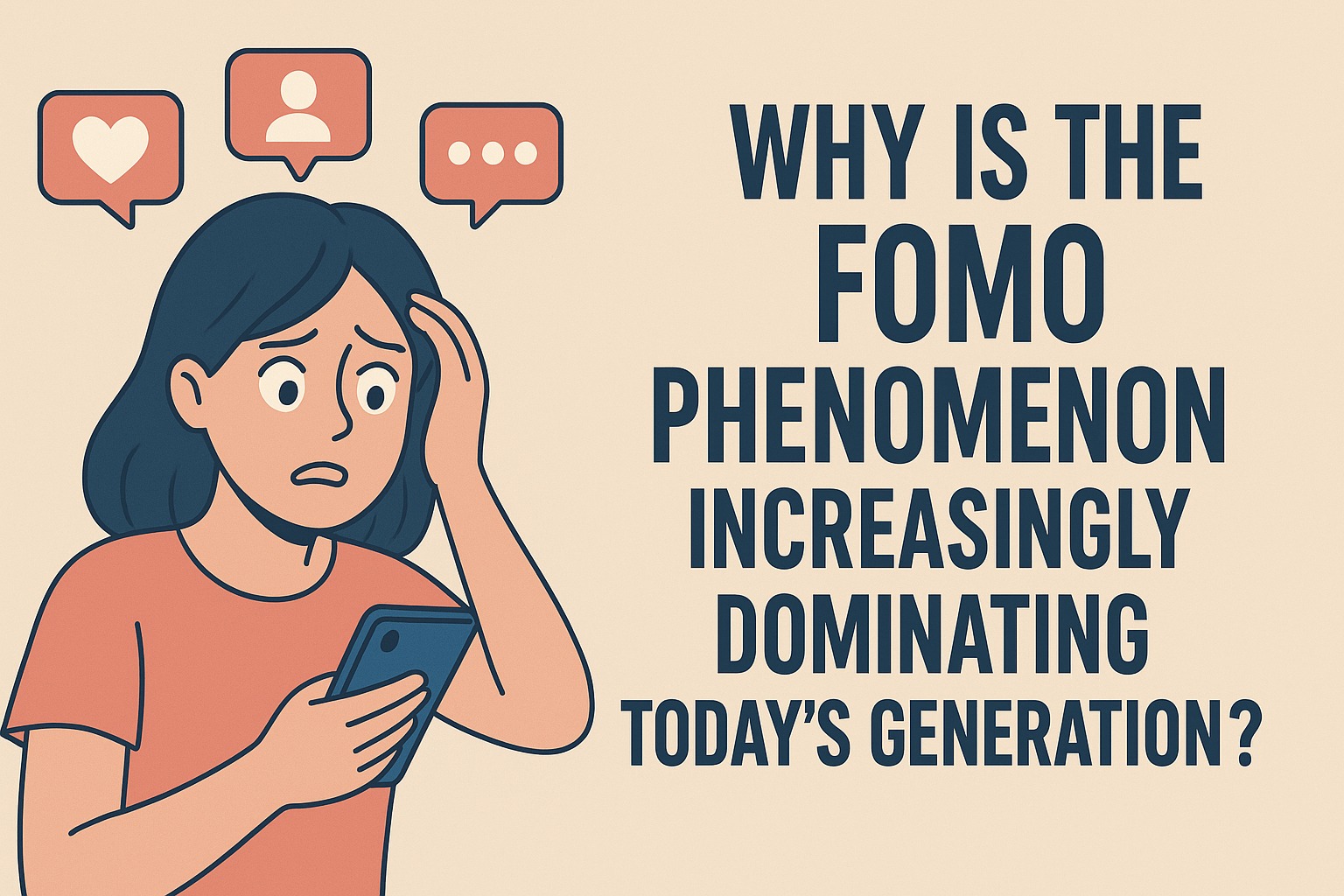
The phenomenon of Fear of Missing Out, or FOMO, is becoming increasingly prominent in today’s digital era. The modern generation, especially young people, live in a constant stream of information. This condition makes them feel the need to always stay connected, always know what’s happening, and always keep up with every new trend so they won’t be left behind. But what exactly makes FOMO so dominant?
WHAT IS FOMO AND WHY DOES IT HAPPEN EASILY?
FOMO is a feeling of anxiety or fear of being left out of experiences, information, or opportunities enjoyed by others. In the age of social media, this feeling emerges easily because everyone can see the “best moments” of other people’s lives.
Today’s generation grows up with notifications, daily updates, and a fast-paced sharing culture. Constant exposure to these stimuli trains the brain to feel the need to always stay up-to-date. This is why FOMO appears more frequently compared to previous generations.
THE ROLE OF SOCIAL MEDIA IN INTENSIFYING FOMO
Social media greatly reinforces this phenomenon. Platform algorithms are designed to show content that keeps users returning to the app.
Several factors that strengthen FOMO through social media include:
• The highlight reel of others’ lives that appears more exciting
• Social comparison—whether lifestyle, achievements, or appearance
• Viral content that makes people feel “left out” if they don’t know it quickly
When people see others looking more productive, more successful, or happier, feelings of inadequacy and anxiety may arise. Eventually, the desire to keep up with everything grows stronger.
THE IMPACT OF FOMO ON THE MODERN GENERATION
FOMO affects not only mindset, but also daily life. Some of its impacts include:
1. Increased stress and anxiety due to the pressure to stay connected
2. Lower quality of life because focus shifts from achievements to what is lacking
3. Reduced focus in studying or working due to frequent social media checking
4. Disrupted real-life relationships as people chase online validation instead of face-to-face interaction
If unnoticed, these effects may accumulate and harm long-term mental well-being.
WHY ARE YOUNG PEOPLE THE MOST VULNERABLE?
Young people grow up in an era where information arrives in seconds. They are also in a phase of self-discovery and social validation.
Reasons they are more vulnerable include:
• The need for recognition from others
• Competitive environments—academically, professionally, and socially
• Social media culture that demands perfection
• Unstable identity formation, making them more sensitive to comparison
HOW TO OVERCOME FOMO IN THE DIGITAL AGE
Overcoming FOMO does not mean abandoning technology—it means learning to use it wisely.
Steps that can be taken include:
• Gradually reducing social media usage time
• Focusing on meaningful activities, not just visually appealing ones
• Realizing that online posts only show a small fragment of real life
• Practicing gratitude and appreciating personal growth
With consistent awareness, anyone can break free from FOMO and live a more peaceful life.
Tentang Penulis
Gusti Ayu Tita
Penulis — Universitas STEKOM
Penulis aktif yang berfokus pada isu-isu akademik, teknologi pendidikan, dan pengembangan sumber daya manusia di lingkungan kampus.