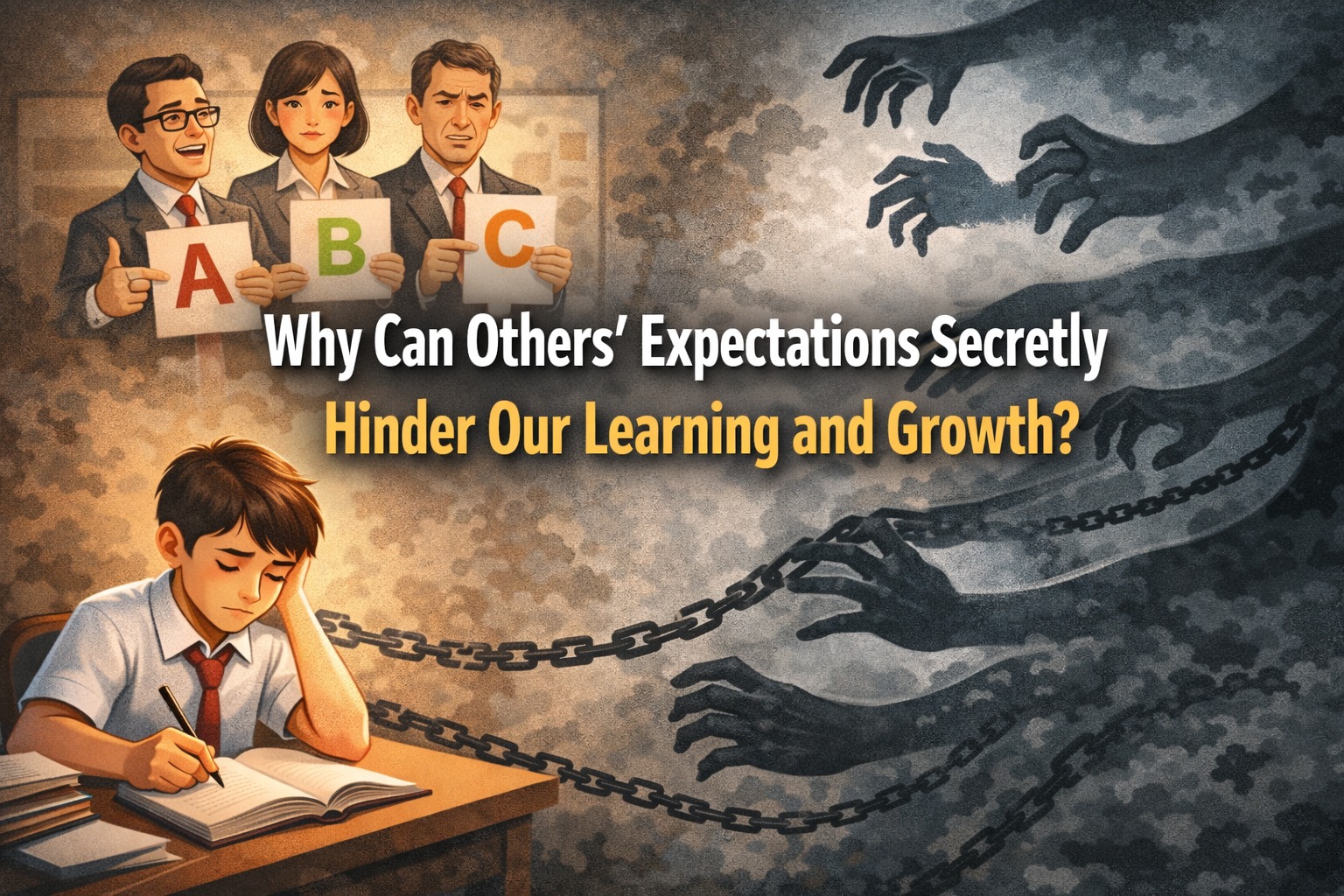
In the process of learning and growing, many people face not only internal challenges but also external pressures. One factor that is often overlooked is the expectations of others. These expectations can come from family, educational environments, workplaces, or social circles. Although they may appear as a form of care or support, excessive expectations can actually hinder personal development.
So, how do other people’s expectations influence the way we learn and grow?
PRESSURE TO MEET CERTAIN STANDARDS
Other people’s expectations often come in the form of standards that must be achieved. High grades, ideal careers, or specific skills become measures of success. When these standards are imposed, the learning process no longer focuses on understanding, but solely on outcomes.
As a result, individuals tend to learn to meet expectations rather than to support genuine personal growth.
LOSS OF SPACE FOR SELF-EXPLORATION
Learning and growth require space to try, make mistakes, and improve. However, overly rigid expectations make people afraid to take risks. They hesitate to try new things because they fear disappointing others.
This fear gradually limits exploration, even though exploration is a crucial part of meaningful learning.
DECLINE IN INTRINSIC MOTIVATION
When learning goals are driven by external expectations, intrinsic motivation—the inner drive to learn—tends to weaken. A person may appear diligent and disciplined, but internally lose curiosity and natural interest.
Without intrinsic motivation, learning feels burdensome and can easily lead to mental exhaustion.
FEAR OF MAKING MISTAKES AND FAILING
Other people’s expectations are often accompanied by judgment. This causes mistakes to be perceived as failures rather than as part of the learning process. Fear of making mistakes pushes individuals to choose safe paths, avoid challenges, and stop growing.
In reality, mistakes are one of the most valuable sources of learning.
IDENTITY SHAPED BY EXTERNAL OPINIONS
In the long run, constantly following other people’s expectations can shape an identity that is not fully authentic. Individuals may lose clarity about what they truly enjoy and need.
When personal identity is built on external opinions, the growth process becomes unbalanced and fragile.
HOW TO RELEASE YOURSELF FROM THE PRESSURE OF OTHERS’ EXPECTATIONS
Letting go of expectations does not mean ignoring feedback, but placing it in proper proportion. Some steps that can help include:
• Identifying personal learning goals
• Distinguishing between supportive and limiting expectations
• Courageously setting boundaries against external pressure
• Valuing the process, not just the results
• Allowing room to fail and try again
Through these steps, learning can return to being a meaningful experience.
CONCLUSION
Other people’s expectations can serve as motivation, but they can also become obstacles if they are not recognized and managed wisely. Pressure to meet external standards can reduce motivation, limit exploration, and hinder personal growth. By building awareness of personal needs and setting one’s own direction, individuals can learn and grow more freely and authentically.
Tentang Penulis
Gusti Ayu Tita
Penulis — Universitas STEKOM
Penulis aktif yang berfokus pada isu-isu akademik, teknologi pendidikan, dan pengembangan sumber daya manusia di lingkungan kampus.