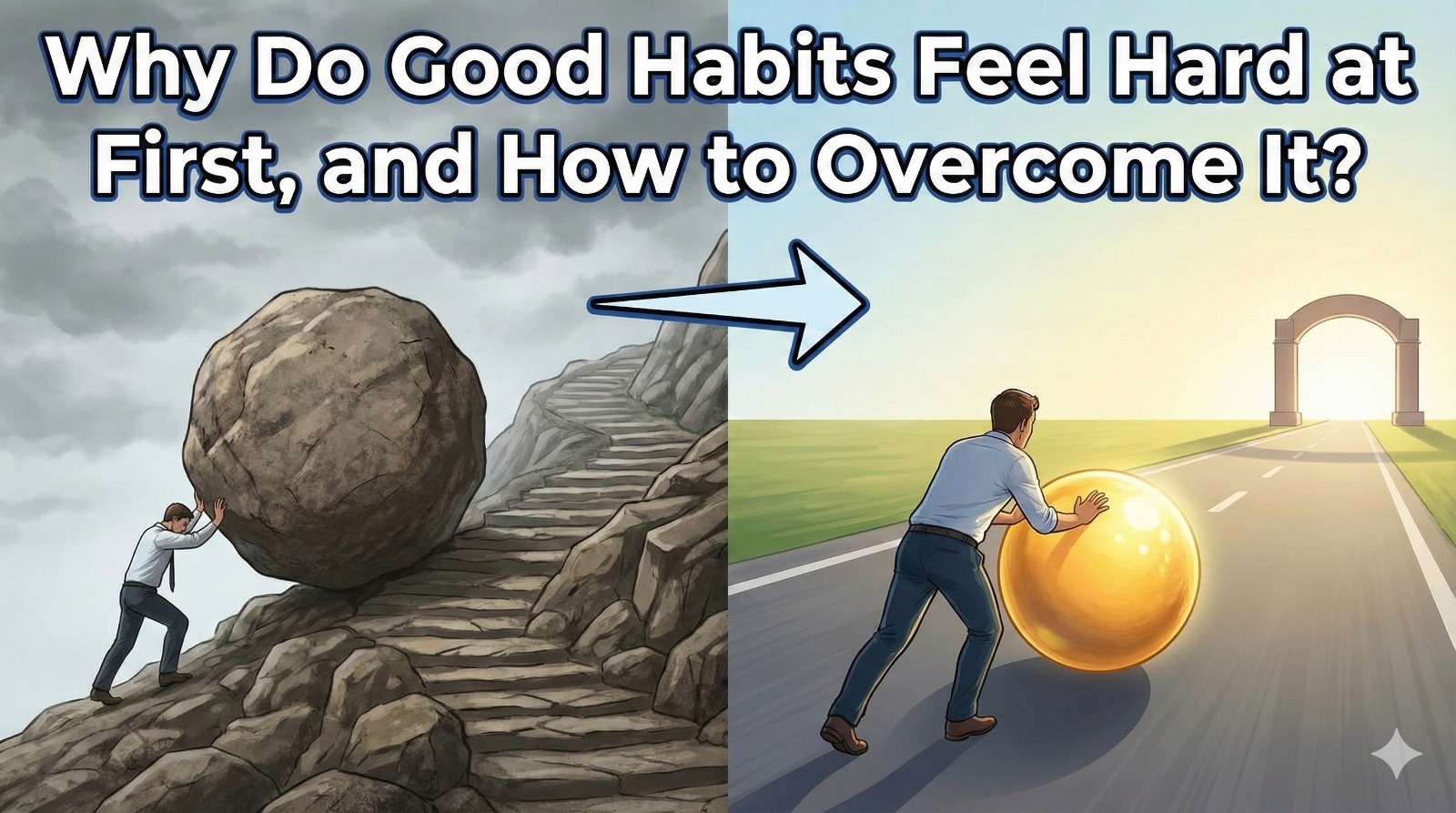
Many people want to build good habits—such as exercising, reading, waking up earlier, or learning new skills—yet the first step often feels difficult. Even though we know these habits are beneficial, starting them still feels challenging. Why does this happen? And how do we overcome it?
This article explains the psychological and practical reasons behind the initial struggle of forming habits, along with simple strategies to make the process easier and sustainable.
THE BRAIN DOESN'T LIKE SUDDEN CHANGE
Naturally, our brain prefers routine. Any kind of change—even a positive habit—is seen as a threat to comfort. That’s why starting something new feels like swimming against the current.
The initial struggle does not mean we are incapable—it simply means our brain isn’t used to it yet.
OVERLY AMBITIOUS GOALS CREATE DIFFICULTY
Habits often feel difficult because we set goals that are too large from the beginning—like exercising for an hour or finishing a full chapter daily.
Big goals drain energy quickly and reduce motivation. This is why many habits fail within just a few days.
LACK OF SYSTEM & PREPARATION
Sometimes the problem isn't the habit itself, but the lack of structure. Without a clear system, habits are easily skipped.
Examples:
* No specific schedule
* Tools or space not prepared
* Environment is not supportive
Weak systems make habits feel heavier than they should.
DISCIPLINE IS NOT YET BUILT
In the early stages, discipline is not strong. Everything depends heavily on motivation—which fluctuates easily.
Once discipline develops, habits become much easier to maintain.
USE THE SMALL-HABIT METHOD
One of the most effective ways to make habits feel lighter is to start small. Small steps allow the brain to adapt gradually.
Examples:
* Read 5 minutes
* Exercise 10 minutes
* Write one paragraph
* Meditate for 3 minutes
Small habits increase consistency and reduce overwhelm.
CREATE A SUPPORTIVE ENVIRONMENT
A supportive atmosphere makes habit-building faster. Prepare a clean, distraction-free space for your routine.
Simple tips:
* Place your book on the table where it’s visible
* Prepare workout clothes the night before
* Keep your workspace tidy to boost focus
Environment acts as a natural habit trigger.
FIND A MEANINGFUL EMOTIONAL REASON
Habits feel lighter when backed by strong emotional reasons. This is what keeps us consistent even when it feels heavy.
Ask yourself:
* What long-term benefits will I gain?
* What do I want to achieve?
* How will my life improve if I succeed?
Strong reasons help us stay committed.
GIVE SMALL REWARDS FOR PROGRESS
Small rewards boost dopamine and make habits enjoyable.
Examples of rewards:
* Watching a short favorite video
* A favorite drink
* Extra rest time
Rewards help the brain link habits with positive feelings.
CONCLUSION
Good habits feel difficult at first because the brain isn’t familiar with them, goals are too big, systems are weak, and discipline isn’t strong yet.
However—starting small, building a supportive environment, having emotional purpose, and rewarding progress make habit formation much easier.
What matters most is not doing everything at once, but taking **small steps consistently.
Tentang Penulis
Gusti Ayu Tita
Penulis — Universitas STEKOM
Penulis aktif yang berfokus pada isu-isu akademik, teknologi pendidikan, dan pengembangan sumber daya manusia di lingkungan kampus.