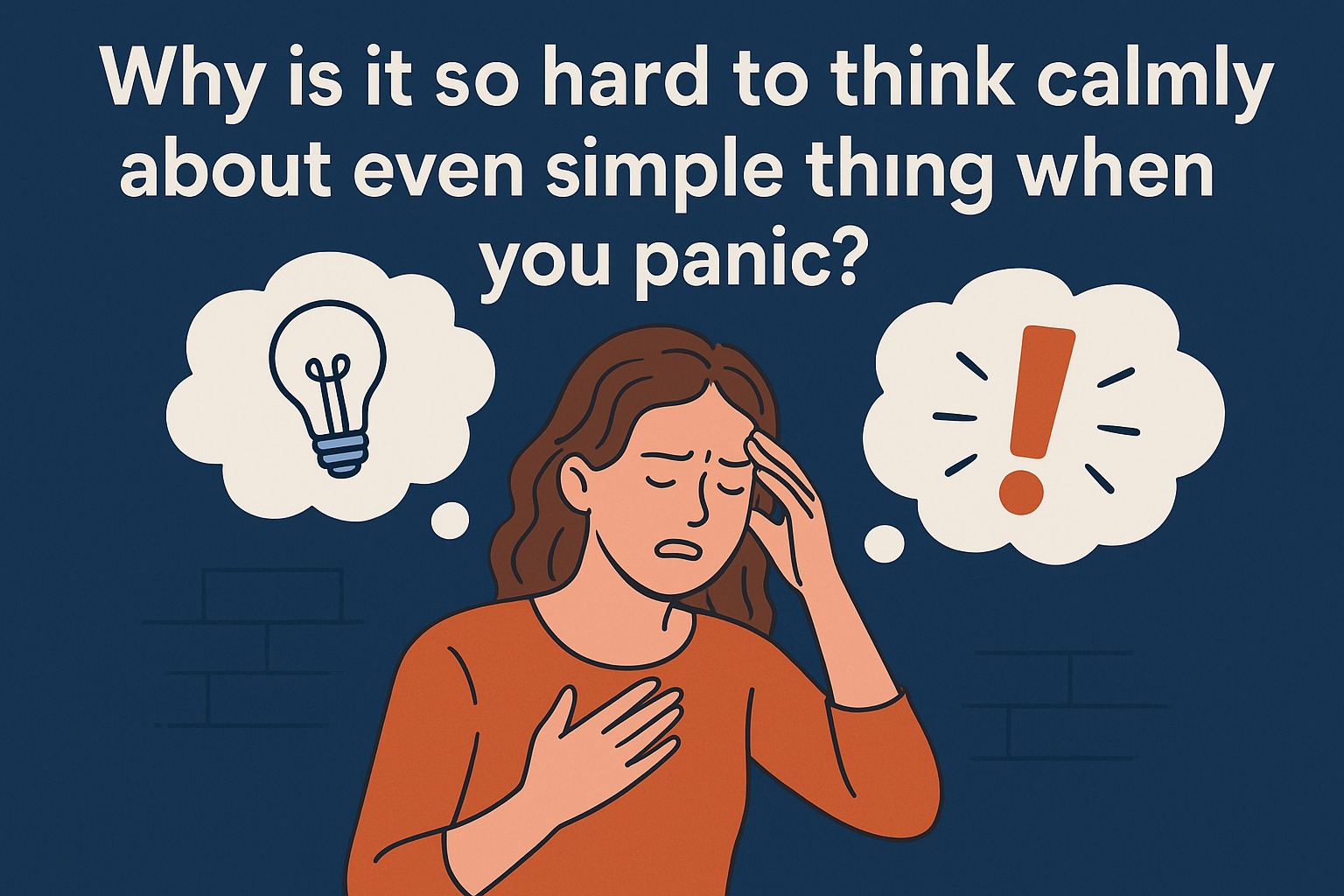
When panic strikes, many people find it difficult to do things that are normally very simple — such as answering easy questions, making small decisions, or even just controlling their breathing. This phenomenon actually has a scientific explanation and is closely related to how the human brain works under pressure.
THE BRAIN SWITCHES TO EMERGENCY MODE
When panic sets in, the body activates its emergency response through the fight-or-flight system. At this moment, the amygdala — the emotional center of the brain — reacts faster than the parts responsible for logical thinking.
The prefrontal cortex, which normally helps us think calmly and rationally, becomes less active. As a result, our ability to process simple information decreases. This is why tasks that should be easy suddenly feel difficult when panic hits.
WHY SIMPLE TASKS FEEL OVERWHELMING
During panic, the brain prioritizes fast reactions over deeper analysis. All mental energy is directed toward ensuring we “survive,” not toward thinking clearly.
Several factors make simple tasks feel complicated, such as:
* Focus narrowing only to fear or pressure
* The mind filled with worst-case scenarios
* Information processed out of order or without logic
* Increased heart rate making it hard for the body to stay still
This combination causes the brain to lose the calmness needed to handle small tasks.
FACTORS THAT WORSEN MENTAL CONFUSION
Certain conditions can intensify the effects of panic, making even simple actions feel difficult, such as:
* Mental fatigue, which increases stress responses
* Lack of sleep, making the brain more sensitive to pressure
* Overstimulating environments, like loud noises or excessive information
* Long-term stress history, which weakens emotional regulation
These factors make the brain more easily overwhelmed when tension rises.
HOW TO CALM THE MIND AGAIN
Although panic is an automatic reaction, we can regain control through several simple steps.
1. Practice steady breathing
Slow, controlled breathing helps reduce amygdala activity and restore logical processing.
2. Use grounding techniques
Focus on things you can touch, hear, or see to redirect your mind from anxiety.
3. Take a short pause
Stop what you’re doing for a moment to give your brain time to reset its focus.
4. Give yourself simple instructions
For example: “Breathe,” “Stay calm,” or “One step at a time.” Short phrases help guide your thinking back to clarity.
5. Train calmness outside panic situations
Routines like meditation, exercise, or journaling strengthen your ability to think clearly when pressure comes.
CONCLUSION
When panic strikes, the brain shifts from logic to emotional response. This makes even simple tasks feel hard to complete calmly. However, with breathing techniques, grounding, and emotional regulation practice, we can help ourselves think more clearly even in tense situations.
Tentang Penulis
Gusti Ayu Tita
Penulis — Universitas STEKOM
Penulis aktif yang berfokus pada isu-isu akademik, teknologi pendidikan, dan pengembangan sumber daya manusia di lingkungan kampus.