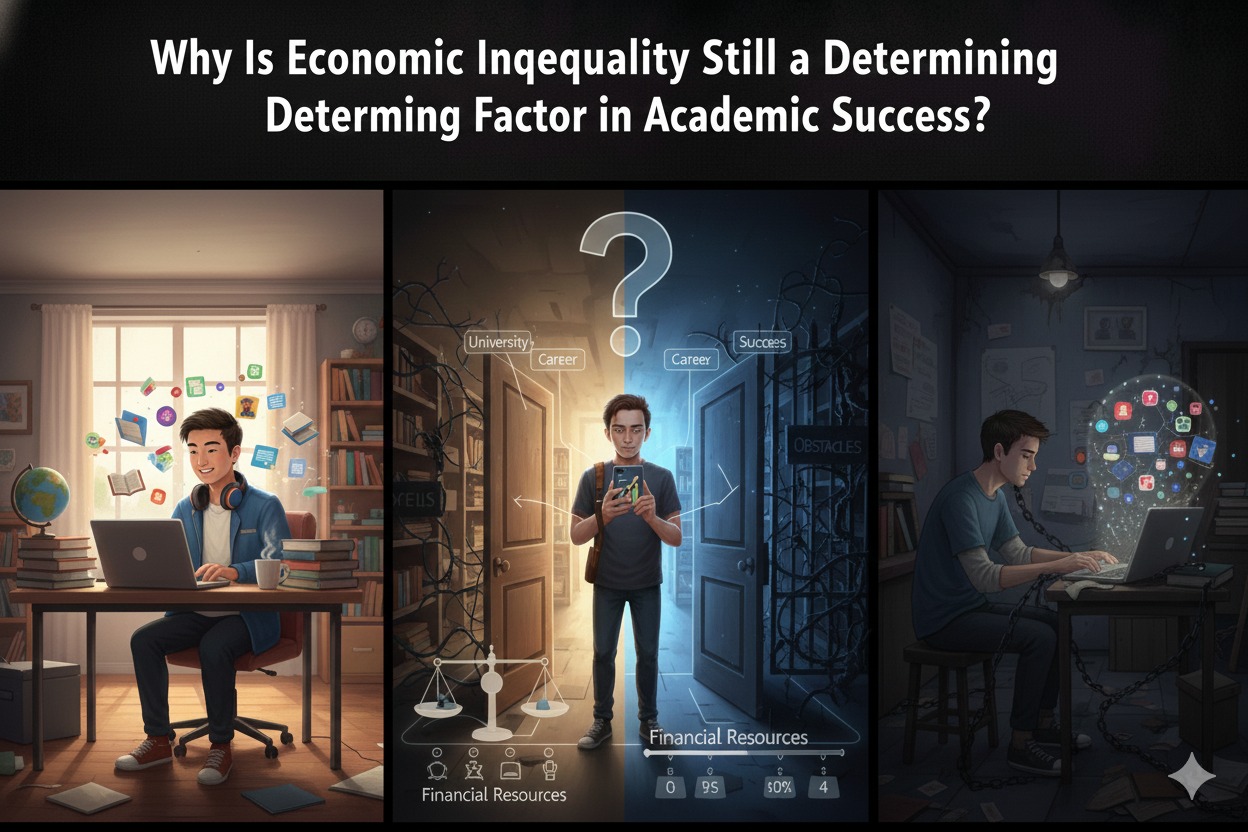
Academic success is often associated with students’ abilities, perseverance, and motivation. However, there is one external factor that continues to have a significant influence: economic inequality. Although education is ideally inclusive for everyone, real-world conditions show that a family’s economic background still strongly determines students’ chances of success. This article discusses why economic inequality remains a decisive factor in modern education.
Economic Inequality in the Context of Education
Economic inequality refers to differences in income levels and overall welfare among families. In education, this inequality is reflected in:
* Access to learning facilities
* The quality of schools that students can choose or afford
* The availability of academic support
* The stability of the home learning environment
The wider the economic gap, the greater the disparity in the quality of education students receive.
Why Does Economic Inequality Play a Major Role in Academic Success?
a. Unequal Access to Learning Facilities
Students from well-off families usually have access to laptops, smartphones, fast internet connections, complete learning materials, premium educational platforms, and comfortable private study spaces. In contrast, students from low-income families often struggle with limited facilities, sometimes even lacking basic learning tools or stable internet access.
b. Differences in School Quality
Economic conditions often determine which schools students can attend. Higher-cost schools generally offer experienced teachers, modern laboratories and libraries, enriching extracurricular activities, and safe, supportive learning environments. Schools with limited funding face challenges in providing these resources, which affects students’ academic outcomes.
c. Unequal Parental Support
Families with stronger financial resources can provide private tutoring, additional courses, intensive academic guidance, and consistent supervision. Meanwhile, many parents from low-income households must work longer hours, have less time to support their children’s learning, and cannot afford extra academic assistance. This creates a significant developmental gap.
d. Economic Pressure and Psychological Impact
Low economic conditions often expose students to stress, such as worries about daily needs, responsibilities to help support the family, or unstable home environments. These pressures directly affect concentration, motivation, and academic performance.
e. Health and Nutrition
Economic status influences nutritional quality, which in turn affects concentration, learning energy, memory, and physical endurance. Students with inadequate nutrition tend to tire more easily and struggle to focus in class.
Fact: Economic Inequality Still Determines Educational Quality
Research and field data indicate that students from wealthier families more frequently achieve high academic scores, have greater chances of entering elite schools, and benefit from early access to quality learning resources. The digital divide, especially after periods of online learning, has further widened academic gaps. This confirms that economic inequality affects not only the learning process but also academic outcomes.
Do Students from Low-Income Families Always Perform Poorly?
No. Many students from disadvantaged backgrounds achieve outstanding academic success. This is often driven by strong motivation, supportive teachers, positive social environments, and access to scholarships or educational aid. However, they generally must work harder than their peers from wealthier families because they start from less favorable conditions.
Efforts to Reduce the Impact of Economic Inequality
Reducing the effects of economic inequality requires equitable access to technology, improvements in public school quality, targeted scholarships and financial aid, collaboration among institutions, and parental education to strengthen home learning environments.
Conclusion
Economic inequality remains a determining factor in academic success because it influences nearly every aspect of the learning process—from facilities and school quality to psychological well-being. Nevertheless, it is not an insurmountable barrier. With fair educational policies, proper support systems, and strong student motivation, academic potential can still grow regardless of economic background.
Tentang Penulis
Gusti Ayu Tita
Penulis — Universitas STEKOM
Penulis aktif yang berfokus pada isu-isu akademik, teknologi pendidikan, dan pengembangan sumber daya manusia di lingkungan kampus.