Amid rapid technological advancement and an increasingly interconnected global landscape, the world of education is facing major challenges. One of the most pressing issues is how to prepare students for a future that is both digital and global. For students in the Social Sciences and Humanities (Soshum), skills related to digital literacy and global collaboration are no longer merely added value—they have become unavoidable necessities. This article discusses why these two skills are crucial for Soshum students and how they can open future opportunities.
DIGITAL TRANSFORMATION: AN INEVITABLE REALITY
The digital revolution has transformed almost every aspect of life, including education and the workplace. Today, nearly all sectors—from government institutions to private organizations—rely on technology to improve efficiency and productivity. For Soshum students, who are deeply engaged in social, political, economic, and cultural fields, the ability to adapt to technological change will be a key factor in future career success.
1. Digital Literacy as a Foundation
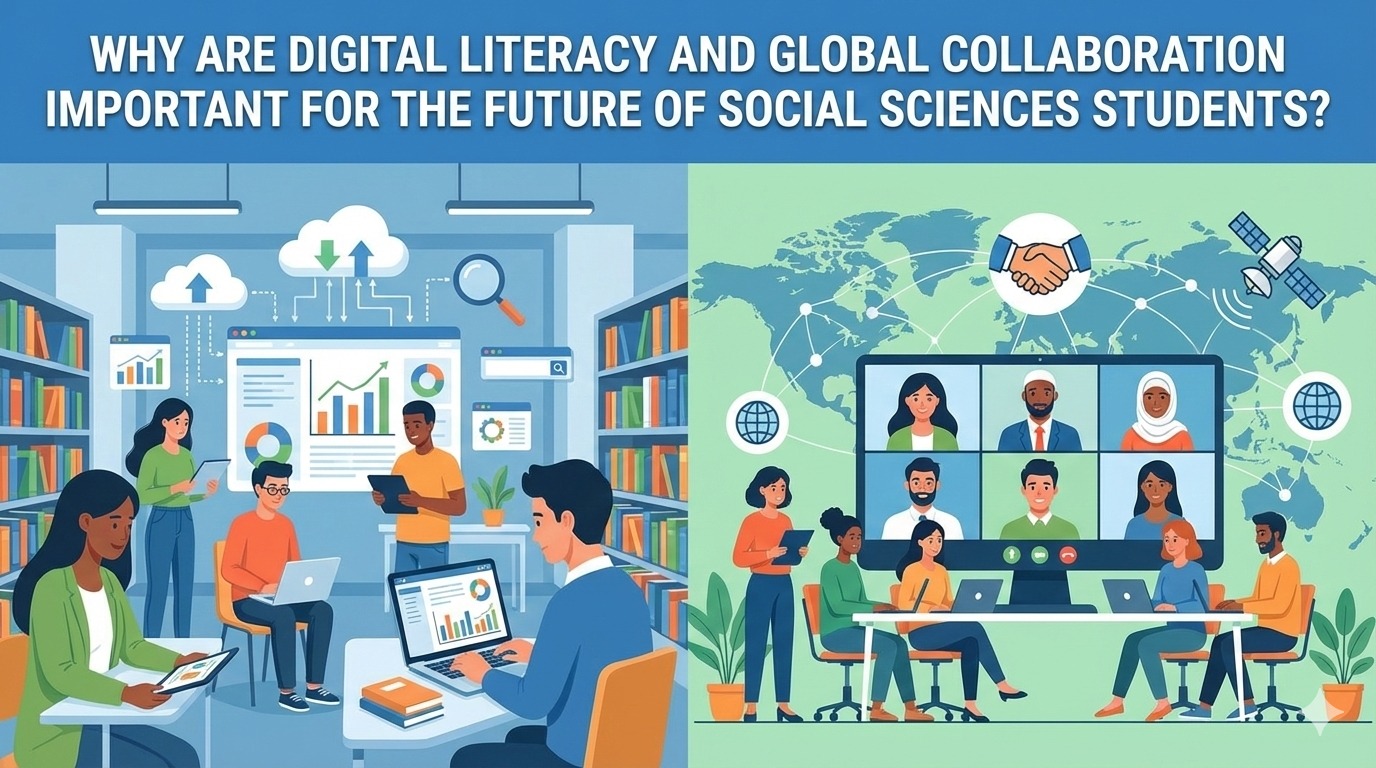
Digital literacy goes far beyond the ability to operate devices such as computers or smartphones. It refers to the capacity to access, analyze, evaluate, and communicate information in various technology-based formats. This includes the use of social media, data analysis software, and an understanding of digital ethics and cybersecurity issues.
For Soshum students, digital literacy enables them to:
* Access information quickly and accurately: In social and humanities disciplines, research and data analysis are essential for understanding social phenomena. With strong digital literacy, students can access big data and apply it to social, economic, or political analysis.
* Make data-driven decisions: Social scientists, economists, and political analysts with digital literacy skills can provide more effective policy recommendations and analyses based on valid and up-to-date data.
* Navigate digital challenges wisely: With increasing cyber threats, misinformation, and privacy issues, digitally literate students are better equipped to use digital media responsibly and avoid misleading information.
2. Global Collaboration: Entering a Borderless World
In addition to digital literacy, global collaboration skills are equally important. Global collaboration refers to the ability to work effectively with individuals or groups from diverse cultural, linguistic, and national backgrounds. In today’s interconnected world, geographical boundaries no longer limit communication and cooperation.
For Soshum students, global collaboration offers several benefits:
* Broadening global perspectives: Working with peers from different countries and cultures allows students to gain new insights into social, political, and economic issues at both national and international levels.
* Enhancing cross-cultural communication skills: In a globalized world, effective communication across cultures is essential. Students who are accustomed to global collaboration will be more adaptable and culturally sensitive—valuable traits in the professional world.
* Expanding professional networks: Global collaboration opens opportunities to build international professional networks, which are especially important for careers in diplomacy, international research, or non-governmental organizations.
THE ROLE OF THESE SKILLS IN THE SOSHUM WORKPLACE
Soshum students study disciplines closely related to social dynamics, policymaking, and human interaction. Careers in this field—ranging from government agencies and research institutions to international organizations—require specialized skills to address global challenges and technological change.
1. Digital Literacy for Social Research and Analysis
In the digital era, most social, economic, and political data are available in digital formats. Without sufficient digital literacy, Soshum students may struggle to utilize these resources effectively. Conversely, those skilled in digital data analysis tools such as SPSS, Excel, or similar software are better prepared to identify social trends, formulate policies, and conduct scientific research.
2. Global Collaboration for Solving Shared Problems
Global issues such as climate change, economic inequality, and refugee crises require collaborative solutions across nations and cultures. Soshum students with global collaboration skills can contribute more effectively to inclusive and globally accepted policy solutions. Moreover, proficiency in digital collaboration platforms like Google Workspace or Slack enables them to work seamlessly in international teams without geographical constraints.
CHALLENGES AND OPPORTUNITIES AHEAD
Despite the importance of digital literacy and global collaboration, many Soshum students still face challenges in mastering these skills. Not all educational institutions provide comprehensive digital literacy training, and not all students have equal access to technology.
However, these challenges also create significant opportunities. With increased access to technology and online learning, Soshum students now have greater chances to develop digital and global collaboration skills. Platforms such as Coursera, edX, and LinkedIn Learning offer accessible courses to enhance digital literacy, communication abilities, and cross-cultural collaboration skills.
CONCLUSION
In today’s digital and global era, digital literacy and global collaboration are no longer optional—they are essential for the future of Soshum students. These skills equip them to navigate a workforce full of challenges and opportunities. By strengthening competencies in these areas, Soshum students will not only adapt to changing times but also become agents of change capable of making a positive global impact. Therefore, it is crucial for Soshum students to start preparing themselves by developing digital literacy and global collaboration skills for a brighter and more connected future.
Tentang Penulis
Gusti Ayu Tita
Penulis — Universitas STEKOM
Penulis aktif yang berfokus pada isu-isu akademik, teknologi pendidikan, dan pengembangan sumber daya manusia di lingkungan kampus.