
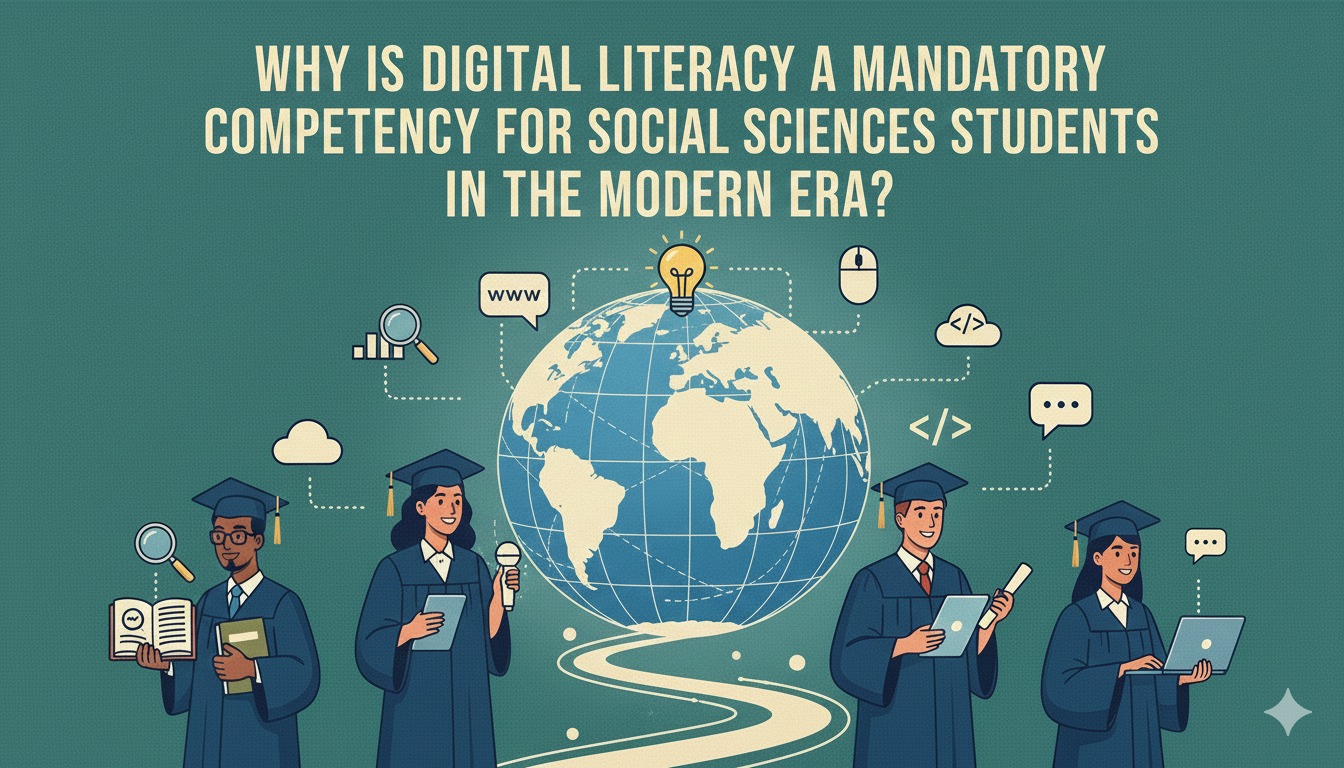
Why Is Digital Literacy Essential for Soshum Students in the Modern Era?
The rapid advancement of technology has brought significant changes to education, social life, and the world of work. For students in Social and Humanities fields (Soshum), digital literacy is no longer just an additional skill—it is a mandatory competency that determines their readiness to face modern challenges. So, why has digital literacy become so important for Soshum students?
WHAT IS DIGITAL LITERACY?
Digital literacy is not only the ability to operate technological devices, but also the capacity to understand, analyze, utilize, and create digital content wisely. This competency includes:
* The ability to search for, evaluate, and process digital information
* Ethical use of technology and social media
* Understanding digital safety and security
* Using technology for learning, working, and creating
For Soshum students, digital literacy serves as a foundation for competing in an increasingly connected world.
1. LEARNING ENVIRONMENTS AND ACADEMIC LIFE ARE ALREADY DIGITALIZED
Today, almost all learning processes rely on technology. From e-learning platforms and digital libraries to the use of AI in research, technology has become integral to education.
With strong digital literacy, Soshum students can:
* Access global academic references quickly
* Complete assignments and research more efficiently
* Utilize digital tools such as Google Workspace, Mendeley, Canva, and AI-based platforms
Students who lack digital literacy risk falling behind in modern education.
2. NAVIGATING THE FLOOD OF INFORMATION AND MISINFORMATION
Soshum students are closely associated with critical thinking and social analysis. In the digital era, these abilities are increasingly crucial to:
* Identify credible and reliable information
* Avoid spreading hoaxes and misinformation
* Become responsible and ethical media users
Digital literacy helps Soshum students become informed, critical, and responsible contributors to the public information space.
3. A KEY FACTOR FOR ADAPTING TO THE MODERN WORKPLACE
The modern workplace demands digital skills from everyone, including Soshum graduates. Many organizations seek individuals who can work digitally, collaborate virtually, and leverage technology effectively.
With digital literacy, Soshum students can adapt and compete in fields such as:
* Digital marketing and content creation
* Technology-based human resources
* Social media management
* Digital public relations
* Social data analysis and trend monitoring
Without digital literacy, career opportunities become increasingly limited.
4. SUPPORTING GLOBAL COLLABORATION AND CONNECTIVITY
The modern era allows Soshum students to engage in international communities, competitions, research, and projects. Digital literacy enables them to:
* Collaborate with students from different countries
* Participate in webinars, scholarships, and global courses
* Build cross-cultural and multilingual networks
Global collaboration has become a “future skill” that can only be achieved through effective use of technology.
5. ENHANCING CREATIVITY AND PRODUCTIVITY
Digital literacy also empowers Soshum students to create and innovate. Through technology, they can produce digital content, conduct socially driven research, and develop solutions to societal challenges.
Examples include:
* Creating educational content on YouTube, TikTok, or blogs
* Designing social campaigns through digital media
* Utilizing AI tools for idea development and productivity
Creativity becomes broader and less limited by physical space, as digital platforms enable endless possibilities.
CONCLUSION
Digital literacy is no longer optional—it is a mandatory competency for Soshum students in the modern era. By mastering digital literacy, students are better prepared to face academic demands, workplace expectations, and social challenges in the digital age. From utilizing technology and filtering information to engaging in global collaboration, all require strong digital literacy skills.
Tentang Penulis
Gusti Ayu Tita
Penulis — Universitas STEKOM
Penulis aktif yang berfokus pada isu-isu akademik, teknologi pendidikan, dan pengembangan sumber daya manusia di lingkungan kampus.



