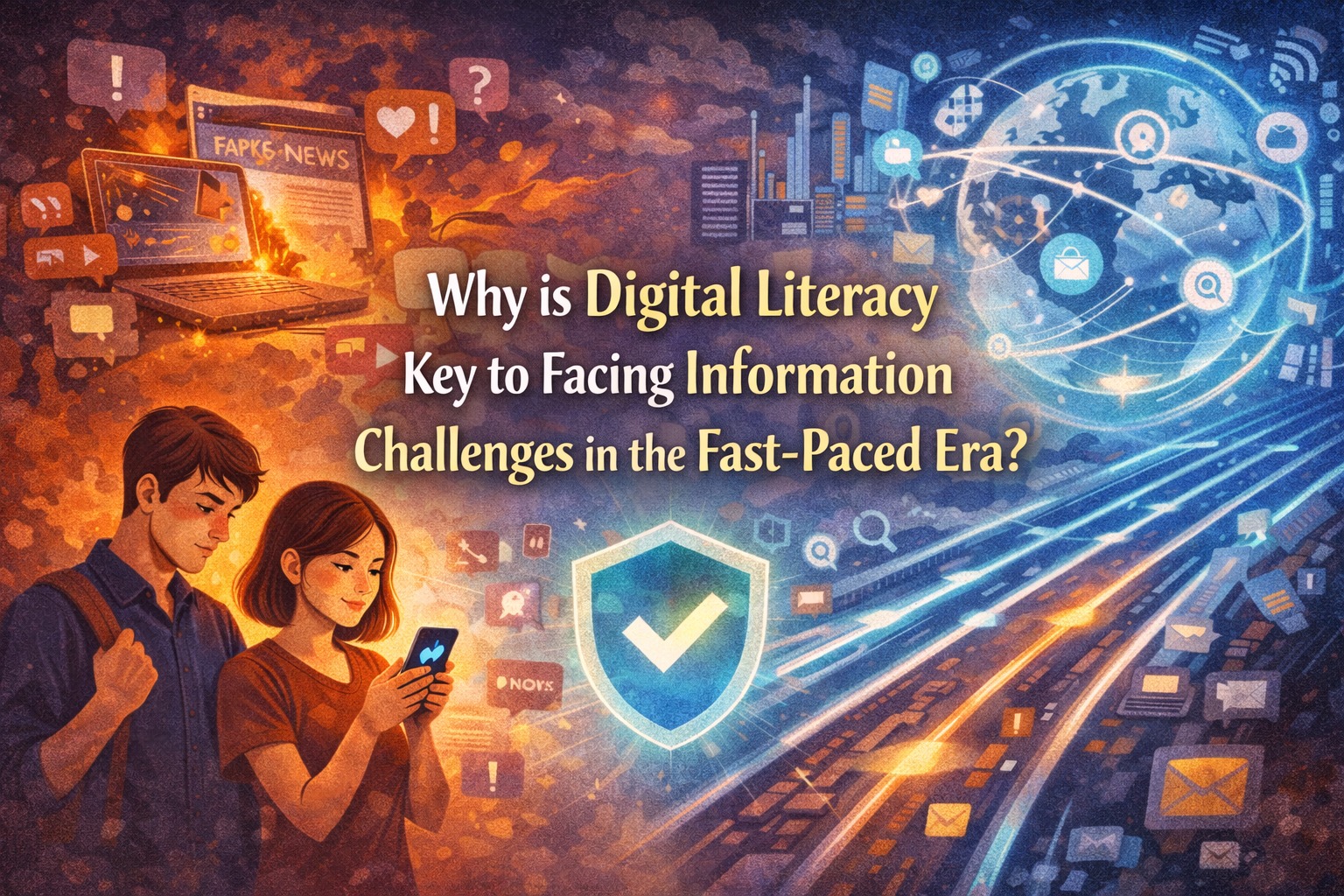
The flow of information in the digital era moves so rapidly that the boundary between facts and opinions often becomes blurred. Every second, thousands of new pieces of content appear across various platforms, requiring people to select, filter, and understand information critically. In this situation, digital literacy becomes a crucial key to surviving and thriving amid the overwhelming flood of data.
Understanding the Meaning of Digital Literacy
Digital literacy does not simply refer to the ability to use gadgets or applications. More than that, it involves a deep understanding of how information is produced, shared, verified, and utilized. This ability demands individuals to be critical, adaptive, and aware of both the risks and opportunities that arise within the digital ecosystem.
Information Challenges in a Fast-Paced Era
Technological advancement has introduced new challenges in the form of rapid and massive information dissemination. Hoaxes, data manipulation, and misinformation can spread within minutes. Without adequate digital literacy, society is vulnerable to misleading information that can have social, economic, and even political consequences.
Moreover, digital platform algorithms often create “filter bubbles,” where users are exposed only to information that aligns with their preferences. This condition narrows perspectives and makes objective decision-making more difficult.
The Role of Digital Literacy in Countering Misinformation
Digital literacy equips individuals with the ability to verify information before sharing it. This includes checking sources, examining context, understanding the motives behind content, and recognizing patterns of hoax dissemination.
With strong digital literacy skills, people become not only smart consumers of information but also responsible contributors who help maintain a healthy digital ecosystem.
The Importance of Digital Literacy in Everyday Life
In the workplace, digital literacy enables employees to work more efficiently, use data wisely, and adapt to new technologies. In social life, it helps build more ethical interactions, respect privacy, and avoid conflicts caused by misunderstandings in online spaces.
In education, digital literacy encourages students and educators to access global learning resources, broaden their perspectives, and enhance problem-solving skills through technology.
Digital Literacy as Preparation for the Future
Information challenges in the future are expected to become even more complex. Artificial intelligence, deepfakes, and automated communication add new layers to the information ecosystem. Digital literacy acts as both a shield and a compass, helping people remain critical while using technology in positive and productive ways.
With strong digital literacy, society can navigate information dynamics without losing the ability to evaluate, understand, and make wise decisions.
Conclusion
Digital literacy is a fundamental foundation for facing the overwhelming flow of information in a fast-moving era. It is not merely a technical skill, but an intellectual and social asset that shapes how we think, interact, and make decisions. The higher the level of digital literacy within society, the healthier and stronger the digital civilization that emerges.
Tentang Penulis
Gusti Ayu Tita
Penulis — Universitas STEKOM
Penulis aktif yang berfokus pada isu-isu akademik, teknologi pendidikan, dan pengembangan sumber daya manusia di lingkungan kampus.