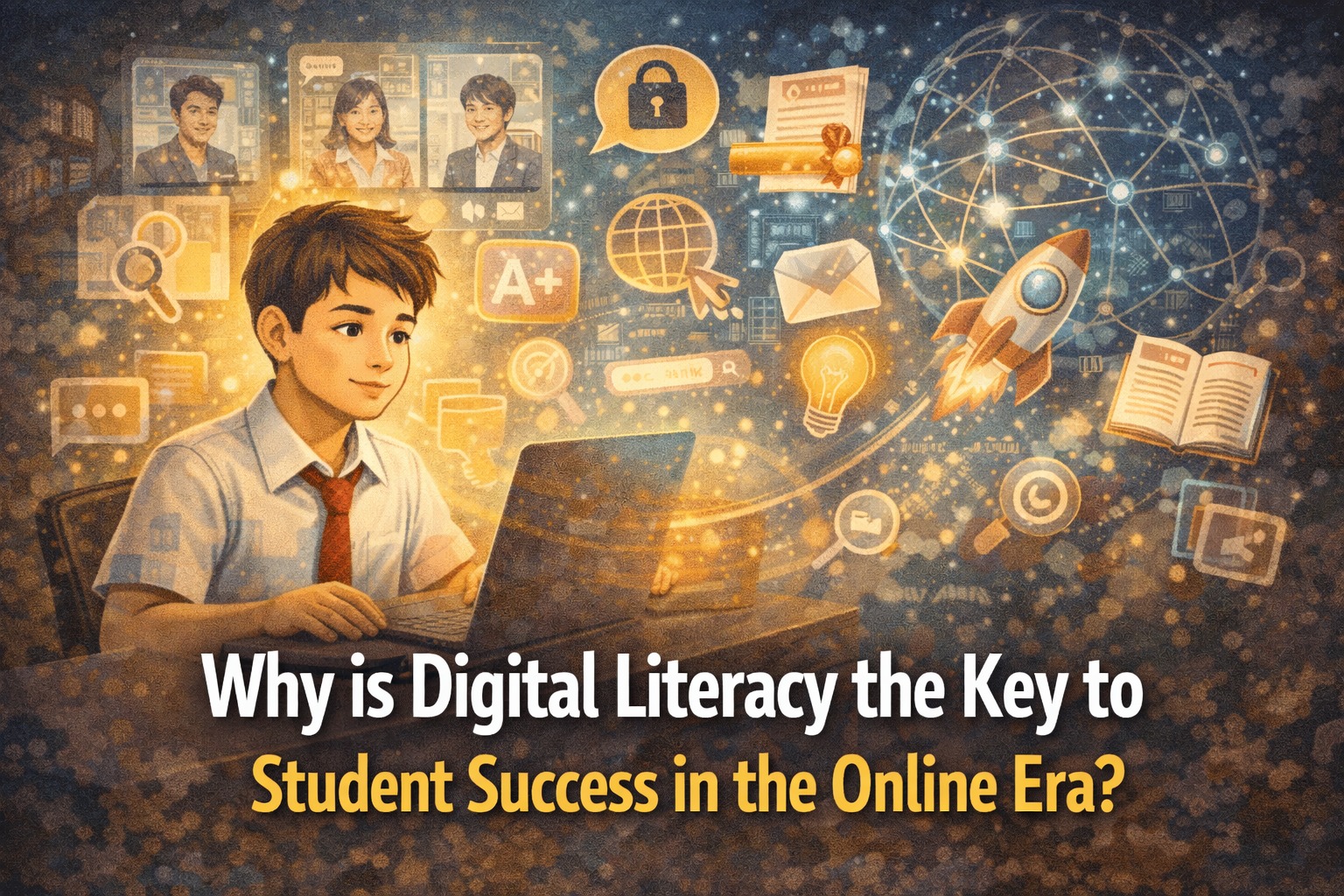
In today’s digital era, almost all aspects of life, including education, have transformed into the online sphere. For university students, digital literacy is no longer just an added advantage, but a core necessity to support academic success and future careers. This article discusses why digital literacy is a key factor in student success in an increasingly online world and how these skills can be improved to remain competitive.
WHAT IS DIGITAL LITERACY?
Digital literacy refers to an individual’s ability to use information and communication technology effectively, critically, and responsibly. It includes understanding how to search for information, manage data, use digital tools, and apply ethical and cybersecurity awareness in online environments.
THE IMPORTANCE OF DIGITAL LITERACY FOR STUDENTS
1. Easier Access to Online Learning Resources
With digital literacy, students can easily access various learning resources such as electronic journals, e-books, video tutorials, and online learning platforms. This enables a more flexible and effective learning process.
2. Enhancing Research and Analytical Skills
Digitally literate students are able to use various tools and data sources appropriately for research purposes. They can also critically analyze information, resulting in higher-quality academic work.
3. Supporting Collaboration and Communication
The online era offers numerous communication platforms, including email, discussion forums, and video conferencing applications. Digital literacy allows students to collaborate with peers and lecturers without geographical barriers.
4. Preparing for the Digital Workplace
Digital skills have become essential in many professional fields. Students who are accustomed to using technology have greater opportunities for employment and long-term career success.
HOW TO IMPROVE STUDENTS’ DIGITAL LITERACY
Participating in Digital Training and Workshops
Many universities and communities provide digital literacy training, ranging from software usage to cybersecurity awareness.
Utilizing Online Learning Platforms
Regularly using platforms such as Coursera, edX, or Google Classroom can enhance digital skills and strengthen academic or professional portfolios.
Practicing Technology Use Consistently
The more frequently students use digital applications and devices, the more proficient they become in optimizing technological functions.
Developing Critical and Ethical Awareness
Students need to learn how to filter accurate information and maintain ethical behavior in online interactions.
CONCLUSION
Digital literacy is not only about mastering technology, but also about using it critically and ethically. In today’s fully online era, students who possess strong digital literacy skills are better positioned to achieve academic success and face the challenges of the modern workforce. Therefore, improving digital literacy should be a top priority for every student.
Tentang Penulis
Gusti Ayu Tita
Penulis — Universitas STEKOM
Penulis aktif yang berfokus pada isu-isu akademik, teknologi pendidikan, dan pengembangan sumber daya manusia di lingkungan kampus.