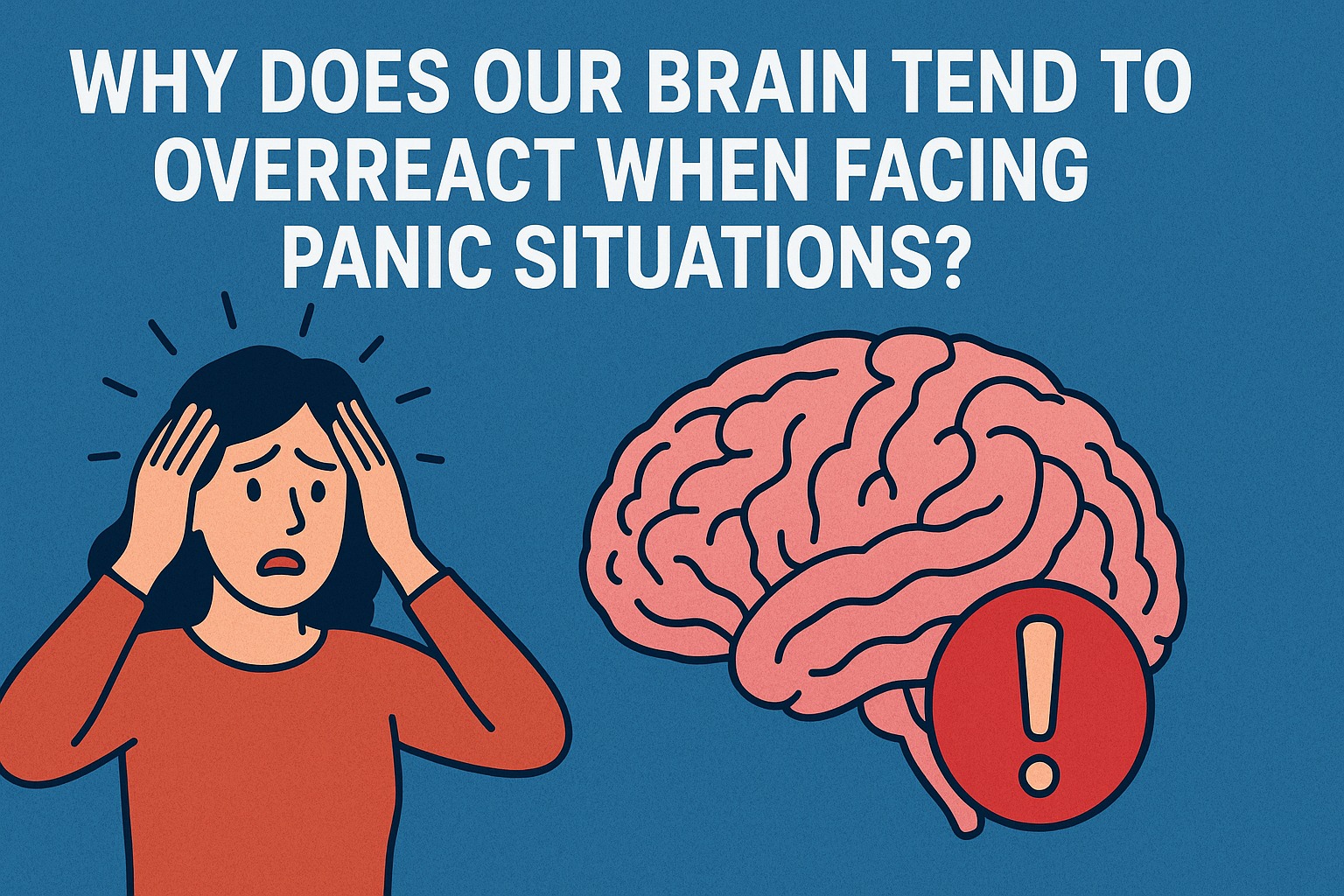
Many people have experienced this: when panic strikes, the body and mind overreact, as if the situation is far more dangerous than it really is. This seemingly disproportionate response actually comes from the brain’s natural protection system. So, what makes the brain exaggerate threats when we panic?
THE BRAIN CHOOSES INSTINCT OVER LOGIC
When the brain detects signs of danger, even very small ones, the amygdala becomes active immediately. This part of the brain triggers quick reactions to protect the body.
The problem is, when the amygdala takes over, the prefrontal cortex—the part responsible for logic, judgment, and reasoning—becomes less dominant. As a result, the brain focuses more on “how to survive” rather than “what is actually happening.” This is what makes us prone to overreact.
THREAT PERCEPTION BECOMES DISPROPORTIONATE
During panic, the brain amplifies risks to ensure we stay alert. This response is originally designed to help humans act quickly.
However, in modern life—such as when dealing with work problems, exams, or social pressure—overreacting often becomes counterproductive. The danger the brain perceives is not physical but psychological. Unfortunately, the brain processes both in a similar way.
WHY THE BODY INTENSIFIES PANIC
Panic doesn’t only happen in the brain. The body reacts in ways that make the panic feel even stronger, such as:
* Increased heart rate
* Shortened breathing
* Sweaty palms
* Muscle tension
These physical changes reinforce the brain’s “danger” signal, making overreactions even harder to control.
FACTORS THAT WORSEN OVERREACTION
Several factors can make the brain more sensitive to stress:
* Lack of sleep, which weakens emotional regulation
* Past trauma, which makes the brain assume danger more quickly
* Chronic stress, which keeps the nervous system on high alert
* Lack of experience managing fear, leaving the brain without stable strategies
These factors make the brain more likely to “panic first” even when the situation isn't that serious.
HOW TO REDUCE THE BRAIN’S OVERREACTION
Fortunately, this response can be managed through techniques that help restore logical functioning.
1. Slow breathing exercises
Steady breathing reduces amygdala activity and stabilizes the body’s response.
2. Use grounding techniques
Focus your senses on your surroundings to shift the brain away from imagined threats.
3. Delay your reaction for a few seconds
A brief pause allows the prefrontal cortex to re-engage.
4. Change your internal narrative
Replace thoughts like “This is dangerous!” with “This is just pressure—I can handle it.”
5. Build emotional resilience regularly
Exercise, meditation, sufficient sleep, and journaling help the brain stay more stable under stress.
CONCLUSION
The brain overreacts during panic because the natural protection system works faster than logic. While this reaction aims to keep us safe, in daily life it can disrupt our calm. With mental training and self-regulation techniques, we can help the brain respond to panic in a more balanced way.
Tentang Penulis
Gusti Ayu Tita
Penulis — Universitas STEKOM
Penulis aktif yang berfokus pada isu-isu akademik, teknologi pendidikan, dan pengembangan sumber daya manusia di lingkungan kampus.