
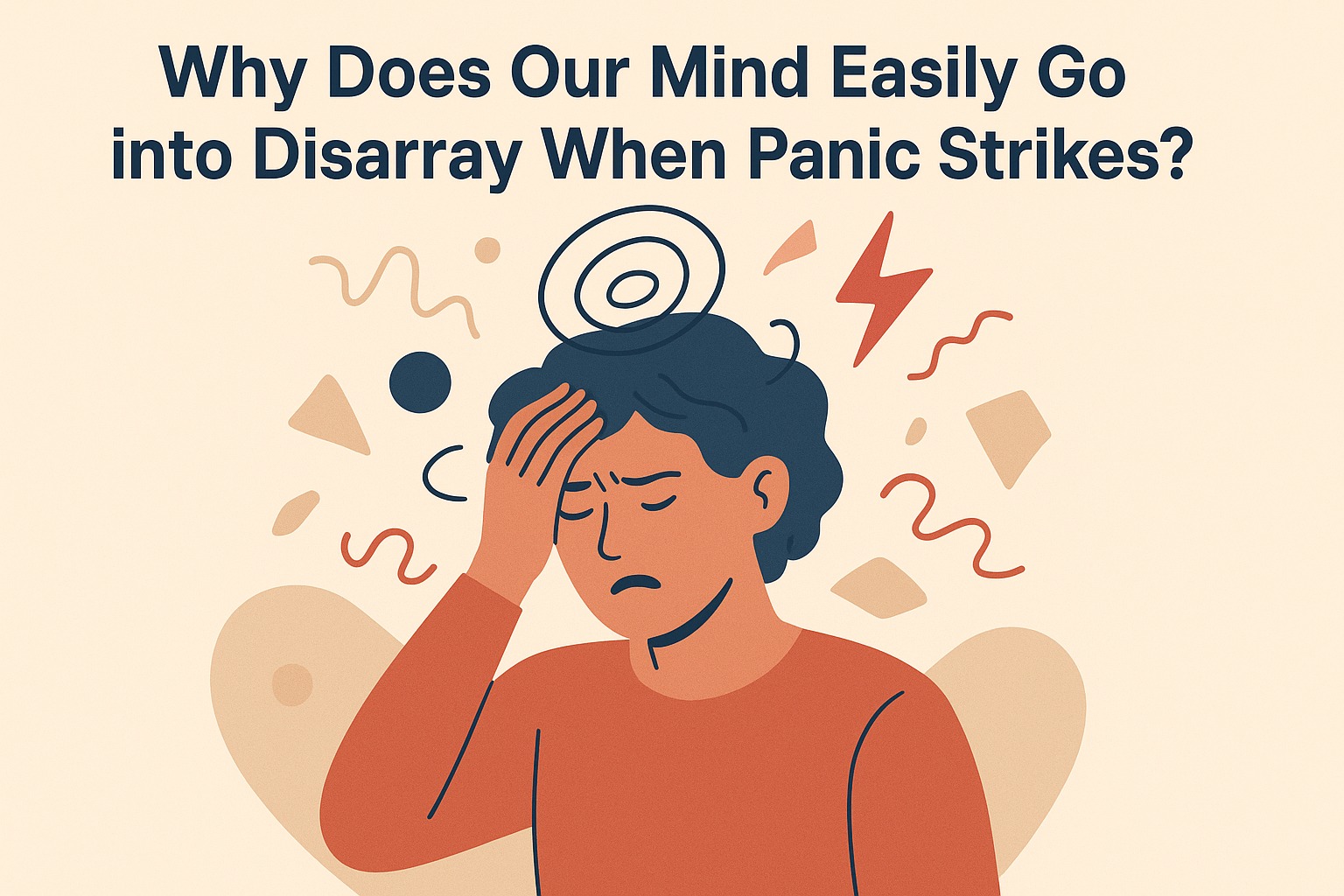
In urgent or tense situations, many people experience the same thing: their thoughts suddenly become scattered, it becomes hard to focus, and even simple decisions feel overwhelming. This condition is not a personal weakness, but rather a natural bodily response. So, what actually causes the mind to become chaotic when panic strees.
HOW PANIC AFFECTS THE BRAIN
When the body detects a threat — even if the threat isn't truly dangerous — the brain automatically activates the “fight or flight” system. The amygdala, the brain’s emotional center, takes over, sends danger signals, and triggers intense emotional reactions.
The problem is, when the amygdala becomes active, the function of the prefrontal cortex (the part of the brain responsible for logical thinking) decreases. This is why our ability to think clearly drops instantly when panic hits. The brain becomes more focused on survival than on rational thinking.
WHY WE OFTEN EXAGGERATE PROBLEMS WHEN PANICKING
Panic causes the brain to process information with a negative bias. Something small can feel like a major threat. The mind becomes hyperactive and starts imagining worst-case scenarios.
This bias appears because the body prioritizes safety over accuracy. The brain chooses to react quickly rather than analyze whether the threat is real or not. That’s why people easily misinterpret situations when they’re panicking.
FACTORS THAT WORSEN MENTAL CHAOS
Certain conditions can make panic harder to control, such as:
* Lack of sleep, which makes the brain more sensitive to stress.
* High daily stress levels, which weaken emotional regulation.
* Little experience dealing with high-pressure situations, making the brain less able to calm itself.
* Information shocks, such as receiving sudden bad news.
These combined factors make it even more difficult for the mind to stay focused when things suddenly become tense.
HOW TO CALM YOURSELF WHEN PANIC STRIKES
Even though panic is a natural reaction, we can still train ourselves to stay more in control of our thoughts.
Here are some helpful steps:
1. Take deep, slow breaths
Breathing techniques help reduce amygdala activity and reactivate logical thinking.
2. Redirect attention to your body
Grounding techniques, such as feeling your feet on the floor, can help restore focus.
3. Validate your feelings instead of ignoring them
Acknowledging that you’re panicking is the first step toward calming yourself down.
4. Break problems into smaller steps
Dividing the situation into stages helps the brain make decisions more easily.
5. Practice regular stress management
Meditation, exercise, and adequate sleep strengthen the brain’s ability to handle pressure.
CONCLUSION
Panic creates mental chaos because the brain shifts control from logic to emotional reactions as a protective mechanism. Although this response is natural, we can still train ourselves to remain calm and regain clear thinking.
Understanding how the brain works during panic makes it easier to control ourselves and respond to situations more wisely.
Tentang Penulis
Gusti Ayu Tita
Penulis — Universitas STEKOM
Penulis aktif yang berfokus pada isu-isu akademik, teknologi pendidikan, dan pengembangan sumber daya manusia di lingkungan kampus.



