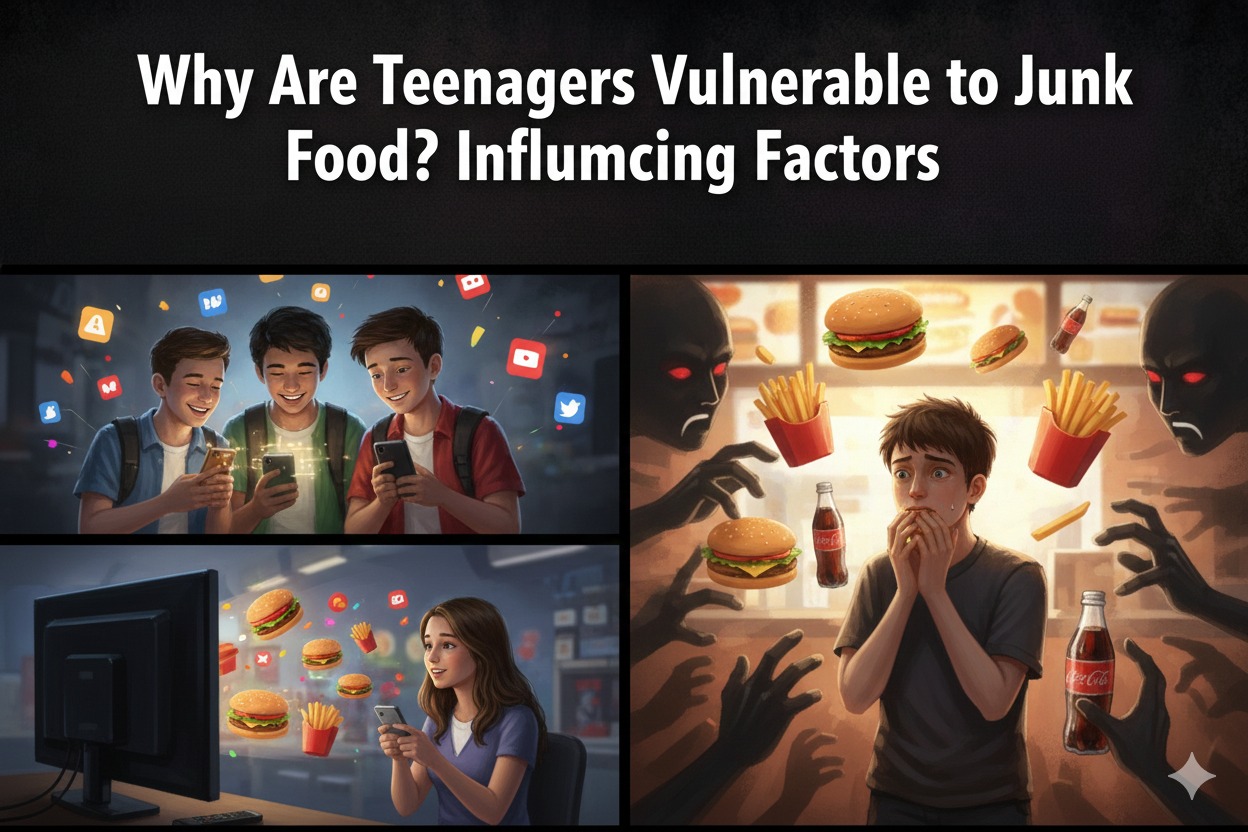
Junk food has become an inseparable part of modern teenagers’ lives. Fast food with strong flavors and convenient serving methods often appears more appealing than healthy meals. Without realizing it, this habit shapes an unbalanced eating pattern that can have long-term health consequences. So, why are teenagers particularly vulnerable to junk food? The answer lies in various interconnected factors.
Environmental Influence and Modern Lifestyle
The environment plays a major role in shaping teenagers’ eating habits. The presence of fast-food restaurants around schools, shopping centers, and public areas makes junk food easily accessible at any time.
A fast-paced modern lifestyle also encourages teenagers to choose instant food. Busy school schedules, extracurricular activities, and limited break times make junk food seem like a practical solution to satisfy hunger quickly.
The Role of Advertising and Social Media
Junk food advertising is designed with attractive visuals and messages that resonate with teenagers. Social media further amplifies this influence through promotional content, food reviews, and viral culinary trends.
Teenagers who are active on social media tend to be easily influenced by the image of fast food as a symbol of a modern and enjoyable lifestyle. Without proper education, they often fail to recognize the health risks behind excessive consumption.
Psychological Factors During Adolescence
Adolescence is a transitional phase filled with emotional changes. Academic stress, social pressure, and the search for personal identity often drive teenagers to seek instant comfort, one of which is through food.
Junk food that is high in sugar and fat can provide temporary comfort. This is why teenagers tend to consume junk food when they feel tired, bored, or emotionally stressed.
Lack of Nutrition Education and Supervision
Limited understanding of balanced nutrition is another important factor. Many teenagers do not fully grasp the long-term effects of unhealthy eating patterns.
At the same time, a lack of family supervision—especially in busy households—gives teenagers more freedom to choose their own food without clear guidance.
Peer Influence on Eating Habits
Peers have a strong influence on teenagers’ decisions, including food choices. Eating junk food together is often seen as part of social bonding and lifestyle.
The desire to be accepted within a group encourages teenagers to follow their friends’ eating habits, even when those choices are unhealthy.
Efforts to Reduce Vulnerability to Junk Food
Reducing teenagers’ dependence on junk food requires a comprehensive approach. Early nutrition education, a supportive environment for healthy eating, and open communication between parents and children are essential.
Providing appealing healthy food alternatives and involving teenagers in choosing and preparing meals can help build better eating habits.
Conclusion
Teenagers’ vulnerability to junk food is influenced by multiple factors, including environment, media, psychological conditions, and social influences. Understanding these factors is the first step toward helping teenagers develop healthier eating patterns. With proper family support and a positive environment, teenagers can avoid the negative effects of junk food and grow more optimally.
Tentang Penulis
Gusti Ayu Tita
Penulis — Universitas STEKOM
Penulis aktif yang berfokus pada isu-isu akademik, teknologi pendidikan, dan pengembangan sumber daya manusia di lingkungan kampus.