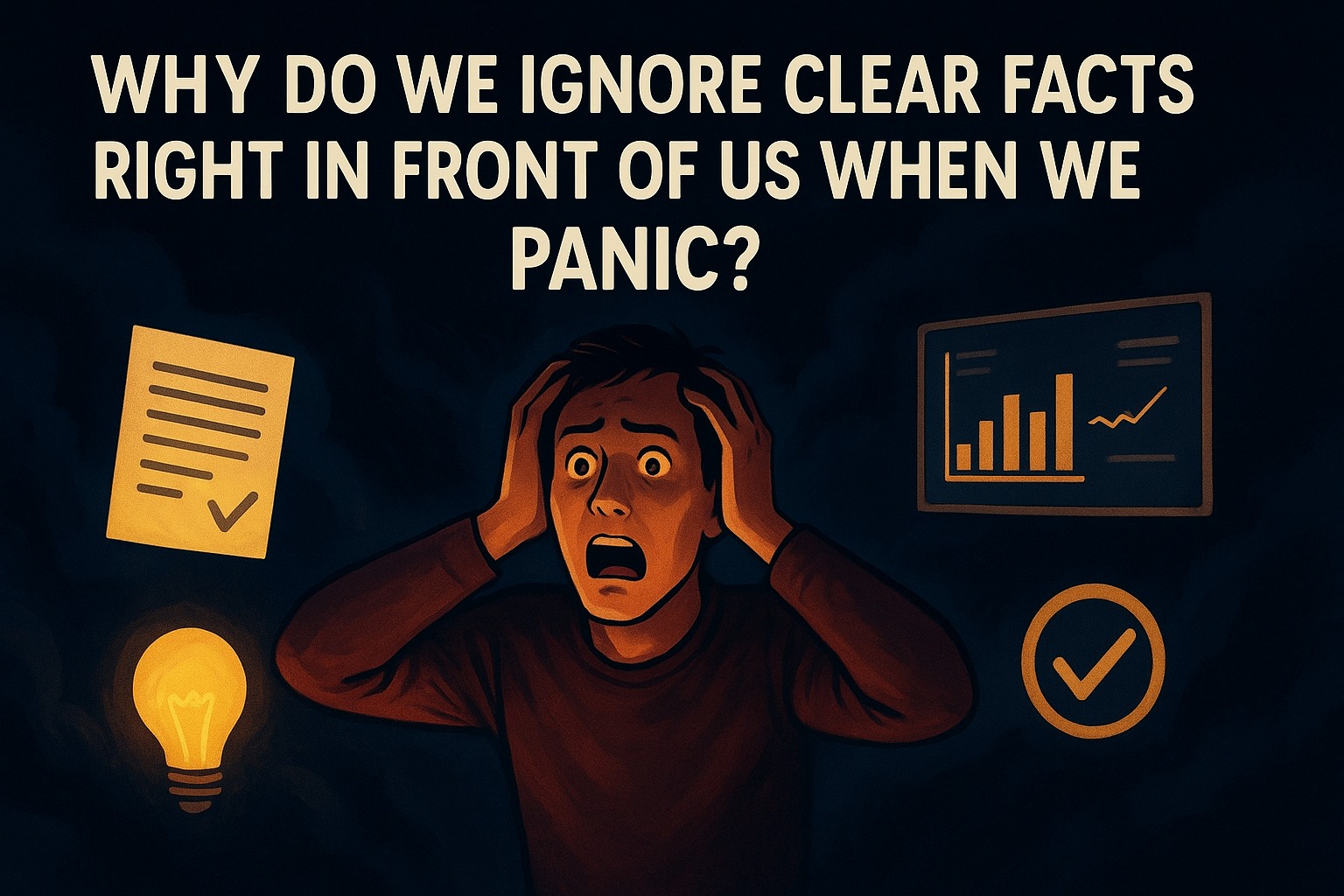
Have you ever been in a critical situation and suddenly felt unable to think logically, even though the solution was actually very clear? This condition is not just a feeling. There are scientific and psychological explanations for why panic makes a person ignore facts that should be easy to understand. This article discusses that mechanism and how humans can regain clear thinking even under pressure.
WHAT HAPPENS IN THE BRAIN WHEN YOU PANIC?
When someone panics, the brain works very differently compared to its normal state. A part of the brain called the amygdala—the center of emotional responses—takes greater control than the prefrontal cortex, which is responsible for logical thinking. As a result, decisions and assessments become more influenced by emotion than rationality.
At this stage, the body releases stress hormones such as adrenaline and cortisol. These hormones prepare the body to face danger, but at the same time make it harder to concentrate. This is why even the most obvious facts can seem unclear when panic arises.
WHY DO FACTS BECOME DIFFICULT TO PROCESS?
There are several reasons why facts seem hard to understand when panic strikes:
Narrowed attention span
The brain focuses only on the perceived threat, not on objective information that could help.
Accelerated decision-making
To survive, the nervous system shortcuts the analytical process that usually helps us understand facts.
Increased negative bias
During panic, the brain is more likely to believe negative or frightening information than logical ones.
Sensory misinterpretation
Intense emotions can distort someone’s perception of what is really happening around them.
All these factors combine, making simple facts feel difficult to digest.
HOW THE MIND EXAGGERATES THREATS
When panicking, the brain tends to amplify potential danger. This is called *catastrophic thinking*—the automatic tendency to imagine the worst possible outcome. This process happens subconsciously, causing a person to fixate on fear rather than reality.
This phenomenon explains why many people make poor decisions when panicking: their focus is drawn more toward “what might happen” instead of “what is actually happening.”
WHY DO PEOPLE STILL PANIC EVEN WHEN THEY KNOW THE FACTS?
Knowing facts and being able to use them during panic are two different things. When calm, the brain can store rational steps clearly. But during panic, access to those logical and memory-based processes becomes disrupted.
Several factors contribute to this:
- emotions move faster than logic,
- the body shifts into “survival mode,”
- rational thinking is not prioritized,
- short-term memory becomes impaired.
This explains why someone can forget simple procedures even after memorizing them.
HOW TO REGAIN CLEAR THINKING DURING PANIC
Although panic is a natural response, there are ways to “reset” the mind:
Take slow breaths
Breathing techniques can reduce amygdala activity, allowing rational thinking to return.
Focus on one real thing
For example, naming visible objects or describing the surroundings. This helps shift attention back to facts.
Move slowly
Reducing impulsive movements signals to the body that the threat may not be as big as it seems.
Use calming self-talk
Repeating phrases like “I can handle this” helps redirect focus from danger to solutions.
With practice, the ability to stay clear-headed during panic can improve significantly.
CONCLUSION
Panic puts the brain into emergency mode, prioritizing emotions and instinct over logic. As a result, even clear facts can be overlooked. However, this condition is not uncontrollable. By understanding how the brain works during panic and applying self-regulation techniques, a person can regain clarity and make better decisions.
Tentang Penulis
Gusti Ayu Tita
Penulis — Universitas STEKOM
Penulis aktif yang berfokus pada isu-isu akademik, teknologi pendidikan, dan pengembangan sumber daya manusia di lingkungan kampus.