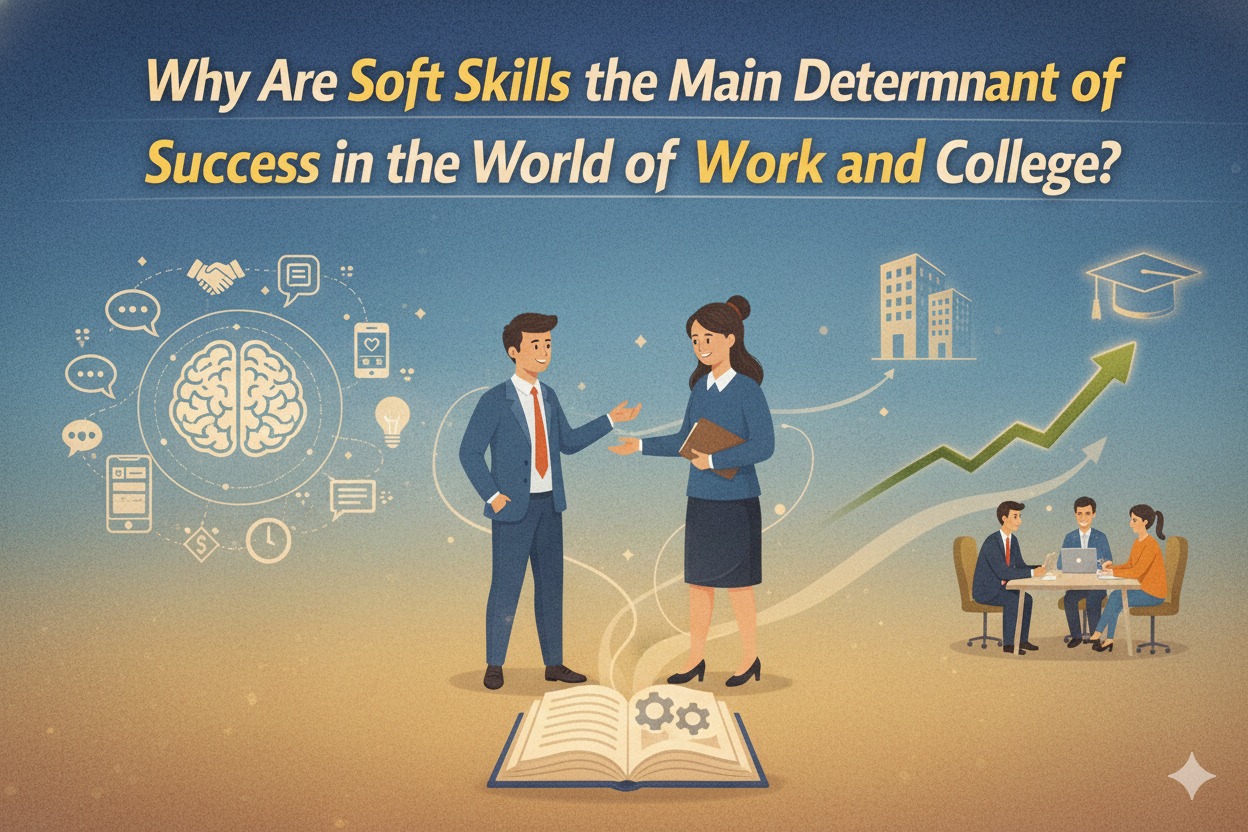
Why Soft Skills Are a Key Factor in Academic and Professional Success
Soft skills are often seen as complementary abilities, yet in practice they form the foundation that shapes how individuals learn, work, and interact with others. Many students and young professionals focus heavily on technical skills, but companies and academic institutions increasingly view non-technical qualities as key differentiators. This article explores why soft skills have become essential components of both academic and professional success.
Understanding Soft Skills and Their Role
Soft skills include communication, critical thinking, teamwork, time management, and emotional intelligence. Unlike hard skills, which can be measured through grades or certifications, soft skills are reflected in how individuals behave and respond to various situations. In today’s dynamic academic and professional environments, these abilities strongly influence a person’s effectiveness in handling challenges.
Why the Workplace Prioritizes Soft Skills
Modern organizations operate in fast-changing environments. Employees who rely solely on technical expertise often struggle to adapt when strategies, technologies, or work patterns evolve.
Key reasons why soft skills are highly valued in the workplace include:
* Collaboration as a standard practice: Most tasks require teamwork, making interpersonal skills crucial to achieving quality outcomes.
* Effective communication increases efficiency: Clear communication reduces misunderstandings that can hinder productivity.
* Problem-solving minimizes risk: Unexpected situations require quick, thoughtful responses rooted in critical thinking.
* Emotional intelligence supports stability: Managing emotions helps individuals perform well under pressure.
The Impact of Soft Skills in Higher Education
In academic settings, soft skills play a major role in learning effectiveness. Students who manage their time well tend to maintain consistency in understanding course material. Communication skills also affect performance in presentations, class discussions, and group projects.
Moreover, universities increasingly encourage students to develop leadership and creative thinking abilities, recognizing that soft skills are vital preparation for entering the professional world after graduation.
Soft Skills as a Competitive Advantage
When many individuals hold similar academic qualifications, soft skills become a powerful differentiator. Two candidates with equal technical abilities may have very different opportunities if one demonstrates stronger interpersonal and adaptive skills.
Qualities such as adaptability, empathy, and initiative signal readiness to face complex challenges. Soft skills do not merely complement hard skills—they strengthen overall personal capacity.
How to Develop Soft Skills Consistently
Soft skills are not developed overnight; they require practice and real-life experience. Effective ways to build them include:
* Joining organizations or communities to practice communication and leadership
* Participating in group projects
* Training critical thinking through reading, discussion, and case analysis
* Practicing self-reflection to improve emotional intelligence
* Taking internships to experience real workplace dynamics
With consistency, soft skills can grow and deliver long-term benefits for both academic and career paths.
Conclusion
Soft skills have become essential elements influencing success in both education and the workplace. Technical expertise remains important, but without strong non-technical abilities, individuals may struggle to compete and adapt. Developing soft skills means building a solid foundation for a more stable, productive, and relevant academic and professional journey.
Tentang Penulis
Gusti Ayu Tita
Penulis — Universitas STEKOM
Penulis aktif yang berfokus pada isu-isu akademik, teknologi pendidikan, dan pengembangan sumber daya manusia di lingkungan kampus.