
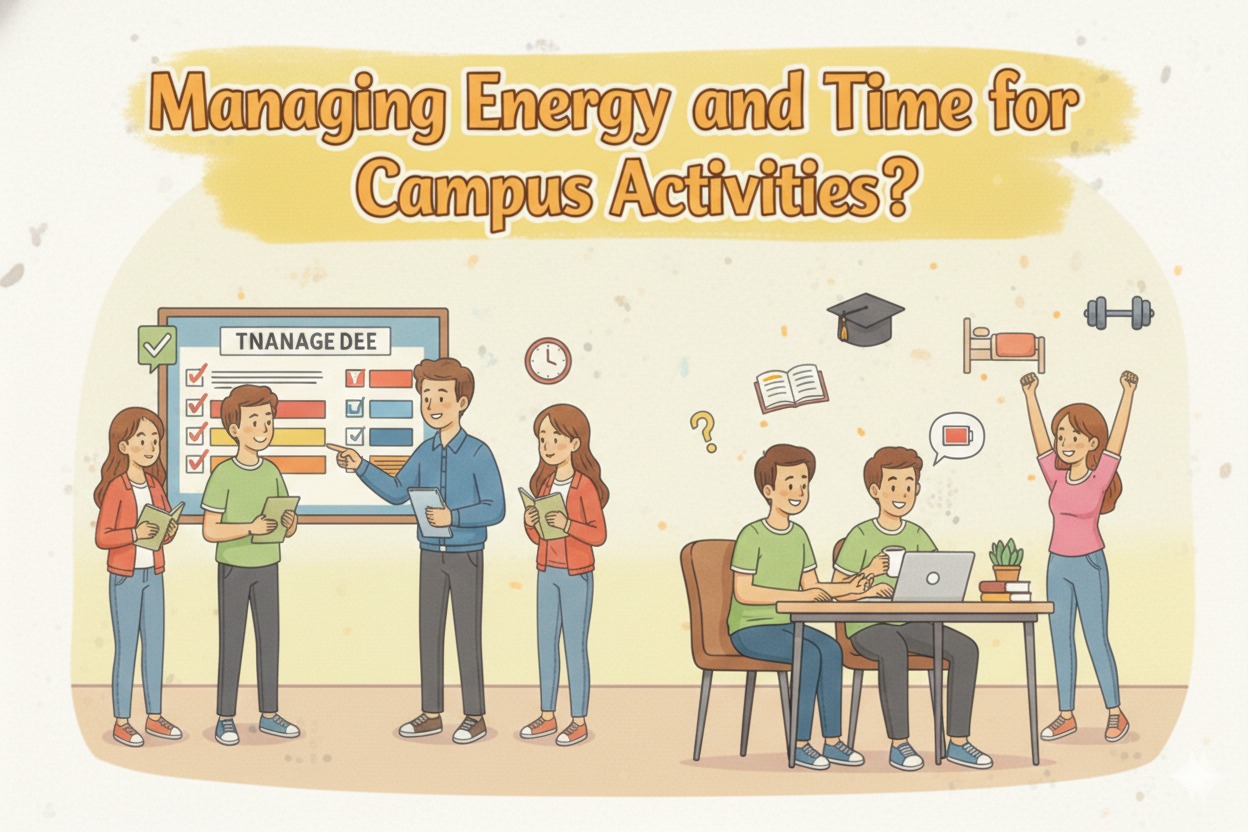
Managing Time and Energy in Campus Life
Campus life often requires students to be active in many areas: lectures, organizations, assignments, and social activities. If not managed well, all these activities can drain energy and make time feel always insufficient. Therefore, the ability to manage time and energy becomes the key to staying productive without feeling excessively exhausted.
This article will discuss smart ways to manage time while maintaining energy so campus activities remain balanced and enjoyable.
THE IMPORTANCE OF MANAGING TIME AND ENERGY
Many students think productivity is only about dividing time. However, energy also plays a major role. It is useless to have a neat schedule if the body and mind are already tired. With good time management and proper energy management, students can:
* Complete assignments on time
* Stay focused during lectures
* Be active in organizations without burnout
* Maintain physical and mental health
This balance makes campus life feel more organized.
SETTING PRIORITIES FROM THE START
The first step is understanding what is most important. Not all activities have the same urgency. Use the priority principle by dividing activities into:
* Important and urgent
* Important but not urgent
* Not important but urgent
* Not important and not urgent
Focus on activities that have a big impact on academics and self-development. This way, time and energy are not wasted on less meaningful things.
CREATING A REALISTIC SCHEDULE
A schedule that is too full can backfire. Make a daily or weekly plan that is realistic according to your capacity. Insert rest time between activities so energy can recover.
Use tools such as:
* Digital calendar
* To-do list apps
* Planner book
With a clear schedule, students can avoid procrastination and be more disciplined.
MANAGING PHYSICAL AND MENTAL ENERGY
Managing energy means keeping physical and mental conditions in top shape. Some simple ways include:
* Sleeping 6–8 hours a day
* Eating nutritious food
* Drinking water regularly
* Doing light exercise
* Taking short breaks after long focus sessions
Also, maintain mental health by giving time for yourself, such as reading, listening to music, or taking a relaxing walk.
AVOIDING EXCESSIVE MULTITASKING
Many students feel great when doing many things at once. However, excessive multitasking actually reduces quality and speeds up fatigue. Focus on one task at a time. This method is more effective and preserves energy.
BUILDING POSITIVE HABITS
Productivity is not the result of one day, but from habits built consistently. Start with small actions such as:
* Waking up earlier
* Reading material before class
* Planning every night
* Completing assignments early
These positive habits help save time and energy in the long run.
CONCLUSION
Managing time and energy is an important skill for every student. By setting priorities, creating realistic schedules, maintaining physical and mental health, and building positive habits, campus activities can be carried out more balanced.
Campus is not only a place for academic learning but also a space to grow into a disciplined, healthy, and productive individual. When time and energy are well managed, every day on campus will feel more meaningful.
Tentang Penulis
Gusti Ayu Tita
Penulis — Universitas STEKOM
Penulis aktif yang berfokus pada isu-isu akademik, teknologi pendidikan, dan pengembangan sumber daya manusia di lingkungan kampus.



