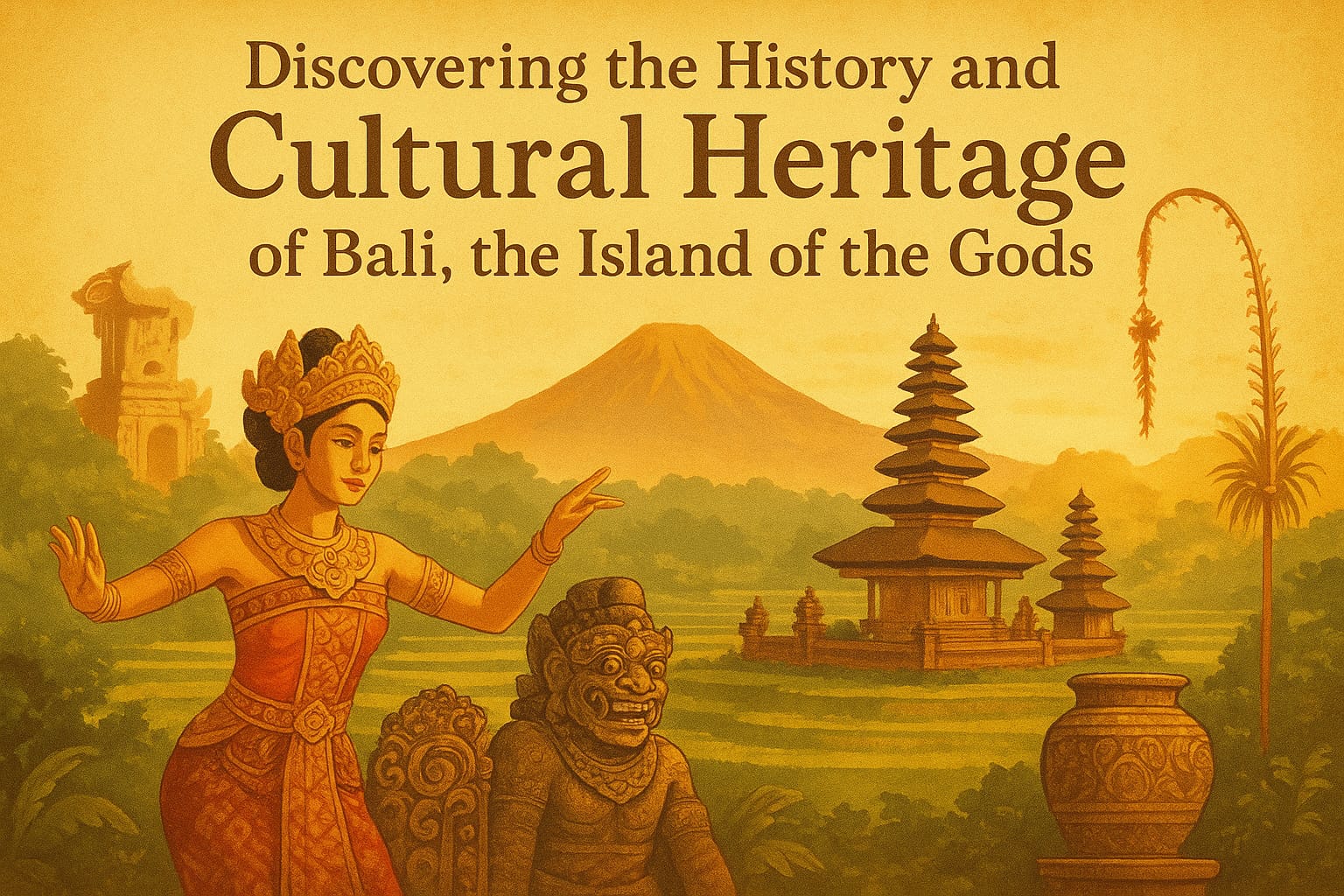
Bali, often referred to as the Island of the Gods, is a magical place located in Indonesia. Besides its captivating natural beauty, Bali is also rich in history and impressive cultural heritage.
Tables of Content
- History and Cultural Heritage of Bali
1.1. Prehistoric Remains
1.2. Hindu-Buddhist Influence
1.3. Golden Era of Majapahit
1.4. Dutch Colonial Era
1.5. Modern Tourism Development
1.6. Beliefs and Spirituality - Conclusion
History and Cultural Heritage of Bali
Behind its beautiful beaches and terraced rice fields, Bali holds a long and rich story of historical and cultural journey.
Prehistoric Remains
Bali has a rich prehistoric history. Archaeological evidence shows that the island has been inhabited since prehistoric times, even as early as 2000 BC. Archaeological sites, caves, and ancient relics reveal the lives of early Balinese communities, including their beliefs and customs.
Hindu-Buddhist Influence
One of the most important historical turning points in Bali was the arrival of Hindu-Buddhism from India in the 1st century AD. Hindu-Buddhist religions brought deep influence to Balinese culture, art, and daily life. Temples and temple complexes were built to worship Hindu deities, and Hindu-Buddhist ceremonial traditions became an integral part of Balinese society.
Golden Era of Majapahit
In the 14th century, Bali became part of the Majapahit Kingdom in Java. The Majapahit golden era brought prosperity and cultural development to Bali. Many ancient architectures and statues from this period can still be found throughout the island.
Dutch Colonial Era
In the 19th century, the Dutch arrived in Bali and began influencing the island's politics and culture. Although Bali was never fully colonized, Dutch influence affected governance and introduced aspects of modernization.
Modern Tourism Development
By the mid-20th century, Bali began to gain international recognition as a tourist destination. Its extraordinary natural beauty, unique culture, and friendly locals made Bali a highly sought-after destination. Today, the island is one of the most popular tourist spots in the world.
Balinese Cultural Heritage
Balinese cultural heritage is a valuable asset that must be preserved. One of its distinctive features is performing arts, such as traditional dances and shadow puppetry. Balinese dances like Legong, Barong, and Kecak showcase artistic expression and religious beliefs. Moreover, carving, painting, and textile arts play important roles in Balinese culture. Many Balinese artists are renowned for their stunning works that enrich the global art scene.
Beliefs and Spirituality
Bali is also known as a center of spirituality. Balinese Hinduism has unique characteristics and integrates beliefs in ancestral spirits, deities, and natural forces. Temples spread across the island serve as sites of worship and ceremonial practices rich in meaning.
Conclusion
Bali is not only about its breathtaking beaches and natural beauty. It is an island with a rich historical and cultural heritage. From Hindu-Buddhist influences to the Majapahit golden era, from Dutch colonial times to modern tourism development, every chapter of Bali’s history adds layers to its cultural richness. Today, Bali is a place where the past and present unite in mesmerizing beauty, creating an unforgettable experience for every visitor to the Island of the Gods.
Tentang Penulis
Gusti Ayu Tita
Penulis — Universitas STEKOM
Penulis aktif yang berfokus pada isu-isu akademik, teknologi pendidikan, dan pengembangan sumber daya manusia di lingkungan kampus.