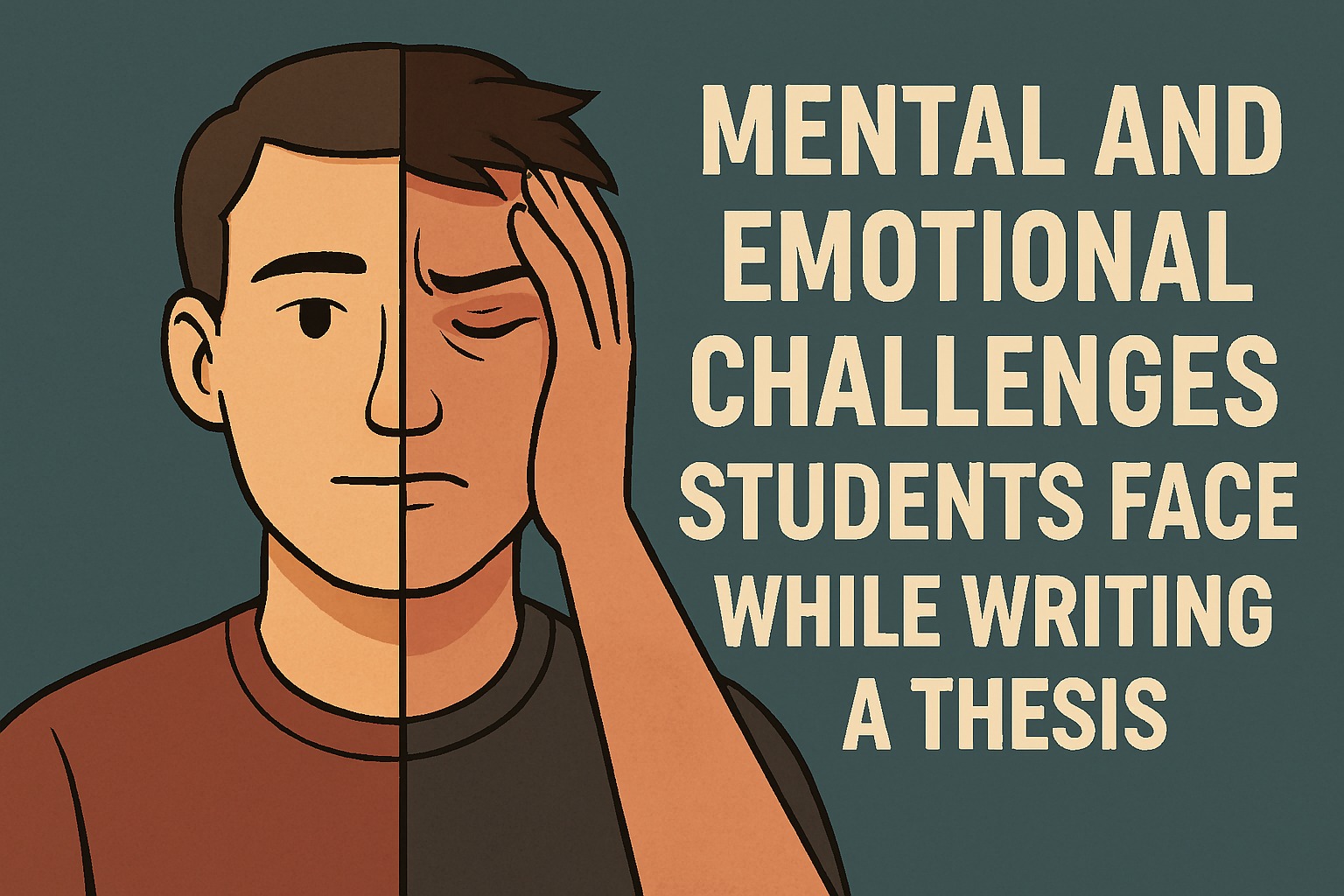
Writing a thesis is often considered the final and most demanding stage of college life. After years of attending lectures, completing assignments, and passing exams, students finally reach the moment where they must prove their knowledge through a single, comprehensive academic work. While this phase is an important milestone, it is also filled with mental and emotional challenges that many students are not fully prepared for. The thesis process is not only about research and writing. It also involves patience, self-discipline, emotional control, and the ability to deal with uncertainty. For many students, this stage becomes one of the most stressful periods in their academic journey.
THE PRESSURE OF HIGH EXPECTATIONS
When students enter their final semester, expectations start to grow. Families expect them to graduate on time. Friends begin to plan their future careers. Some students even feel pressure from themselves to finish as quickly as possible.
This accumulation of expectations can create a heavy mental burden. Students may feel that failing or delaying their thesis means disappointing others. As a result, anxiety and stress become constant companions during the writing process.
FEELING OVERWHELMED BY THE WORKLOAD
Unlike regular assignments, a thesis is a long-term project that requires deep research and continuous writing. Students must read academic journals, collect data, analyze results, and organize their findings into a structured paper.
The amount of work can feel overwhelming, especially at the beginning. Many students struggle to figure out where to start. The thesis may appear too big to handle, which leads to confusion and loss of motivation.
THE FEAR OF MAKING MISTAKES
Academic writing requires accuracy, clarity, and strong arguments. Students often worry about making mistakes in their research, data analysis, or writing style.
This fear can slow down progress. Instead of writing freely, some students become overly cautious. They revise the same paragraph repeatedly, trying to make it perfect. This habit not only wastes time but also increases mental exhaustion.
LONELINESS DURING THE PROCESS
Earlier in college, students usually work in groups or attend classes together. They have friends to discuss assignments with or share ideas.
However, thesis writing is often a solitary process. Students spend long hours reading, writing, and revising on their own. This isolation can lead to feelings of loneliness, especially when they face difficulties and have no one to talk to.
Without proper social support, emotional stress can grow stronger.
WAITING FOR SUPERVISOR RESPONSES
One of the most emotionally challenging moments in the thesis process is waiting for feedback from the supervisor. After submitting a draft, students must wait for comments or approval.
The waiting period can create uncertainty. Students may feel anxious, wondering whether their work is acceptable or needs major revisions. When feedback finally comes, it often includes many corrections, which can feel discouraging.
THE CYCLE OF REVISION AND SELF-DOUBT
Thesis writing usually involves multiple rounds of revisions. Students write, receive feedback, revise, and repeat the process.
This cycle can create self-doubt. Some students begin to question their abilities, thinking they are not good enough or smart enough to finish their thesis. These negative thoughts can reduce motivation and slow down progress.
COMPARING PROGRESS WITH OTHERS
During the final semester, students often see their friends graduating earlier. Social media posts about graduation ceremonies or new jobs can create additional pressure.
Comparing progress with others can lead to feelings of inadequacy. Students may start to believe they are falling behind, even if their own progress is normal.
This comparison can increase stress and damage self-confidence.
BURNOUT AND LOSS OF MOTIVATION
Long hours of research and writing can lead to burnout. Students may feel mentally tired, unmotivated, or emotionally drained.
At times, they may lose interest in their own topic. What once seemed exciting now feels like a burden. This loss of motivation is common, especially when progress feels slow.
STRATEGIES TO MANAGE MENTAL AND EMOTIONAL CHALLENGES
Although the thesis process is challenging, there are practical ways to manage the mental and emotional pressure:
- Break the thesis into smaller, manageable tasks.
- Set realistic daily or weekly writing goals.
- Maintain regular communication with the supervisor.
- Take short breaks to avoid burnout.
- Talk to friends or family when feeling stressed.
- Celebrate small achievements, such as finishing a chapter.
These strategies can help students stay focused and emotionally balanced.
GROWTH THROUGH THE THESIS JOURNEY
Despite the stress and emotional challenges, the thesis process offers valuable lessons. Students learn how to handle pressure, manage time, and work independently.
They also develop confidence as they overcome obstacles and complete a long-term project. The experience may be difficult, but it prepares them for future professional and personal challenges. In the end, writing a thesis is not only about earning a degree. It is also about building resilience, patience, and emotional strength.
Tentang Penulis
Gusti Ayu Tita
Penulis — Universitas STEKOM
Penulis aktif yang berfokus pada isu-isu akademik, teknologi pendidikan, dan pengembangan sumber daya manusia di lingkungan kampus.