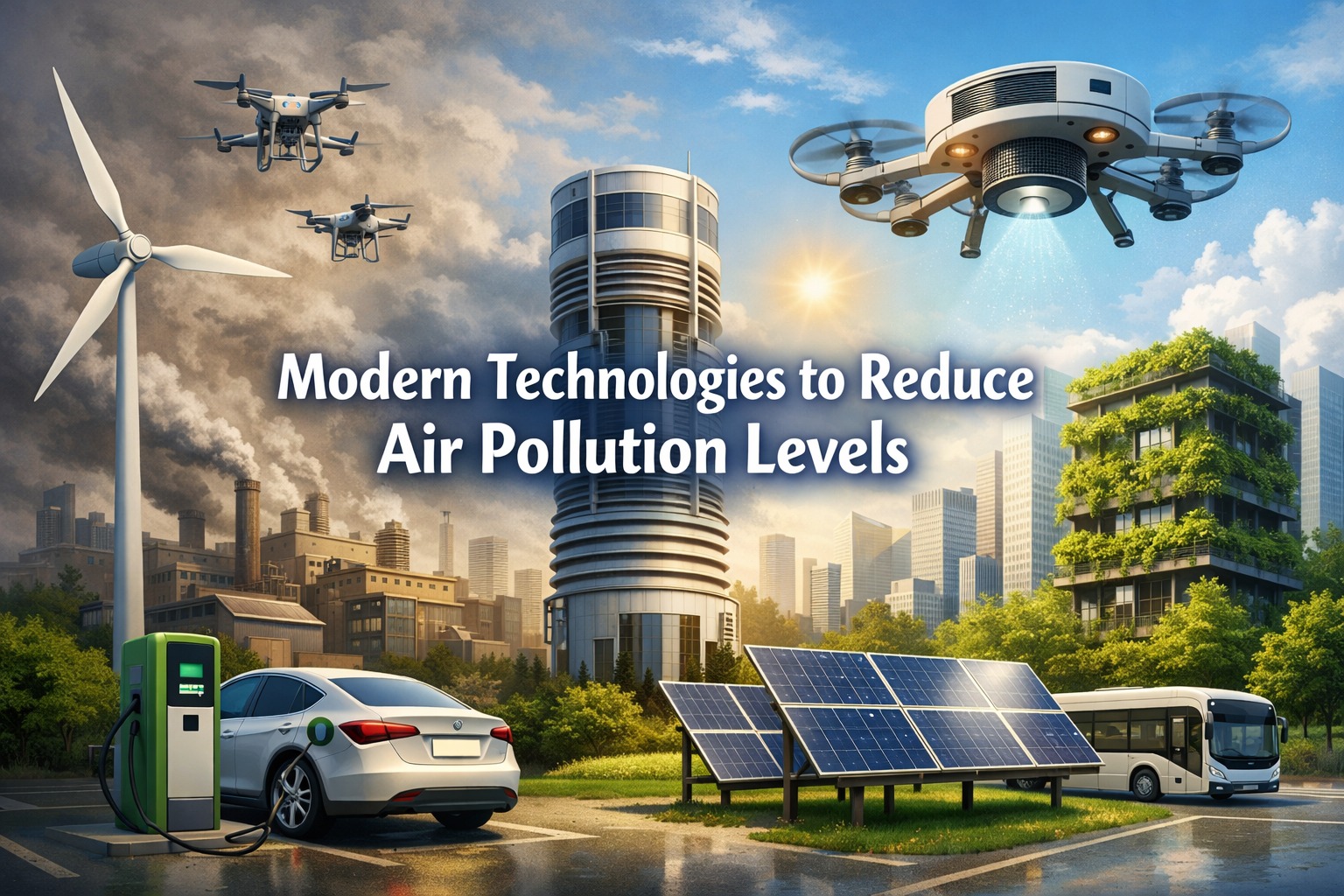
Air pollution has become one of the biggest environmental challenges in modern society. Rapid industrial growth, increasing vehicle emissions, and excessive fossil fuel use continue to worsen air quality in many countries. Poor air conditions not only damage the environment but also threaten human health by increasing respiratory and cardiovascular diseases. Fortunately, modern technology is offering innovative solutions to reduce air pollution levels and create cleaner, healthier cities.
THE IMPORTANCE OF REDUCING AIR POLLUTION
Air pollution affects millions of people worldwide every year. Harmful particles such as carbon dioxide, sulfur dioxide, and nitrogen oxides can remain in the atmosphere for long periods. These pollutants contribute to climate change, acid rain, and health problems.
Reducing air pollution is important because it helps improve public health, protects ecosystems, and supports sustainable development. Governments, companies, and individuals now rely on advanced technologies to minimize harmful emissions and improve air quality.
SMART AIR MONITORING SYSTEMS
One of the most effective modern technologies is the use of smart air monitoring systems. These systems use sensors and artificial intelligence to detect pollution levels in real time. Data collected from monitoring stations can help authorities identify pollution sources and take quick action.
Smart monitoring systems are commonly installed in large cities where traffic congestion and industrial activities are major pollution contributors. Real-time data also helps citizens understand air quality conditions and take precautions when pollution levels are high.
ELECTRIC VEHICLES AND CLEAN TRANSPORTATION
Transportation is one of the leading causes of air pollution. Modern electric vehicles (EVs) help reduce harmful gas emissions because they do not rely on gasoline or diesel fuel. Many countries are encouraging the use of EVs through tax incentives and the development of charging infrastructure.
In addition to electric cars, public transportation systems powered by clean energy are becoming more popular. Electric buses, high-speed trains, and bicycle-sharing programs help reduce traffic congestion and improve urban air quality.
RENEWABLE ENERGY TECHNOLOGY
Traditional power plants that burn coal and oil produce significant amounts of pollution. Renewable energy technologies such as solar panels, wind turbines, and hydropower systems provide cleaner alternatives.
Solar energy is especially popular because it can generate electricity without releasing harmful gases into the atmosphere. Wind energy also reduces dependence on fossil fuels while helping countries achieve environmental sustainability goals.
AIR PURIFICATION TECHNOLOGY
Modern air purification systems are widely used in homes, offices, and industrial areas. Advanced filters can capture dust, smoke, bacteria, and toxic particles from the air. Some smart purifiers even use artificial intelligence to automatically adjust filtration settings based on indoor air quality.
Certain cities are also experimenting with giant outdoor air purifiers that can clean polluted urban environments. These innovations demonstrate how technology can directly improve public health.
GREEN BUILDING INNOVATIONS
Green building technology is another important solution for reducing air pollution. Modern eco-friendly buildings use energy-efficient materials, natural ventilation systems, and rooftop gardens to reduce environmental impact.
Urban green spaces such as vertical gardens and green roofs help absorb carbon dioxide while producing oxygen. These environmentally friendly designs also reduce heat levels in crowded cities and improve overall air quality.
THE ROLE OF ARTIFICIAL INTELLIGENCE
Artificial intelligence (AI) plays a growing role in environmental protection. AI systems can predict pollution trends, optimize traffic flow, and improve industrial efficiency to reduce emissions.
Factories now use AI-powered machines to monitor production processes and minimize waste. Smart traffic management systems also reduce vehicle idling time, which lowers fuel consumption and air pollution in busy urban areas.
CONCLUSION
Modern technology offers powerful solutions to reduce air pollution levels and create a healthier environment. From smart monitoring systems and electric vehicles to renewable energy and AI-powered innovations, these technologies are transforming the way society addresses environmental problems.
However, technology alone is not enough. Public awareness, government policies, and community participation are equally important in maintaining clean air for future generations. By combining innovation with environmental responsibility, the world can move toward a cleaner and more sustainable future.
Tentang Penulis
Gusti Ayu Tita
Penulis — Universitas STEKOM
Penulis aktif yang berfokus pada isu-isu akademik, teknologi pendidikan, dan pengembangan sumber daya manusia di lingkungan kampus.