
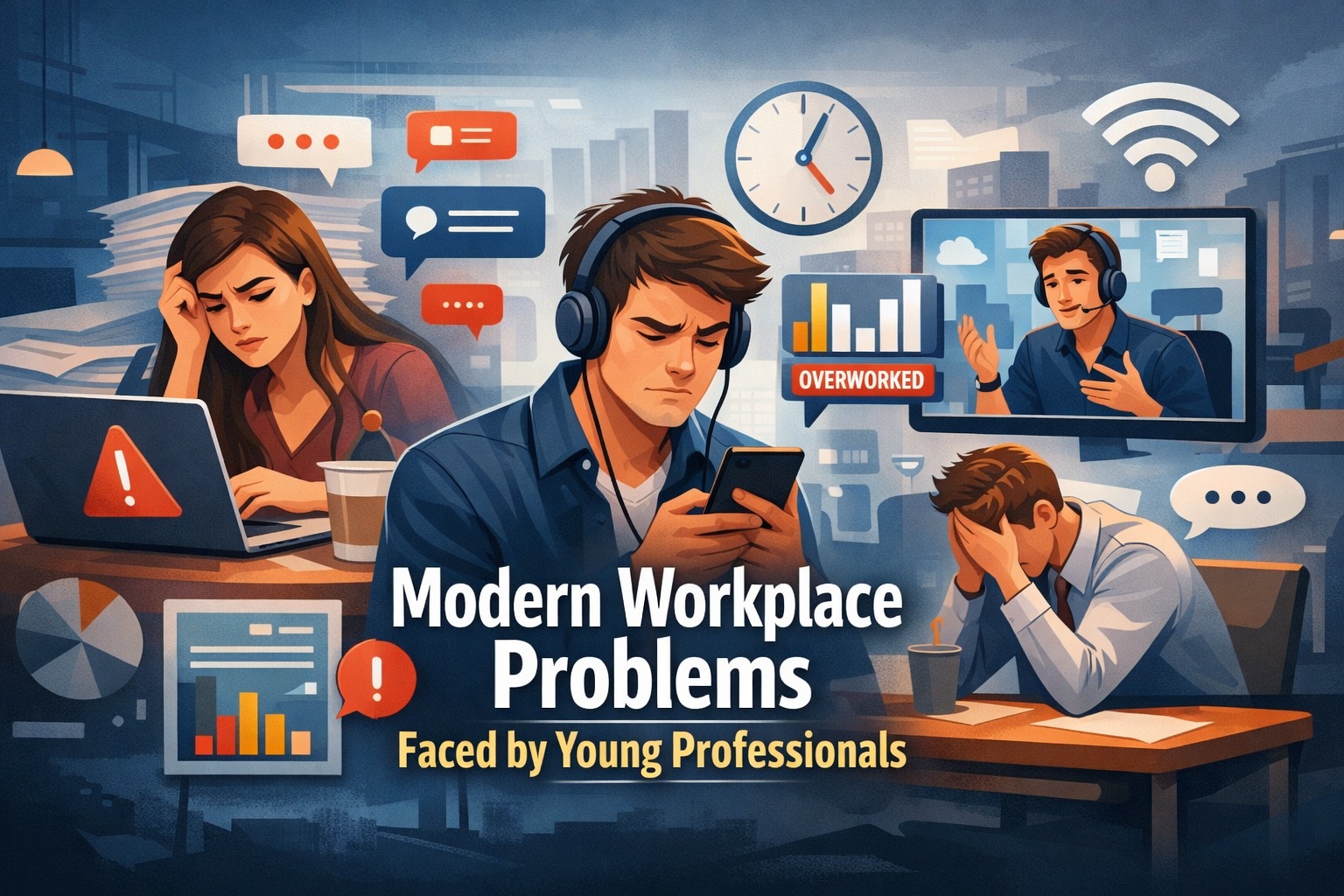
The modern workplace offers many opportunities for young professionals to grow and succeed. However, behind the flexible work culture and digital innovation, many employees still face serious challenges in their careers. From work-life imbalance to job insecurity, these workplace problems can affect productivity, mental health, and long-term career development.
Young professionals today are expected to adapt quickly, compete globally, and maintain high performance in fast-changing environments. Understanding these workplace problems is important to help individuals and companies create healthier and more productive work environments.
WORK-LIFE BALANCE BECOMES HARDER TO MAINTAIN
One of the biggest challenges faced by young professionals is maintaining a healthy work-life balance. Many employees struggle to separate personal life from work responsibilities, especially with remote and hybrid working systems becoming more common.
Technology allows employees to stay connected at all times, but this often creates pressure to respond to messages and complete tasks outside working hours. As a result, many young workers experience burnout, stress, and fatigue.
Long working hours can also reduce personal time for family, hobbies, and self-development. Without proper balance, productivity and motivation may decline over time.
HIGH WORK EXPECTATIONS AND COMPETITION
Modern companies often demand fast results and high productivity from employees. Young professionals are expected to multitask, learn new skills quickly, and compete with experienced workers in highly competitive industries.
Social media and professional networking platforms also increase pressure because people constantly compare their achievements with others. This situation can lower self-confidence and create anxiety among workers who feel left behind.
In some workplaces, unrealistic deadlines and excessive workloads make employees feel overwhelmed. If companies fail to provide proper support, employee satisfaction and loyalty may decrease significantly.
JOB INSECURITY IN THE DIGITAL ERA
Technological advancements have changed the way companies operate. Automation, artificial intelligence, and digital transformation create uncertainty for many workers. Young professionals often worry that their skills may become outdated in the future.
Contract-based employment and freelance work are also becoming more common. While these systems offer flexibility, they may not provide long-term job security or stable income. Many employees feel uncertain about their future career paths.
To survive in the modern workplace, workers must continuously improve their skills and adapt to industry changes. Lifelong learning is no longer optional but necessary for career growth.
MENTAL HEALTH ISSUES IN THE WORKPLACE
Mental health problems among young professionals continue to rise. Stress, anxiety, and emotional exhaustion are often caused by excessive workloads, toxic work environments, and career uncertainty.
Many employees hesitate to discuss mental health issues because they fear being judged as weak or unprofessional. Unfortunately, ignoring mental health can lead to decreased productivity and serious emotional problems.
Companies now realize the importance of employee well-being. Many organizations have started providing mental health programs, flexible schedules, and counseling support to create healthier workplaces.
LACK OF CAREER DEVELOPMENT OPPORTUNITIES
Another common workplace problem is limited career growth. Young professionals want opportunities to learn, receive mentorship, and develop their potential. However, not all companies provide clear career paths for employees.
Without professional development opportunities, employees may lose motivation and eventually seek better opportunities elsewhere. High employee turnover often happens when workers feel undervalued and unsupported.
Organizations that invest in training programs and employee development usually build stronger and more loyal teams. Career growth opportunities are essential for maintaining employee engagement and satisfaction.
CONCLUSION
Modern workplace problems faced by young professionals continue to evolve alongside technological and economic changes. Work-life imbalance, job insecurity, mental health challenges, and career uncertainty are some of the major issues affecting today’s workforce.
To overcome these challenges, both employees and companies must work together to create supportive, flexible, and healthy work environments. Young professionals should continue improving their skills, while organizations should prioritize employee well-being and career development for long-term success.
Tentang Penulis
Gusti Ayu Tita
Penulis — Universitas STEKOM
Penulis aktif yang berfokus pada isu-isu akademik, teknologi pendidikan, dan pengembangan sumber daya manusia di lingkungan kampus.



