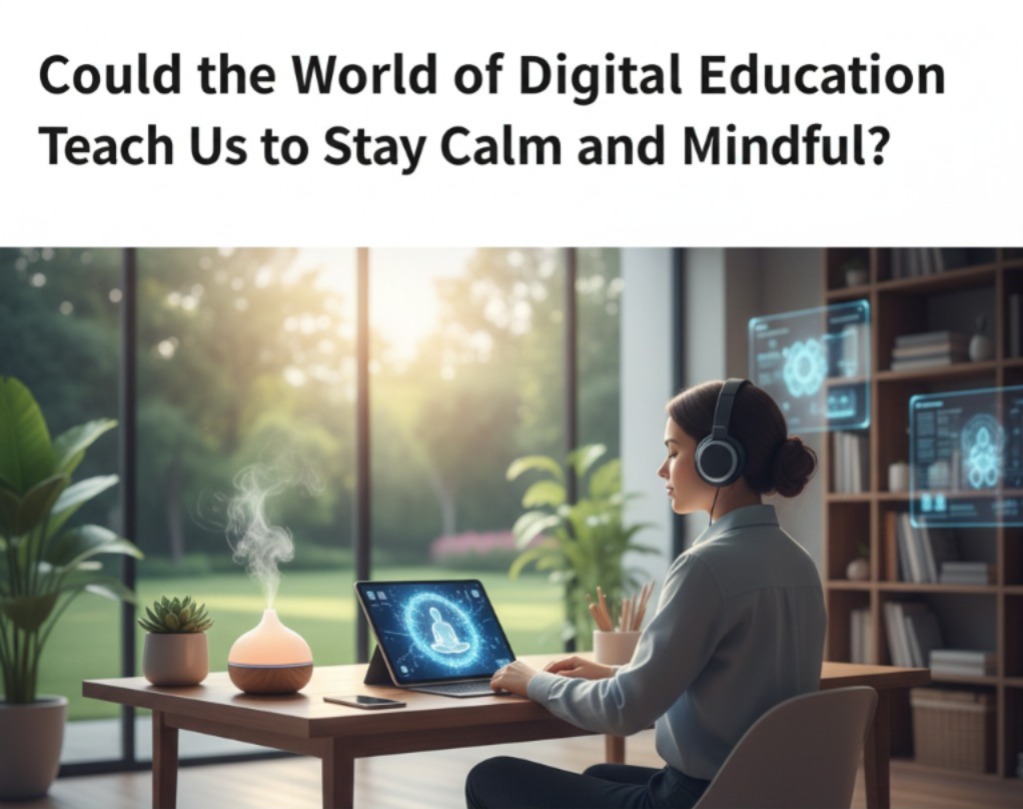
Education has now transformed into the digital realm. From virtual classrooms and online learning to the use of artificial intelligence (AI) in the learning process, technology has reshaped the way students understand the world. However, this rapid transformation also brings consequences: rising stress, digital distraction, and mental fatigue.
This raises an important question: can the fast-paced world of digital education actually become a medium for learning to stay calm and fully aware — or mindful — amid the noise of technology itself?
What Is Mindfulness and Why Is It Important in the Digital Education Era?
Mindfulness is the ability to be aware of what is happening within and around us without reacting excessively. It means being fully present in the current moment — not stuck in the past or rushing toward the future.
In the context of digital education, mindfulness matters because it:
* Helps students manage stress from heavy academic workloads,
* Improves concentration despite screen distractions and notifications,
* Encourages more reflective and meaningful learning.
Without full awareness, students can easily be swept away by the draining flow of digital multitasking, losing the essence of the learning process itself.
Technology: The Enemy or Ally of Mindfulness?
Many assume that technology is the main source of distraction. Endless notifications, piles of online tasks, and the pull of social media make it difficult to maintain focus.
However, when used consciously, technology can actually support mindfulness. The key lies not in the tool itself but in how it is used.
Here are several concrete examples of how technology can support mindfulness in education:
1. Meditation and Digital Reflection Apps
Apps such as Headspace, Calm, or Insight Timer provide accessible guided meditation. A short 5–10-minute session can help students calm their minds before or after studying.
2. Learning Platforms with Balance-Oriented Features
Some learning systems now include “break reminders” or focus modes that encourage students to pause and reset before continuing their tasks.
3. Wearable Technology for Physical Awareness
Smartwatches and fitness trackers monitor heart rate and stress levels, allowing students to recognize when their bodies need a moment to breathe and rest.
4. Virtual Classrooms that Encourage Empathy and Reflection
Digital classes are not only for academic content. Many teachers now include reflection sessions or online journaling to help students understand themselves, their emotions, and their reactions to learning.
Challenges of Mindfulness in Digital Education
Despite its potential, practicing mindfulness in the digital education environment still faces real challenges:
* Excessive digital distractions from multiple platforms,
* Academic pressure demanding quick results,
* Lack of reflection time in fast-paced learning routines,
* Misunderstanding of mindfulness as mere relaxation rather than sustained awareness training.
Overcoming these challenges requires structured approaches — not only adding mindfulness tools, but also building an education culture rooted in awareness and humanity.
Strategies for Creating a Mindful Digital Education System
Integrating Mindfulness into the Digital Curriculum
Short sessions of breathing exercises or reflection before learning can help establish mindful habits.
Training for Teachers and Educators
Teachers must understand how to facilitate mindfulness in digital classes to create a calmer and more focused learning environment.
Setting Boundaries for Technology Use
Scheduled digital breaks help maintain balance between online activity and real-life presence.
Teaching Ethical and Reflective Digital Literacy
Students must learn to use technology not only efficiently but also wisely and mindfully.
Digital education does not have to separate us from inner peace. With proper awareness and strategies, technology can become a bridge to mindfulness — helping students, teachers, and the entire education ecosystem find balance amidst digital acceleration.
The key lies in transforming the way we use technology: not merely as a productivity tool, but as a medium to cultivate attention, empathy, and calmness.
In this way, digital education can shape a generation that is not only intellectually capable but also mindful and emotionally grounded.
Tentang Penulis
Gusti Ayu Tita
Penulis — Universitas STEKOM
Penulis aktif yang berfokus pada isu-isu akademik, teknologi pendidikan, dan pengembangan sumber daya manusia di lingkungan kampus.