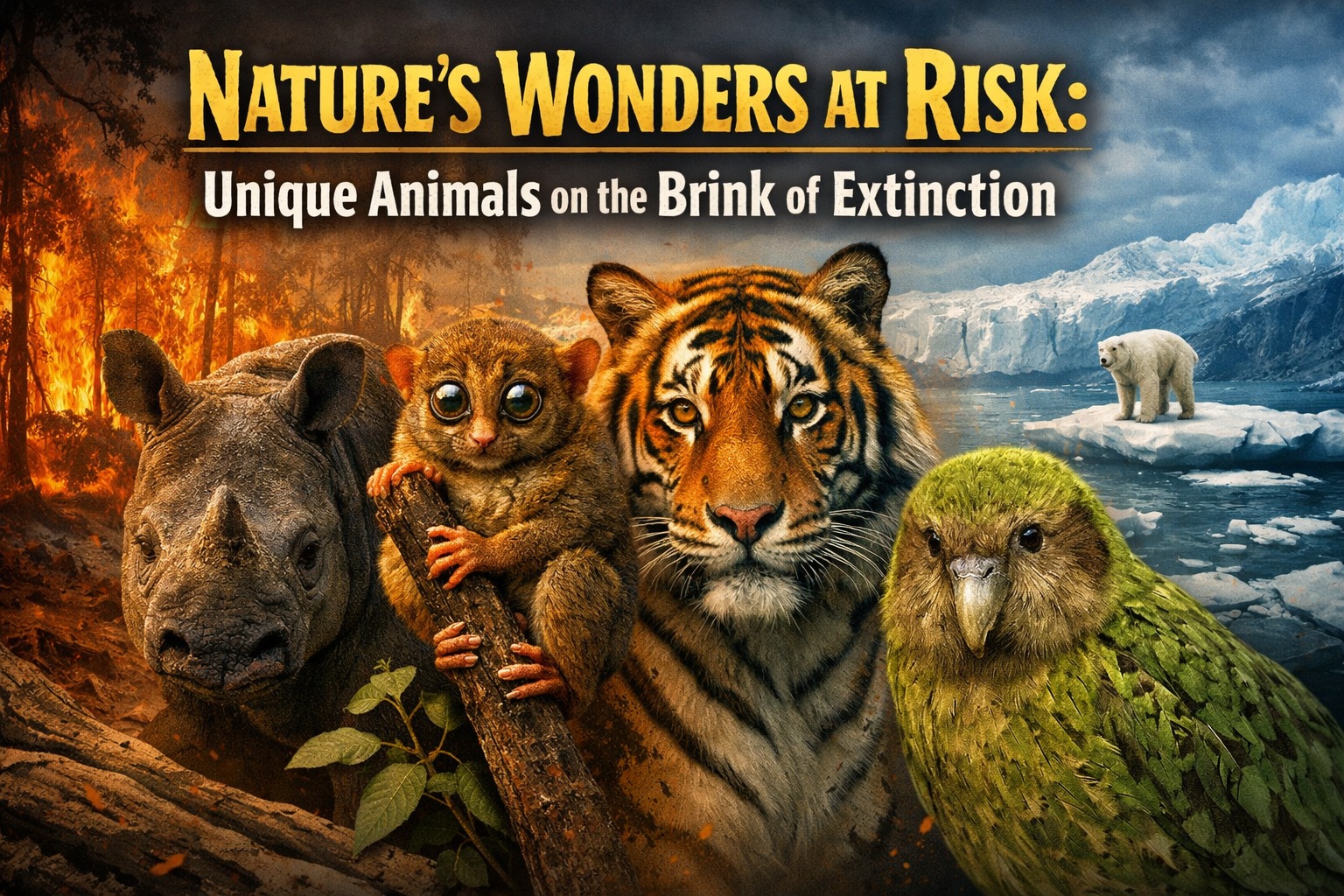
The Earth is home to millions of incredible species, many of which exist nowhere else in the world. From colorful birds hidden deep in tropical forests to rare marine animals swimming in remote oceans, wildlife plays a vital role in maintaining the balance of nature. However, climate change, habitat destruction, illegal hunting, and pollution are pushing many unique animals toward extinction. If immediate conservation efforts are not taken, future generations may only know these creatures through photographs and history books.
WHY ANIMAL EXTINCTION IS A GLOBAL CONCERN
Animal extinction does not only affect wildlife. It also impacts ecosystems, food chains, and human life. Every species has an important role in nature. When one species disappears, the balance of the ecosystem can collapse, affecting plants, animals, and even communities that depend on natural resources.
Human activities remain the largest cause of extinction. Deforestation for agriculture, excessive fishing, industrial pollution, and illegal wildlife trade continue to threaten endangered species across the globe. Rising global temperatures also force animals to adapt quickly or lose their habitats completely.
UNIQUE ANIMALS FACING EXTINCTION
AMUR LEOPARD
The Amur leopard is considered one of the rarest big cats in the world. Native to the forests of eastern Russia and northeastern China, this leopard has beautiful spotted fur adapted to cold environments. Unfortunately, illegal hunting and habitat loss have reduced its population dramatically.
Conservation organizations are now working to protect forests and stop poaching activities. Although the population has slightly improved in recent years, the species still remains critically endangered.
VAQUITA
The vaquita is a small marine mammal found only in the Gulf of California, Mexico. It is known for its dark eye patches and shy nature. Sadly, the vaquita is dangerously close to extinction due to fishing nets used illegally in its habitat.
Experts believe only a small number remain in the wild. Without stronger protection and sustainable fishing practices, this rare porpoise could disappear forever.
SUMATRAN ORANGUTAN
The Sumatran orangutan is one of humanity’s closest relatives in the animal kingdom. Living in the rainforests of Indonesia, these intelligent primates are threatened by deforestation caused by palm oil plantations, logging, and forest fires.
Orangutans play a major role in spreading seeds throughout forests, helping ecosystems survive. Protecting their habitat is essential not only for the species but also for environmental sustainability.
AXOLOTL
The axolotl is a fascinating amphibian native to Mexico. Unlike most amphibians, it keeps its juvenile features throughout its life, including external gills. This unusual creature has become famous because of its ability to regenerate body parts.
Urban pollution and habitat destruction have placed the axolotl at serious risk. Conservation programs are trying to restore its natural habitat and increase awareness about its importance.
MAIN CAUSES OF EXTINCTION
HABITAT DESTRUCTION
Forests, wetlands, and oceans are being damaged by human development. As natural habitats disappear, animals lose food sources, shelter, and breeding areas.
ILLEGAL HUNTING
Poaching continues to threaten many species for profit. Animal parts such as ivory, fur, and exotic skins are still sold illegally in international markets.
CLIMATE CHANGE
Rising temperatures, melting ice caps, and changing weather patterns force animals to migrate or struggle to survive in unfamiliar environments.
POLLUTION
Plastic waste, toxic chemicals, and water contamination harm wildlife on land and in the ocean. Marine animals are especially vulnerable to pollution.
HOW PEOPLE CAN HELP SAVE ENDANGERED ANIMALS
Protecting wildlife requires cooperation from governments, organizations, and individuals. People can contribute by reducing plastic use, supporting conservation programs, avoiding products linked to deforestation, and spreading awareness about endangered species.
Education also plays an important role. When communities understand the value of biodiversity, they are more likely to support environmental protection efforts.
THE FUTURE OF EARTH’S BIODIVERSITY
Nature’s wonders are irreplaceable. Every endangered species represents a unique part of Earth’s biodiversity and natural history. Without immediate action, many extraordinary animals may vanish forever. Conservation efforts, stronger environmental policies, and public awareness are essential to ensure that future generations can continue to witness the beauty of wildlife in the natural world.
Protecting endangered animals is not just about saving species—it is about preserving the balance of life on Earth.
Tentang Penulis
Gusti Ayu Tita
Penulis — Universitas STEKOM
Penulis aktif yang berfokus pada isu-isu akademik, teknologi pendidikan, dan pengembangan sumber daya manusia di lingkungan kampus.