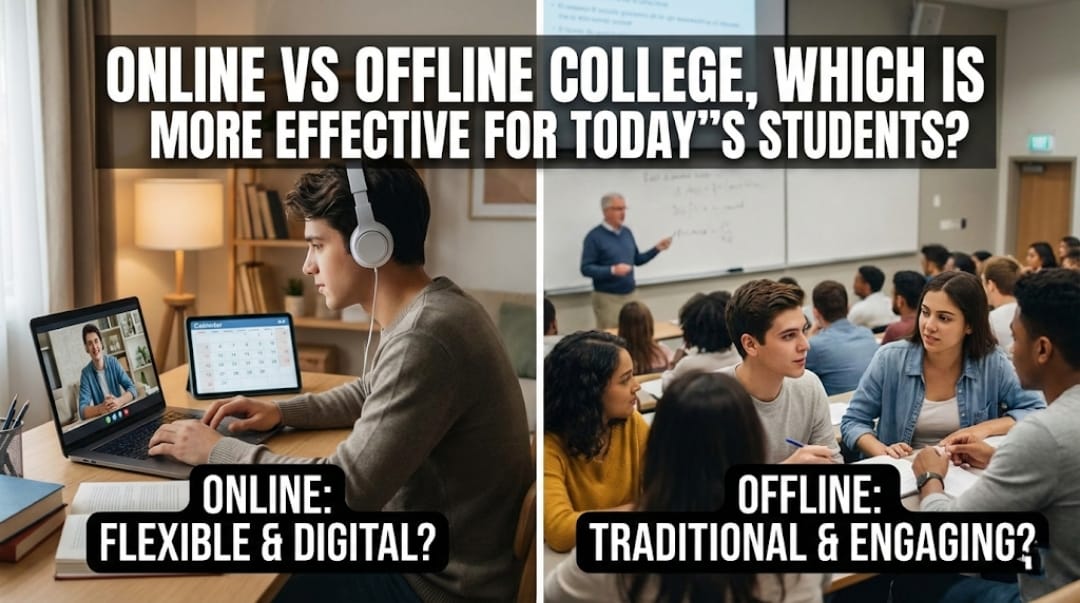
The rapid growth of digital technology has reshaped higher education across the globe. Universities now offer flexible online programs alongside traditional face-to-face classes. This shift raises an important question - online vs offline college, which is more effective for today’s students?
Effectiveness in education is not just about convenience. It involves academic performance, engagement, discipline, interaction, and long-term skill development. To determine which system works best, we need to examine both approaches from multiple perspectives.
UNDERSTANDING ONLINE AND OFFLINE COLLEGE
Online college refers to courses delivered through digital platforms such as Learning Management Systems (LMS), video conferencing tools, and virtual discussion forums. Students can attend lectures, submit assignments, and take exams remotely.
Offline college, on the other hand, involves traditional in-person classes held on campus. Students interact directly with professors and peers in a structured classroom environment.
The core difference lies in flexibility, communication style, and learning atmosphere.
ADVANTAGES OF ONLINE COLLEGE
Online college offers unmatched flexibility - students can learn from virtually anywhere with an internet connection. This model is particularly beneficial for working students or those balancing multiple responsibilities.
Key advantages include:
* Flexible schedules
* Access to recorded lectures
* Reduced commuting costs
* Wider access to digital resources
Students who are self-disciplined and comfortable with independent learning often thrive in online environments. The ability to replay lectures and manage study time independently can significantly support academic success.
However, online learning requires strong time management skills. Without structure, distractions can easily interfere with productivity.
BENEFITS OF OFFLINE COLLEGE
Offline college provides a structured academic setting that many students find motivating. Being physically present in a classroom can enhance concentration and accountability.
In-person interaction allows spontaneous discussions, immediate feedback, and clearer communication through body language and tone. These elements contribute to deeper understanding of complex subjects.
Additionally, campus life fosters social connections, networking opportunities, and extracurricular involvement that support both personal and professional growth.
FACTORS THAT DETERMINE EFFECTIVENESS
Choosing between online and offline college depends on several factors:
1. Individual learning style
2. Level of self-discipline
3. Access to reliable technology
4. Need for social interaction
5. Type of academic program
Students who value flexibility and autonomy may find online college more effective. Those who benefit from structured environments and direct interaction may perform better in offline settings.
In many cases, effectiveness is less about the format and more about how students engage with the system.
THE RISE OF HYBRID LEARNING
Many institutions are now adopting hybrid models - combining online flexibility with in-person interaction. This approach aims to balance independence with structure.
Hybrid learning reflects a broader educational evolution, recognizing that modern students have diverse needs and preferences.
CONCLUSION
There is no universal answer to whether online or offline college is more effective for today’s students. Both systems offer unique advantages and challenges.
Online college excels in flexibility and accessibility, while offline college strengthens interaction and structured learning. Ultimately, effectiveness depends on personal goals, discipline, and learning preferences.
The most successful students are not defined by the format they choose, but by how actively and consistently they engage in the learning process.
Tentang Penulis
Gusti Ayu Tita
Penulis — Universitas STEKOM
Penulis aktif yang berfokus pada isu-isu akademik, teknologi pendidikan, dan pengembangan sumber daya manusia di lingkungan kampus.