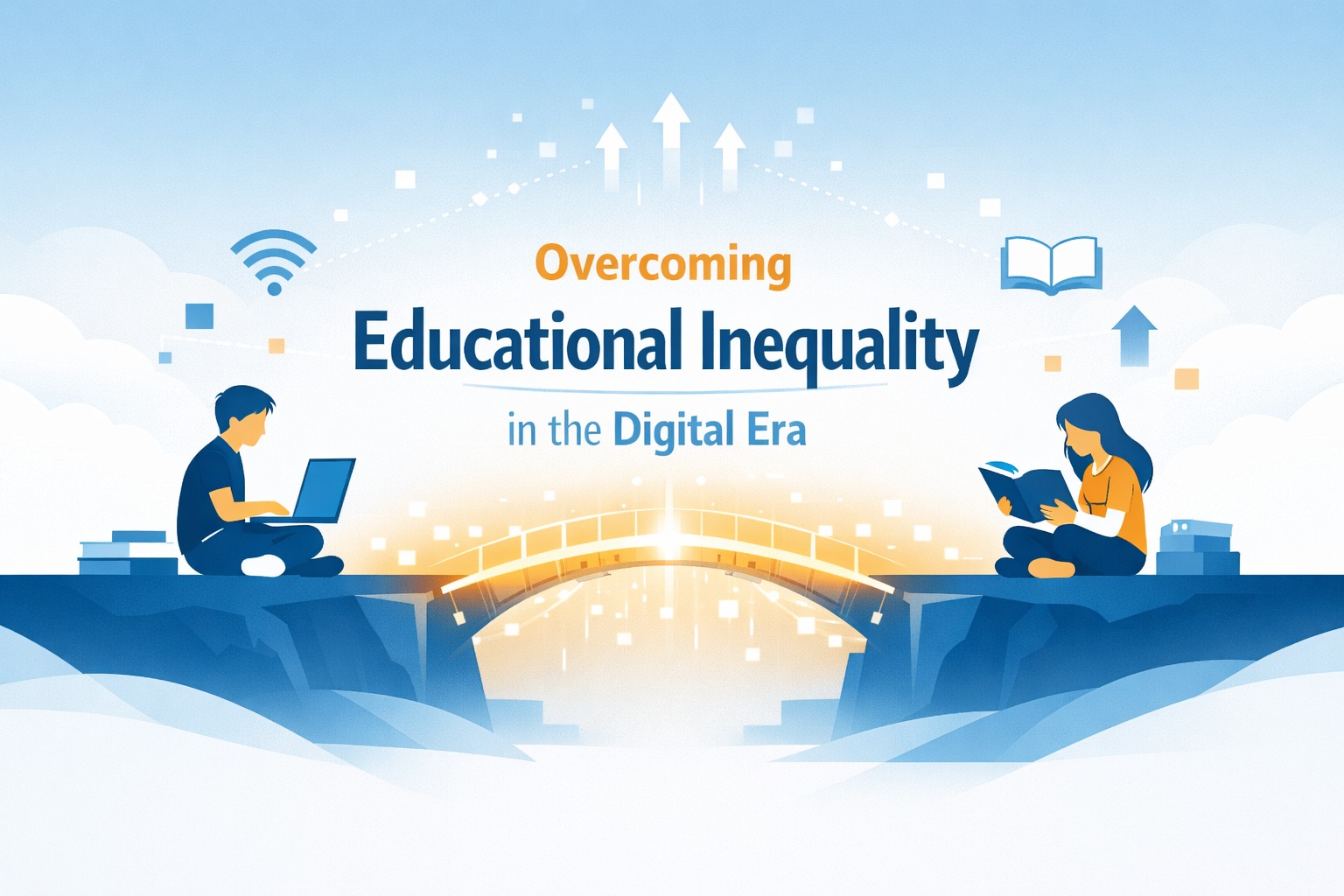
The digital era has transformed education in many positive ways. Technology has introduced online learning platforms, virtual classrooms, digital libraries, and interactive educational tools that make learning more accessible and flexible. However, despite these advancements, educational inequality remains one of the biggest challenges in modern society.
Educational inequality occurs when students do not receive equal opportunities to access quality education due to differences in economic conditions, technology access, geographic location, or social background. In the digital era, this gap can become even wider if governments and educational institutions fail to provide inclusive learning opportunities for all students.
THE IMPACT OF TECHNOLOGY ON EDUCATION
Technology has significantly changed the way education is delivered and accessed. Students can now learn through online courses, educational applications, and digital collaboration platforms.
Teachers also use technology to create more interactive and engaging learning experiences. Digital tools such as video conferencing, multimedia presentations, and online assessments have improved educational flexibility and efficiency.
However, the benefits of technology cannot be fully enjoyed by everyone because not all students have equal access to digital resources.
CAUSES OF EDUCATIONAL INEQUALITY
One major cause of educational inequality is the lack of access to technology and internet connectivity. Many students from low-income families or rural areas do not have laptops, smartphones, or stable internet connections needed for online learning.
Economic conditions also influence educational quality. Students from financially disadvantaged backgrounds often have fewer opportunities to access high-quality schools, tutoring, and learning resources.
Another factor is the unequal distribution of educational infrastructure and teacher quality between urban and rural areas.
THE DIGITAL DIVIDE IN EDUCATION
The digital divide refers to the gap between individuals who have access to digital technology and those who do not. In education, this divide creates unequal learning opportunities among students.
Students with strong internet access and modern devices can participate more effectively in digital learning environments. Meanwhile, students without adequate technology may struggle to keep up with lessons and assignments.
This digital divide can negatively affect academic performance, confidence, and future career opportunities for disadvantaged students.
THE ROLE OF TEACHERS IN REDUCING INEQUALITY
Teachers play an important role in helping reduce educational inequality. Educators should create inclusive learning environments that support students from different backgrounds and abilities.
Teachers also need to adapt their teaching methods to ensure that all students can participate in learning activities, regardless of technological limitations.
Continuous teacher training and professional development programs are essential for improving educational quality and digital teaching competence.
THE IMPORTANCE OF DIGITAL LITERACY
Digital literacy has become a crucial skill in the modern educational environment. Students need to understand how to use technology responsibly, search for reliable information, and communicate effectively online.
Without proper digital literacy, students may struggle to benefit from digital learning opportunities. Schools should include digital literacy education in their curriculum to prepare students for the future.
Improving digital literacy can also help reduce inequality by empowering students with essential technological skills.
STRATEGIES TO OVERCOME EDUCATIONAL INEQUALITY
Several strategies can help reduce educational inequality in the digital era. Governments should improve internet infrastructure and provide affordable access to technology for students in underserved areas.
Schools can also develop blended learning systems that combine online and offline learning methods to accommodate students with different technological access levels.
Scholarship programs, digital device support, and free educational resources can help disadvantaged students continue their education successfully.
In addition, collaboration between governments, schools, communities, and private organizations is necessary to create more inclusive educational systems.
CHARACTER EDUCATION IN THE DIGITAL ERA
While technology is important, character education should remain a priority in modern education. Students need values such as empathy, discipline, responsibility, and social awareness to become responsible members of society.
Educational institutions should encourage collaboration, respect, and equal opportunities among students from different backgrounds.
By combining technological advancement with character development, education can become more balanced and inclusive.
THE FUTURE OF INCLUSIVE EDUCATION
The future of education should focus on creating equal learning opportunities for all students. Technology can become a powerful tool for educational inclusion if it is supported by proper infrastructure and policies.
Artificial intelligence, online learning platforms, and digital collaboration tools can help improve educational accessibility in remote and underserved areas.
However, educational systems must continue to prioritize human values, social equality, and quality teaching to ensure sustainable educational development.
CONCLUSION
Overcoming educational inequality in the digital era is essential for building a fair and inclusive education system. Although technology offers many opportunities for learning improvement, unequal access to digital resources remains a significant challenge.
By improving internet infrastructure, strengthening digital literacy, supporting teachers, and promoting inclusive education policies, societies can reduce educational inequality effectively. With collaboration and innovation, education can provide equal opportunities for all students to succeed in the modern world.
Tentang Penulis
Gusti Ayu Tita
Penulis — Universitas STEKOM
Penulis aktif yang berfokus pada isu-isu akademik, teknologi pendidikan, dan pengembangan sumber daya manusia di lingkungan kampus.