
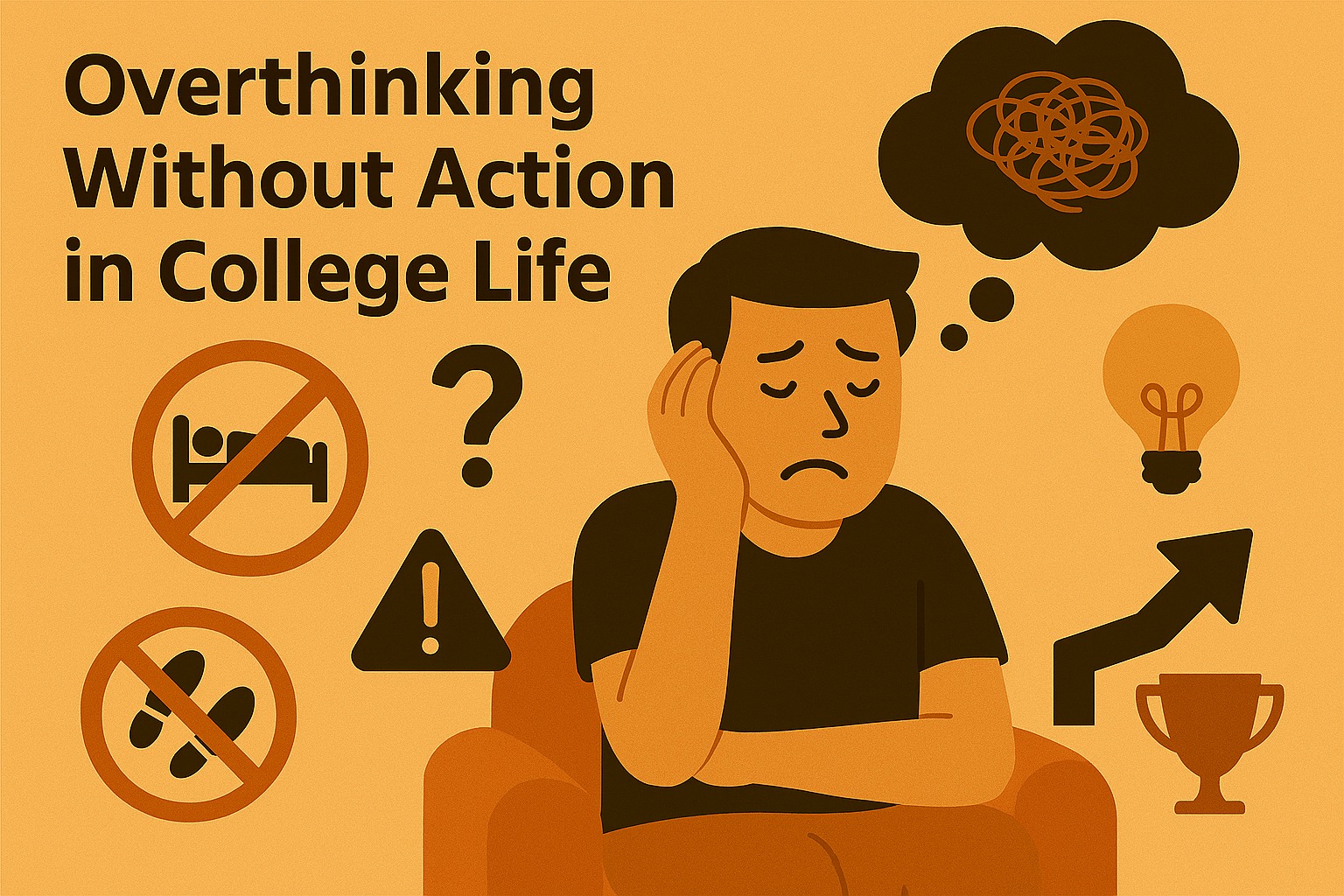
College life is filled with decisions, deadlines, and opportunities. From choosing a major to applying for internships, students constantly face situations that require thoughtful consideration. However, when thinking turns into overthinking without action, progress can quietly stall.
Overthinking without execution is a common challenge among college students. Instead of moving forward, they become trapped in endless analysis, doubt, and hesitation. This article explores how overthinking affects student growth and how to shift from excessive thinking to meaningful action.
UNDERSTANDING OVERTHINKING IN ACADEMIC LIFE
Overthinking happens when students repeatedly analyze a situation without reaching a decision. They may worry about choosing the wrong major, saying the wrong thing in class, or failing a project.
While careful planning is important, excessive analysis drains mental energy. Instead of gaining clarity, students often feel more confused and anxious. The longer they delay action, the more overwhelming the task becomes.
HOW ANALYSIS PARALYSIS BLOCKS PROGRESS
Analysis paralysis occurs when fear of making mistakes prevents students from taking the first step. They spend hours researching, comparing, and imagining worst-case scenarios.
As a result, deadlines approach, opportunities pass, and confidence decreases. In many cases, imperfect action would have produced better results than perfect planning without execution. Growth requires movement, not just reflection.
THE IMPACT ON CONFIDENCE AND PRODUCTIVITY
Overthinking not only delays action but also weakens self-belief. When students repeatedly postpone decisions, they begin to doubt their ability to handle responsibility.
Productivity also declines. Time that could be spent completing assignments or building skills is consumed by unnecessary mental debates. This pattern creates stress and reduces academic performance.
WHY ACTION CREATES CLARITY
Many students wait for complete certainty before acting. However, clarity often comes after taking action, not before. Real experience provides feedback that no amount of thinking can replace.
For example, joining a student organization or applying for an internship may feel intimidating. Yet, once students take that step, they gain insight and confidence that help them grow.
PRACTICAL STRATEGIES TO STOP OVERTHINKING
Shifting from overthinking to action requires intentional habits. Students can try the following strategies:
- Set time limits for decision-making
- Break large tasks into smaller steps
- Focus on progress rather than perfection
- Accept that mistakes are part of learning
- Take one small action daily toward a goal
These techniques help build momentum and reduce mental clutter.
BUILDING AN ACTION-ORIENTED MINDSET
An action-oriented mindset emphasizes learning through doing. Instead of asking, “What if I fail?” students can ask, “What will I learn if I try?”
This shift encourages experimentation and resilience. College is not only a place to think critically but also to practice, apply, and grow through experience.
CONCLUSION
Overthinking without action in college life can silently block personal and academic growth. Endless analysis, fear of mistakes, and delayed decisions reduce productivity and confidence.
By prioritizing small, consistent actions, students can transform hesitation into progress. Thinking is valuable, but action is what turns ideas into real development and long-term success.
Tentang Penulis
Gusti Ayu Tita
Penulis — Universitas STEKOM
Penulis aktif yang berfokus pada isu-isu akademik, teknologi pendidikan, dan pengembangan sumber daya manusia di lingkungan kampus.



