
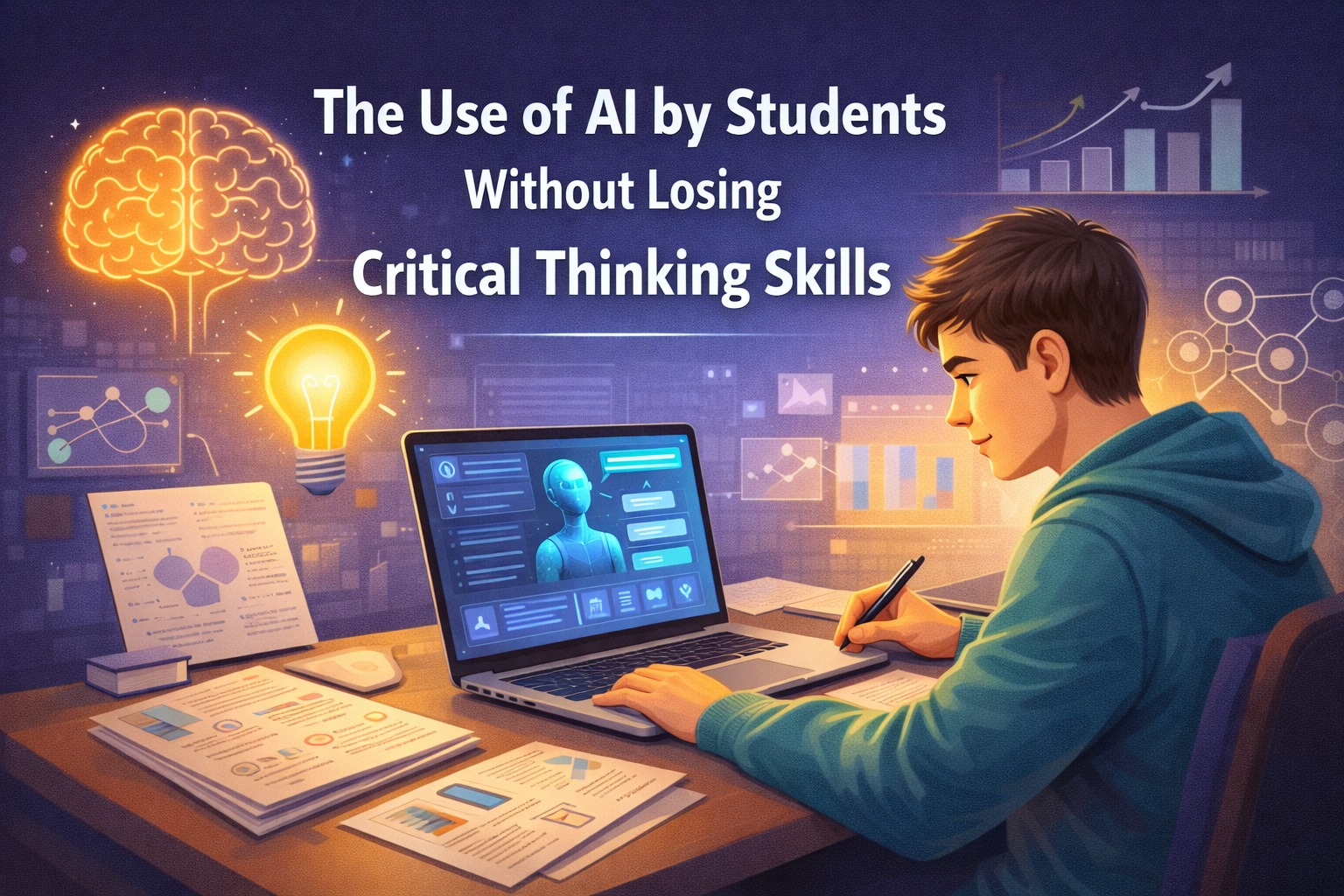
Advancements in Artificial Intelligence (AI) technology have become an inseparable part of students’ lives. Various AI-based applications are now widely used to support the learning process, ranging from searching for references to organizing writing outlines. However, the use of AI must be done wisely so that it does not diminish critical thinking skills, which are the core foundation of the academic world.
This article discusses how students can optimally utilize AI without losing their ability to think independently and analytically.
The Role of AI in Students’ Academic Life
AI serves as a supporting tool that can accelerate students’ learning processes. This technology helps simplify information, provide learning material recommendations, and support the understanding of complex concepts. In the dynamic environment of higher education, AI becomes a practical solution for managing time and heavy academic workloads.
However, AI’s role should be limited to a supporting function, not as a replacement for the thinking process itself. Students still need to deeply understand the material to achieve meaningful learning outcomes.
The Benefits of Using AI Wisely
When used appropriately, AI can enhance students’ productivity and learning quality. AI assists in the early stages of learning, such as idea exploration, data collection, and outline preparation. As a result, students have more time to analyze information, develop arguments, and critically evaluate sources.
In addition, AI can encourage independent learning. Students can adjust their learning pace according to their abilities, making the learning process more effective and efficient.
The Risks of Overdependence on AI
On the other hand, excessive reliance on AI may reduce students’ critical thinking abilities. Dependence on instant AI-generated outputs can make students less accustomed to conducting in-depth analysis and academic reflection. This condition may hinder long-term intellectual development.
Therefore, it is important for students to actively question, evaluate, and verify information generated by AI.
Strategies to Maintain Critical Thinking Skills
To maintain critical thinking skills, students need to apply balanced AI usage strategies. One effective approach is to use AI as an initial support tool rather than a final answer provider. Students are encouraged to review AI-generated results, compare them with other sources, and draw conclusions based on their own understanding.
Academic discussions, direct engagement with literature, and independent writing practice are also essential steps in maintaining critical thinking skills amid technological advancements.
Conclusion
The use of AI by students is inevitable in the digital era. AI offers numerous benefits when used wisely and responsibly. However, students must maintain a balance between utilizing technology and developing critical thinking skills. With the right approach, AI can become a supportive learning partner rather than an obstacle to students’ intellectual development.
Tentang Penulis
Gusti Ayu Tita
Penulis — Universitas STEKOM
Penulis aktif yang berfokus pada isu-isu akademik, teknologi pendidikan, dan pengembangan sumber daya manusia di lingkungan kampus.



