
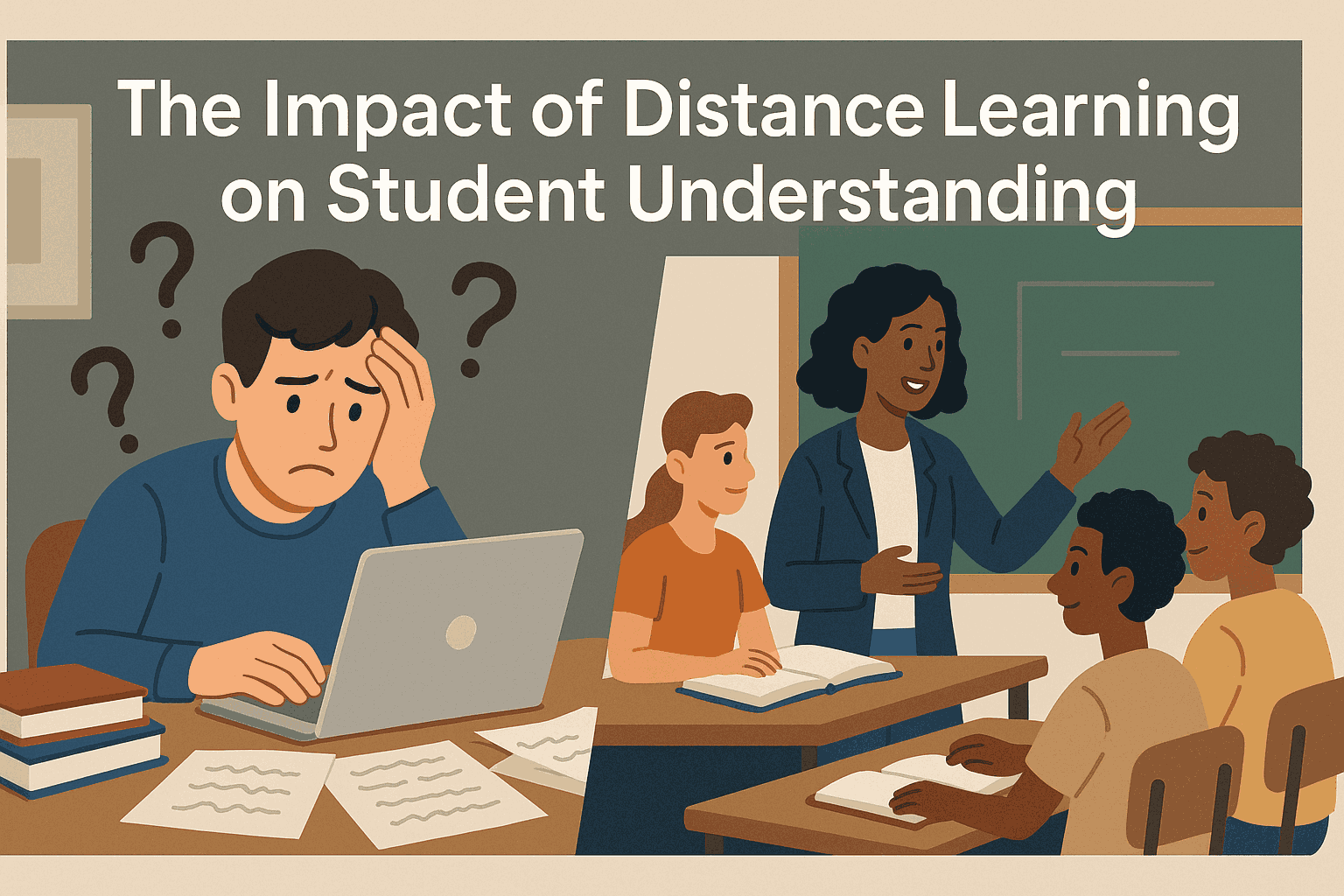
Distance learning became a primary solution in the world of education during the COVID-19 pandemic. As technology continues to advance, this learning method is being adopted by more educational institutions—even after the pandemic has subsided. However, an important question arises: how does distance learning affect students' understanding? This article explores both the positive and negative impacts of remote learning on student comprehension.
1. FLEXIBILITY IN TIME AND ACCESS TO LEARNING MATERIALS
One of the biggest advantages of distance learning is the flexibility in scheduling and easy access to learning materials. Students can set their own study times and access digital materials anytime. This allows learners to study at their own pace, which can help some students better grasp the material. Access to recorded lessons also enables students to revisit topics they previously struggled to understand.
2. LIMITED DIRECT INTERRACTION WITH TEACHESRS
One of the main challenges of remote learning is the lack of face-to-face interaction with instructors. In traditional classrooms, students can ask questions directly when they don’t understand something. In contrast, online learning often faces technical issues—like unstable internet connections or poor audio—which can disrupt communication and hinder effective learning.
3. LACK OF GROUP DISCUSIONS AND COLLABORATION
Distance learning often limits students’ ability to participate in meaningful group discussions or collaborative projects. Discussion is a vital method for deepening understanding. With online learning, students may find it harder to collaborate due to platform limitations or different time zones, reducing the opportunity to learn from diverse perspectives.
4. HIGH LEVEL OF INDEPENDENT LEARNING REQUIRED
Remote learning demands a higher level of self-discipline and independence. Students must be able to manage their time and stay committed to self-guided learning. For some, this can enhance understanding as they become more proactive in seeking out additional resources. However, students who struggle with discipline may find online learning difficult, leading to poor comprehension.
5. THE ROLE OF TECHNOLOGY IN UDERSTANDING
Technology tools such as videos, interactive presentations, and digital simulations can support better student understanding. E-learning platforms often provide visual and interactive features to enhance learning. However, not all students have equal access to advanced technology. Those in remote or underprivileged areas may face difficulties due to limited internet access or lack of proper devices.
6. DISTRACTIONS AND ENVIRNMENTAL INTERRUPTIONS
Home learning environments are often less effective than classrooms. Students may face constant distractions from family members, household responsibilities, or background noise. These environmental challenges can affect concentration, making it harder for students to fully absorb the material.
7. DECREASED LEARNING MOTIVATION
A major issue with distance learning is the decline in student motivation. The lack of in-person interaction with teachers and peers can make students feel emotionally disconnected from the learning process. This decrease in engagement and social support can lead to reduced motivation, ultimately affecting comprehension.
8. THE IMPORTANCE OF SUPPORT FROM PARENTS AND TEACHERS
Parental and teacher support plays a crucial role in making distance learning successful. Educators need to provide clear guidance and extra help for students who struggle with understanding. At the same time, parents can create a supportive and distraction-free learning environment at home. With proper support, distance learning can be more effective in improving student understanding.
CONCLUSION
The impact of distance learning on student understanding varies greatly depending on factors such as self-discipline, access to technology, and environmental support. While it offers flexibility and better access to materials, remote learning also presents challenges in interaction, group work, and maintaining focus. To ensure distance learning improves student comprehension, a holistic approach is necessary—one that includes strong support from teachers, parents, and technology access.
Tentang Penulis
Gusti Ayu Tita
Penulis — Universitas STEKOM
Penulis aktif yang berfokus pada isu-isu akademik, teknologi pendidikan, dan pengembangan sumber daya manusia di lingkungan kampus.



