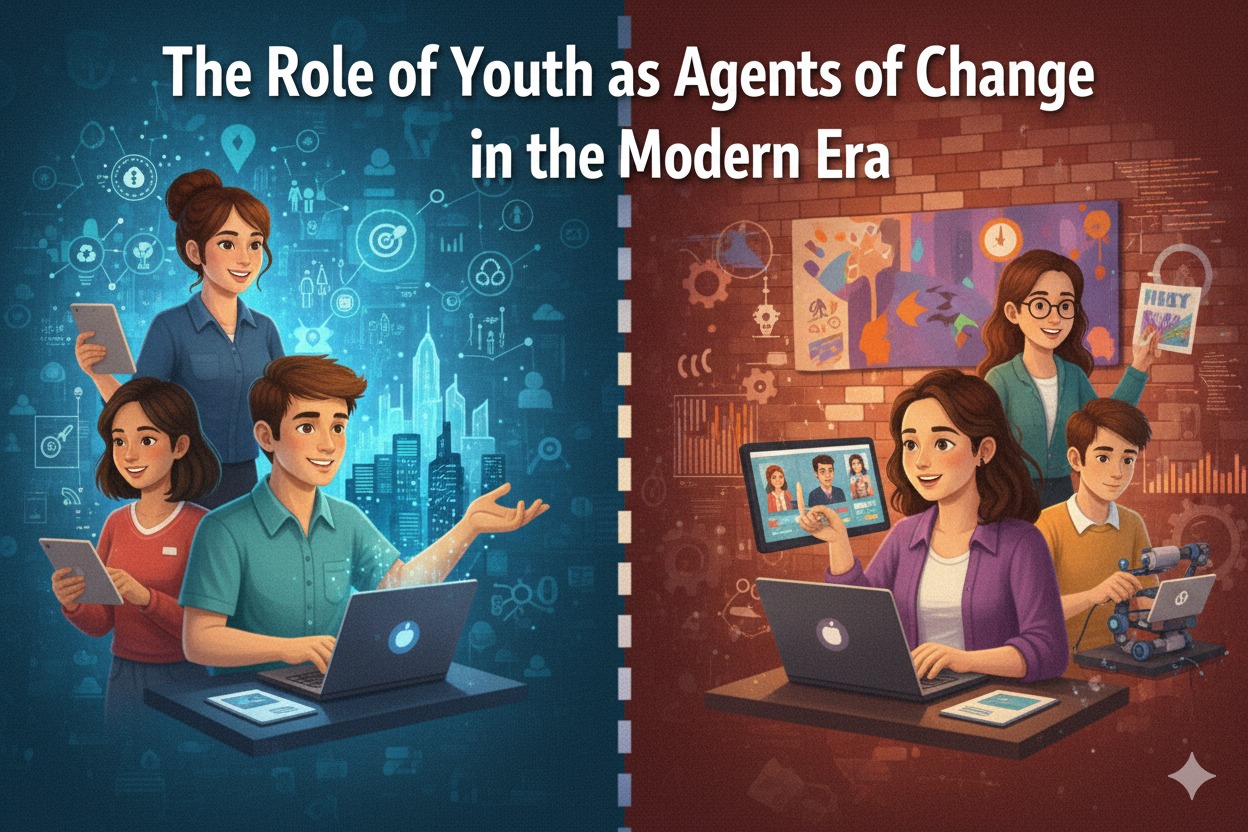
Youth as Agents of Change in the Modern Era
Adolescents represent an age group with great potential to drive social change. In the modern era—marked by rapid technological development, globalization, and the fast flow of information—the role of youth has become increasingly strategic. They are not only the future generation of the nation, but also agents of change who are capable of bringing positive values to society.
Youth and the Challenges of the Modern Era
The modern era presents various challenges, including advances in digital technology, cultural shifts, and social and environmental issues. Young people grow up alongside social media, artificial intelligence, and unlimited access to information. These conditions require youth to possess strong digital literacy, critical thinking skills, and the ability to filter information wisely so they are not easily influenced by negative impacts such as hoaxes, radicalism, or consumerist behavior.
Youth as Agents of Social Change
As agents of change, youth play an important role in creating a better social environment. Through creativity, critical thinking, and a spirit of innovation, young people can contribute to various fields, including education, social development, culture, and the environment. Participation in organizations, communities, and social movements provides a platform for youth to express their aspirations and offer real solutions to problems in their surroundings.
Using Technology for Positive Change
Digital technology offers significant opportunities for youth to contribute on a wider scale. Social media can be used as a tool for educational campaigns, promoting tolerance, and mobilizing social action. Many young people have successfully initiated positive movements such as environmental awareness campaigns, digital literacy initiatives, and technology-based social entrepreneurship. This shows that when used wisely, technology can be an effective tool for positive change.
The Role of Education and the Social Environment
Education and the surrounding environment play a crucial role in shaping youth as agents of change. Education should not focus solely on academic achievement, but also on character building, leadership, and social awareness. In addition, families, schools, and communities need to provide space and trust for young people to actively participate in decision-making processes and social activities.
Conclusion
The role of youth as agents of change in the modern era is vital and cannot be ignored. With strong literacy skills, solid character, and the positive use of technology, young people can become key drivers of change toward a more progressive and civilized society. Therefore, synergy between youth, education, and the social environment must continue to be strengthened so that the potential of young people can develop optimally and sustainably.
Tentang Penulis
Gusti Ayu Tita
Penulis — Universitas STEKOM
Penulis aktif yang berfokus pada isu-isu akademik, teknologi pendidikan, dan pengembangan sumber daya manusia di lingkungan kampus.