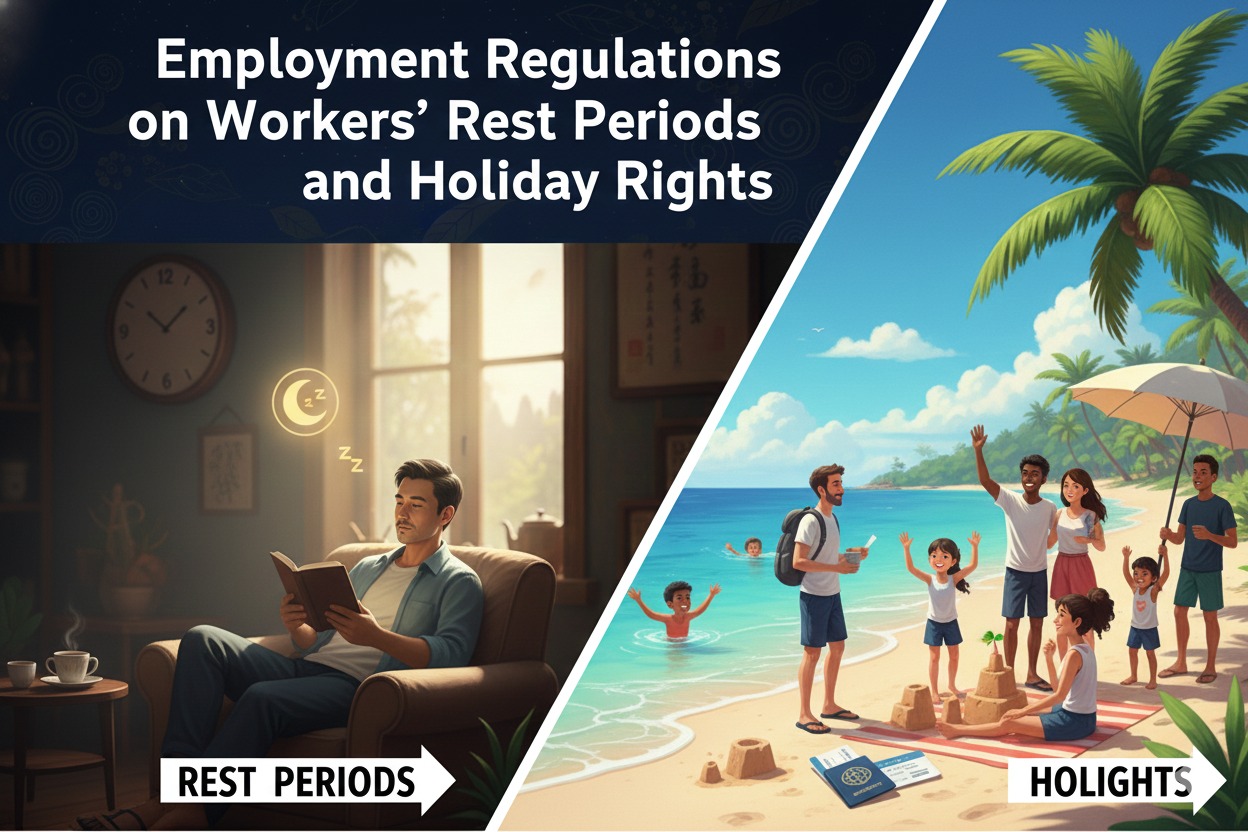
LABOR REGULATIONS ON REST PERIODS AND WORKERS’ LEAVE ENTITLEMENTS
Rest periods and leave entitlements are essential components of labor protection. These regulations are designed to safeguard workers’ physical and mental health and to ensure a balance between work and personal life. In Indonesia, provisions regarding rest periods and workers’ leave rights are clearly regulated under labor laws.
So, what are the workers’ rights related to rest periods and leave according to the applicable regulations? The following is a comprehensive explanation.
LEGAL BASIS FOR REST PERIODS AND LEAVE ENTITLEMENTS
Regulations on workers’ rest periods and leave are governed by:
* Law Number 13 of 2003 on Manpower
* Law Number 11 of 2020 on Job Creation
* Government Regulation Number 35 of 2021
These regulations apply to both fixed-term employment agreements (PKWT) and indefinite-term employment agreements (PKWTT).
1. NORMAL WORKING HOURS
Before discussing rest periods, it is important to understand the provisions on normal working hours, namely:
* 7 hours per day and 40 hours per week for a 6-day workweek, or
* 8 hours per day and 40 hours per week for a 5-day workweek
These provisions serve as the basis for calculating rest entitlements and overtime.
2. DAILY REST ENTITLEMENT
Workers are entitled to daily rest periods, which include:
* A minimum of 30 minutes after working continuously for 4 hours
* This rest period is not counted as working time
Daily rest is intended to prevent fatigue and maintain worker productivity.
3. WEEKLY REST (DAYS OFF)
Workers are entitled to weekly rest in the form of:
* 1 day off after 6 working days, or
* 2 days off after 5 working days
These days off must be provided by the employer and cannot be eliminated without a clear legal basis.
4. ANNUAL LEAVE ENTITLEMENT
Every worker who has been employed for 12 consecutive months is entitled to:
* A minimum of 12 working days of annual leave
The implementation of annual leave is regulated based on mutual agreement between the worker and the employer; however, the right to annual leave may not be abolished.
5. PUBLIC HOLIDAYS AND SPECIAL LEAVE
In addition to annual leave, workers are also entitled to:
* Leave on official public holidays
* Special leave, such as:
* Marriage leave
* Leave for a child’s marriage
* Leave for a wife’s childbirth
* Bereavement leave for the death of a family member
The types and duration of special leave are regulated by law and company regulations.
SANCTIONS FOR NON-COMPLIANT EMPLOYERS
Employers who violate provisions on rest periods and leave entitlements may be subject to:
* Administrative sanctions
* Written warnings
* Fines
* Other sanctions in accordance with applicable laws and regulations
These sanctions aim to protect workers’ rights and encourage employer compliance.
CONCLUSION: REST PERIODS AND LEAVE ARE FUNDAMENTAL WORKERS’ RIGHTS
Rest periods and leave entitlements are normative workers’ rights guaranteed by law. Employers are required to comply with these provisions as part of labor protection and legal responsibility.
For workers, understanding these rights is essential to maintaining health, productivity, and work–life balance. For employers, compliance with labor regulations helps create a fair, professional, and sustainable working environment.
Tentang Penulis
Gusti Ayu Tita
Penulis — Universitas STEKOM
Penulis aktif yang berfokus pada isu-isu akademik, teknologi pendidikan, dan pengembangan sumber daya manusia di lingkungan kampus.