
Different Learning Styles: Public vs. Private Universities
Each university has a different learning character. Public and private universities are often perceived to have different learning styles, from teaching methods to the interaction patterns between lecturers and students. Understanding the differences in learning styles between these two types of campuses is important so prospective students can adjust and maximize their academic potential from the start of college.
LEARNING SYSTEM IN PUBLIC UNIVERSITIES
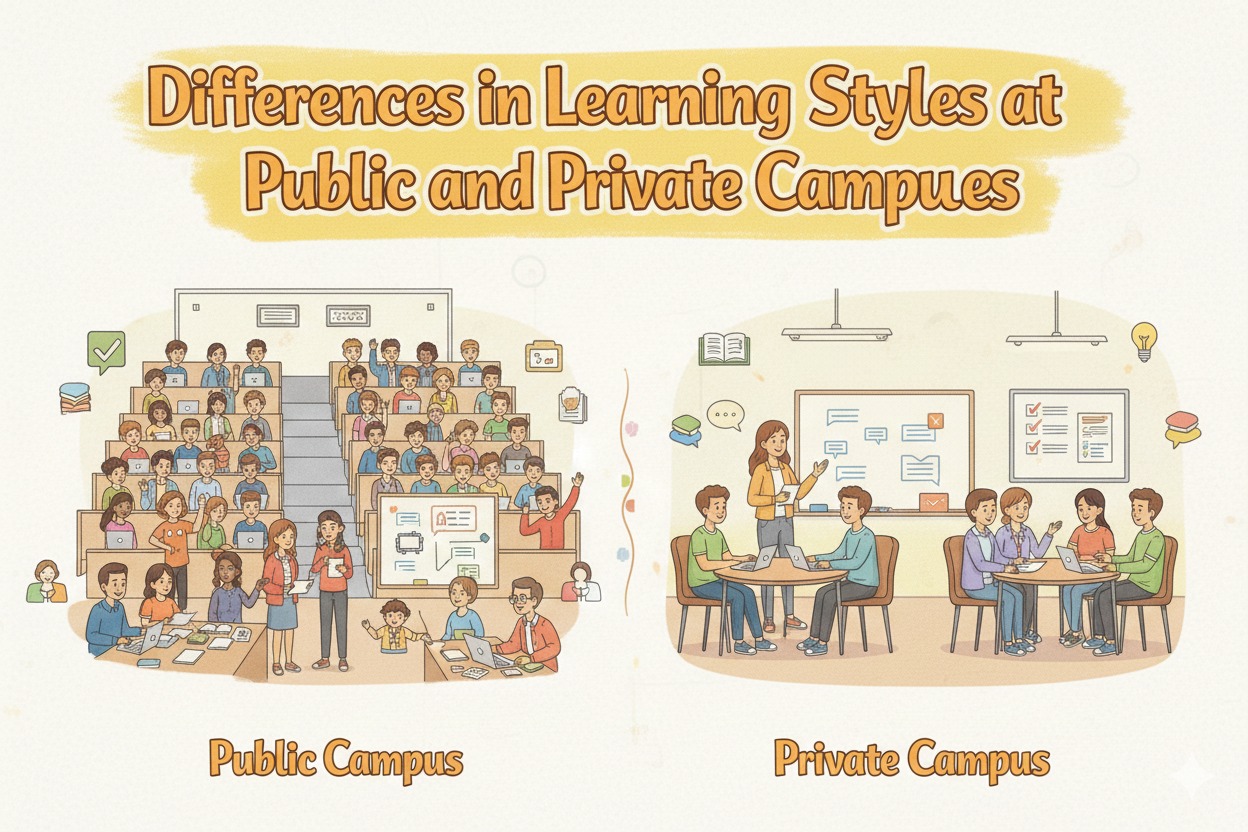
Public universities generally implement a learning system that emphasizes student independence. The number of students in one class is relatively large, so the learning process is more focused on lecturer explanations and general discussions. Students are expected to actively seek additional references, read journals, and manage their study time independently.
This approach trains critical and analytical thinking skills but can be challenging for students who are used to intensive guidance.
LEARNING STYLE IN PRIVATE UNIVERSITIES
Unlike public universities, private universities tend to have smaller classes with closer interaction between lecturers and students. Learning methods are often more practical, combining theory with practice through case studies, group projects, and presentations.
This learning style is suitable for students who need more structured guidance and a communicative and collaborative learning environment.
DIFFERENCE IN TEACHING METHODS
In public universities, lecturers often act as facilitators who provide a framework of material, while students are responsible for deepening the topics independently. In contrast, lecturers in private universities usually provide more intensive guidance, give regular evaluations, and monitor student progress.
This difference in teaching methods affects how students understand material and develop academic skills.
IMPACT OF LEARNING STYLE ON STUDENTS
The learning style applied by the campus will shape students’ habits and character. Public universities tend to produce students who are independent and resilient under academic pressure, while private universities encourage students to be more communicative, practical, and accustomed to working in teams.
Both have positive values as long as students can adapt and utilize the existing system.
WHICH LEARNING STYLE IS THE MOST SUITABLE?
There is no absolute best learning style. The best choice depends on each individual’s character, needs, and learning style. Students who like independent exploration may be more suitable for public universities, while those who prefer intensive guidance and practical learning may feel more comfortable at private universities.
CONCLUSION
The differences in learning styles between public and private universities are not about which is superior, but about suitability. By understanding the learning characteristics of each campus, prospective students can make choices that align with their potential. Ultimately, academic success is determined by willingness, consistency, and the ability to adapt to any academic environment.
Tentang Penulis
Gusti Ayu Tita
Penulis — Universitas STEKOM
Penulis aktif yang berfokus pada isu-isu akademik, teknologi pendidikan, dan pengembangan sumber daya manusia di lingkungan kampus.



