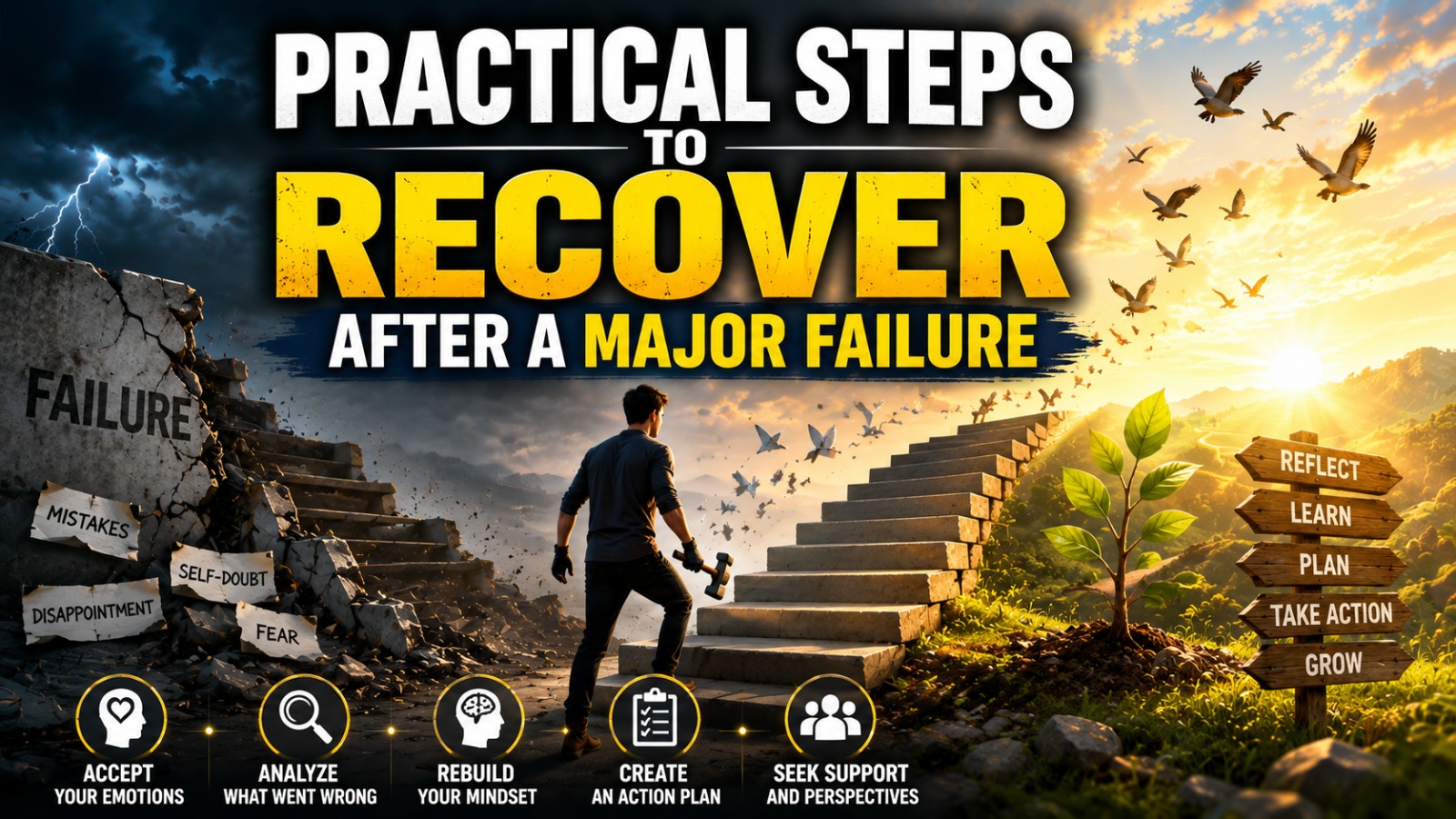
Failure can feel overwhelming, especially when it disrupts plans you have worked hard to build. Yet history shows that setbacks often become the starting point for stronger growth. Learning how to recover effectively after a major failure is not just about resilience—it is about transforming adversity into momentum.
WHY FAILURE HURTS SO MUCH
A major setback can affect confidence, motivation, and emotional stability. People often attach personal identity to achievements, so when things collapse, it feels deeply personal. This reaction is normal and rooted in psychology: the brain perceives failure as a threat to security and self-worth.
However, failure does not define your value. It only highlights areas that need adjustment, new strategies, or fresh perspectives.
ACCEPT THE EMOTIONS FIRST
Recovery begins with acknowledging your feelings. Ignoring disappointment or frustration can delay healing and make it harder to move forward.
Healthy ways to process emotions include:
* Writing down your thoughts and reflections
* Talking with trusted friends or mentors
* Taking short breaks to regain mental clarity
Acceptance is not surrender. It is the first step toward rebuilding.
ANALYZE WHAT WENT WRONG
Once emotions settle, shift into reflection mode. Instead of blaming yourself, focus on learning.
Ask constructive questions:
* What factors contributed to the outcome?
* Which decisions worked well and which did not?
* What skills or resources were missing?
Turning failure into data transforms it from a painful memory into a valuable lesson.
REBUILD YOUR MINDSET
A growth mindset is essential after a setback. People who recover successfully view failure as feedback rather than a final verdict.
To rebuild your mindset:
* Replace negative self-talk with realistic encouragement
* Focus on progress instead of perfection
* Celebrate small improvements
Confidence grows through consistent action, not instant success.
CREATE A SMALL ACTION PLAN
After a major failure, restarting can feel intimidating. The key is to begin with small, manageable steps.
Start by:
1. Setting one short-term goal
2. Breaking it into weekly tasks
3. Tracking your progress
Small wins rebuild motivation and create momentum toward larger achievements.
SEEK SUPPORT AND NEW PERSPECTIVES
You do not have to recover alone. Support from others provides encouragement, feedback, and fresh ideas.
Consider:
* Mentors who have experienced similar setbacks
* Communities that share your goals
* Learning resources or skill-building courses
New perspectives can reveal opportunities you may not see on your own.
TURN FAILURE INTO A LONG-TERM ADVANTAGE
Many successful people credit their biggest breakthroughs to earlier failures. Why? Because setbacks force growth, adaptation, and innovation.
When you embrace lessons from failure, you develop:
* Stronger problem-solving skills
* Greater emotional resilience
* Clearer long-term direction
In time, what once felt like a major loss can become a turning point.
CONCLUSION
Recovering from a major failure is a process, not a single moment. By accepting emotions, analyzing lessons, rebuilding mindset, and taking small actions, you can transform setbacks into stepping stones. Failure is not the end of the journey—it is often the beginning of a stronger and wiser path forward.
Tentang Penulis
Gusti Ayu Tita
Penulis — Universitas STEKOM
Penulis aktif yang berfokus pada isu-isu akademik, teknologi pendidikan, dan pengembangan sumber daya manusia di lingkungan kampus.