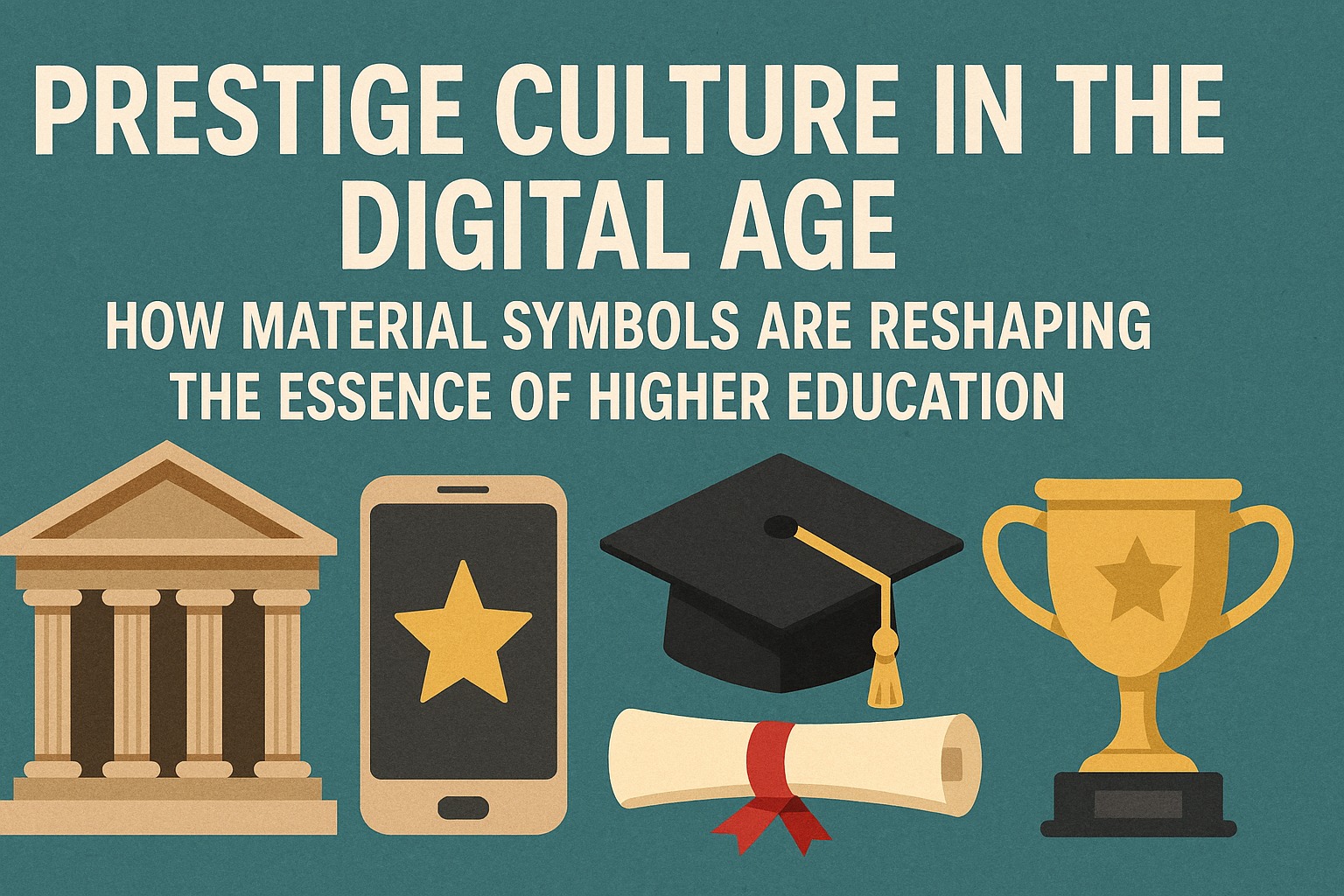
Higher education in the digital age is increasingly influenced by prestige culture. Universities, once defined primarily by intellectual rigor and scholarly contribution, now operate within a broader ecosystem shaped by branding, digital visibility, and material symbolism.Material symbols—ranging from advanced technology to lifestyle representation—are gradually reshaping how students interpret success, influence, and academic worth. Prestige culture has become a defining feature of modern campus life.
THE RISE OF PRESTIGE CULTURE
Prestige culture refers to the social emphasis on recognition, exclusivity, and visible success. In universities, this culture manifests through competitive internships, global certifications, premium gadgets, and curated online identities.
Digital platforms such as LinkedIn transform academic milestones into public achievements. Recognition becomes quantifiable through endorsements, connections, and engagement metrics.
The result is a shift from private intellectual development to publicly displayed accomplishment.
MATERIAL SYMBOLS AND ACADEMIC IDENTITY
Material symbols play a powerful role in shaping academic identity. High-end laptops, international exchange experiences, and professional attire function as markers of ambition and capability.
Drawing from the theory of symbolic capital proposed by Pierre Bourdieu, these symbols gain legitimacy when socially acknowledged. Over time, they contribute to stratification, influencing how peers and institutions assign credibility.
TRANSFORMATION OF EDUCATIONAL VALUES
Prestige culture can subtly alter the core mission of higher education. Instead of prioritizing critical thinking and intellectual exploration, students may focus on accumulating visible credentials and aesthetic achievements.
This transformation risks commodifying education, turning learning into a portfolio-building exercise rather than a process of intellectual growth and ethical development.
OPPORTUNITIES AND CHALLENGES
Despite its risks, prestige culture also offers opportunities. Digital exposure can democratize access to global networks and professional pathways. Students from diverse backgrounds can showcase talent beyond local limitations.
However, the challenge lies in ensuring that material symbols support rather than dominate academic values. Without critical awareness, symbolic competition may overshadow substance.
REAFFIRMING THE ESSENCE OF HIGHER EDUCATION
To preserve the integrity of higher education, universities must balance innovation with reflection. Policies that emphasize inclusivity, merit-based recognition, and mental well-being can counteract excessive prestige pressure.
Education should cultivate intellectual curiosity, ethical leadership, and collaborative spirit—not merely symbolic distinction.
CONCLUSION
Prestige culture in the digital age is reshaping the essence of higher education through the growing influence of material symbols. While symbolic capital can enhance visibility and opportunity, it must not replace the foundational principles of scholarship and integrity.The future of higher education depends on the ability of institutions and students to navigate symbolic dynamics critically, ensuring that prestige remains a byproduct of excellence rather than its substitute.
Tentang Penulis
Gusti Ayu Tita
Penulis — Universitas STEKOM
Penulis aktif yang berfokus pada isu-isu akademik, teknologi pendidikan, dan pengembangan sumber daya manusia di lingkungan kampus.