
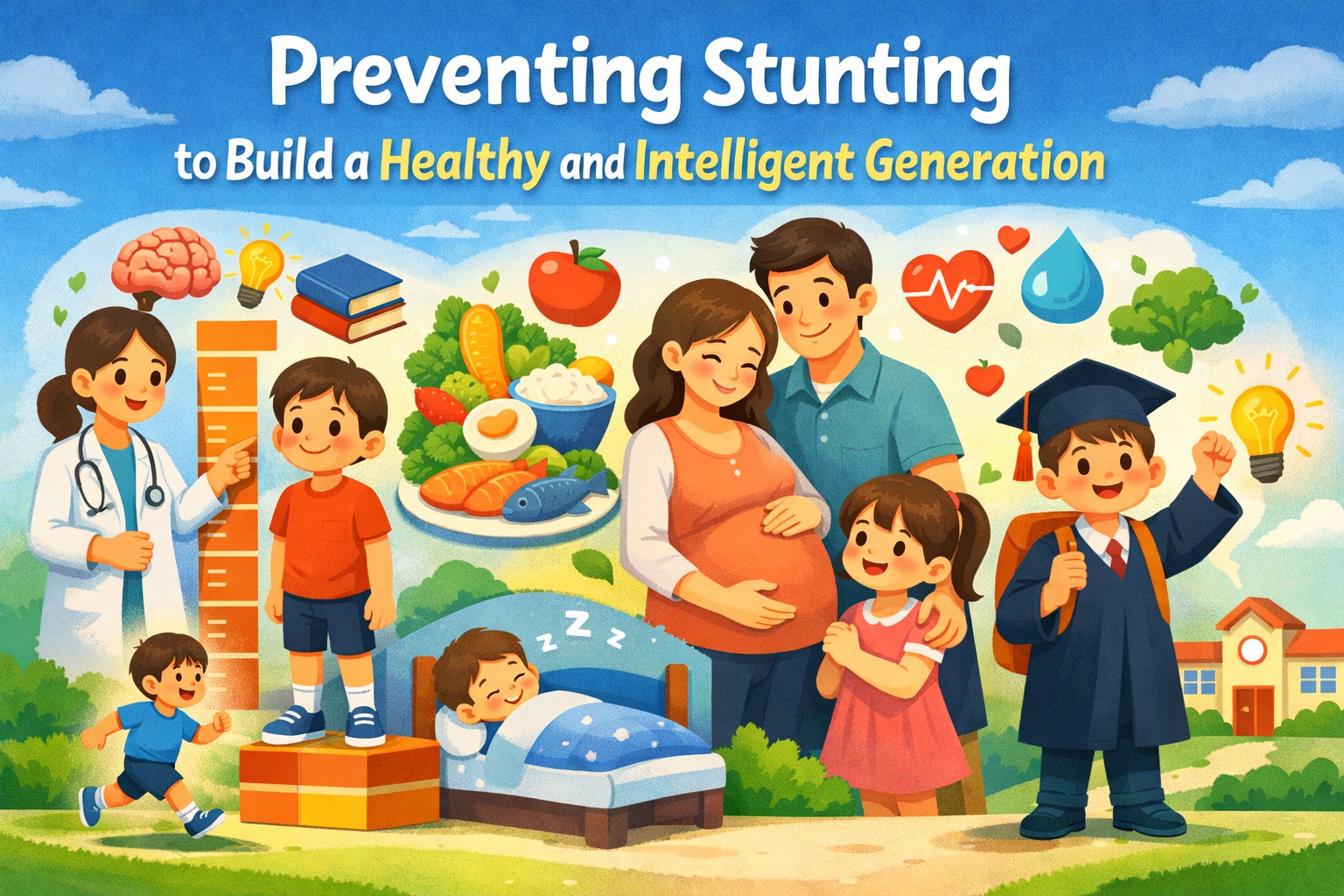
Stunting remains one of the biggest health challenges affecting children worldwide. This condition occurs when children experience impaired growth and development due to poor nutrition, repeated infections, and inadequate care during the early stages of life. Preventing stunting is essential because it directly impacts a child’s physical growth, intelligence, productivity, and future quality of life. Building a healthy and intelligent generation begins with ensuring that every child receives proper nutrition and care from pregnancy through early childhood.
UNDERSTANDING STUNTING
Stunting is a chronic malnutrition condition that causes children to have shorter height compared to their age. However, the effects of stunting go beyond physical appearance. Children who suffer from stunting often experience delayed cognitive development, weakened immune systems, and lower learning abilities.
The first 1,000 days of life, starting from pregnancy until a child reaches two years old, are the most critical period for growth and brain development. Lack of essential nutrients during this phase can lead to irreversible consequences that affect children throughout their lives.
MAIN CAUSES OF STUNTING
Several factors contribute to stunting in children. Poor maternal nutrition during pregnancy is one of the leading causes. Pregnant women who do not consume balanced and nutritious food may give birth to babies with low birth weight, increasing the risk of stunting.
Inadequate breastfeeding practices and poor complementary feeding also play major roles. Babies need exclusive breastfeeding for the first six months and nutritious complementary foods afterward to support healthy growth.
In addition, poor sanitation and limited access to clean water can increase the risk of infections such as diarrhea, which prevents proper nutrient absorption. Economic challenges and lack of health education further contribute to the problem.
THE IMPORTANCE OF BALANCED NUTRITION
Balanced nutrition is the key to preventing stunting. Children need sufficient intake of carbohydrates, proteins, healthy fats, vitamins, and minerals to support optimal growth. Protein-rich foods such as eggs, fish, milk, meat, tofu, and beans are especially important for muscle and brain development.
Mothers should also ensure children consume fruits and vegetables regularly because they contain essential vitamins and antioxidants that strengthen the immune system. Iron, zinc, calcium, and folic acid are crucial nutrients that help improve physical growth and cognitive function.
Providing nutritious meals consistently can significantly reduce the risk of growth failure and developmental delays.
THE ROLE OF PARENTS AND COMMUNITIES
Parents have a major responsibility in preventing stunting. They must monitor their children’s growth regularly and ensure proper nutrition from an early age. Mothers are encouraged to attend health checkups during pregnancy and follow medical advice regarding nutrition and child care.
Communities and governments also play important roles by improving healthcare services, sanitation systems, and nutrition education programs. Public awareness campaigns can help families understand the dangers of stunting and the importance of healthy lifestyles.
Schools, healthcare workers, and local organizations can work together to create supportive environments that promote child health and development.
LONG-TERM IMPACT OF STUNTING
Children affected by stunting often face difficulties in school performance and social development. In adulthood, they may experience lower productivity and reduced economic opportunities. This condition can also affect national development because a less healthy population may reduce overall workforce quality.
Preventing stunting is therefore not only a family responsibility but also a national investment in creating future generations that are healthy, productive, and competitive.
CONCLUSION
Preventing stunting is essential to building a healthy and intelligent generation. Proper nutrition, good healthcare, clean environments, and strong parental support are the foundations of healthy child development. By working together to improve nutrition and awareness, societies can reduce stunting rates and create a brighter future for children. Every child deserves the opportunity to grow, learn, and achieve their full potential without the limitations caused by stunting.
Tentang Penulis
Gusti Ayu Tita
Penulis — Universitas STEKOM
Penulis aktif yang berfokus pada isu-isu akademik, teknologi pendidikan, dan pengembangan sumber daya manusia di lingkungan kampus.



