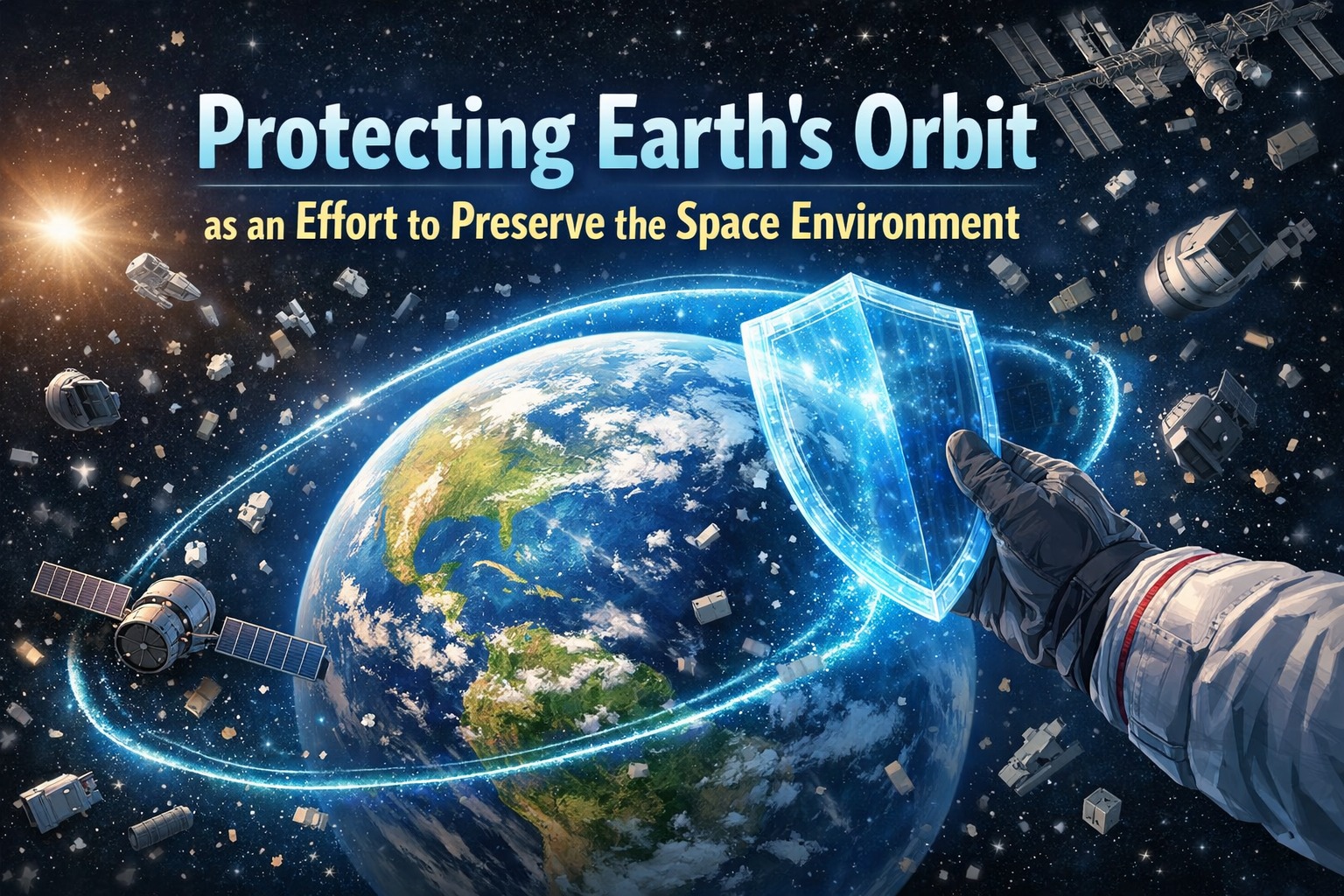
Earth’s orbit has become one of the most critical zones for modern civilization. It hosts thousands of active satellites that support communication, navigation, weather forecasting, military systems, and scientific research. However, increasing human activity in space has created a growing concern: the accumulation of space debris. Protecting Earth’s orbit is no longer optional but essential to ensure the long-term sustainability of space operations and the safety of future missions.
THE GROWING PROBLEM OF SPACE DEBRIS
Space debris refers to defunct satellites, spent rocket stages, and fragments resulting from collisions or explosions in orbit. As more satellites are launched, especially with the rise of mega-constellations, the risk of congestion in low Earth orbit increases significantly. Even small fragments traveling at extremely high speeds can damage operational satellites, creating even more debris in a dangerous chain reaction known as the Kessler Syndrome.
IMPORTANCE OF SUSTAINABLE SPACE MANAGEMENT
Sustainable space management focuses on reducing debris generation and ensuring responsible behavior in orbit. This includes designing satellites that can safely deorbit at the end of their mission, minimizing fragmentation risks, and adhering to international guidelines for space operations. Without proper management, Earth’s orbit could become too hazardous for new missions, limiting technological progress and global connectivity.
ROLE OF TECHNOLOGY IN ORBIT PROTECTION
Advanced technologies play a crucial role in protecting Earth’s orbit. Space agencies and private companies are developing debris-tracking systems, collision avoidance algorithms, and even robotic removal missions to clean up existing waste. Innovations such as reusable rockets also help reduce the number of discarded components left in space, contributing to a cleaner orbital environment.
INTERNATIONAL COOPERATION AND POLICY
Protecting Earth’s orbit requires global cooperation. No single country owns space, making international agreements essential. Organizations like the United Nations Office for Outer Space Affairs (UNOOSA) promote guidelines for responsible space activity. Countries and private companies must work together to enforce regulations, share tracking data, and ensure transparency in orbital operations.
FUTURE OF EARTH’S ORBIT PROTECTION
The future of Earth’s orbit depends on how effectively humanity addresses the debris challenge today. With increasing dependence on satellite technology, preserving orbital space is vital for economic stability, scientific discovery, and global communication. Continued innovation, stricter policies, and shared responsibility will determine whether Earth’s orbit remains a safe and usable environment.
CONCLUSION
Protecting Earth’s orbit is a fundamental effort to preserve the space environment for future generations. As space activity continues to grow, responsible management and international collaboration are necessary to prevent irreversible damage. By prioritizing sustainability in space, humanity can ensure that Earth’s orbit remains a valuable and safe resource.
Tentang Penulis
Gusti Ayu Tita
Penulis — Universitas STEKOM
Penulis aktif yang berfokus pada isu-isu akademik, teknologi pendidikan, dan pengembangan sumber daya manusia di lingkungan kampus.