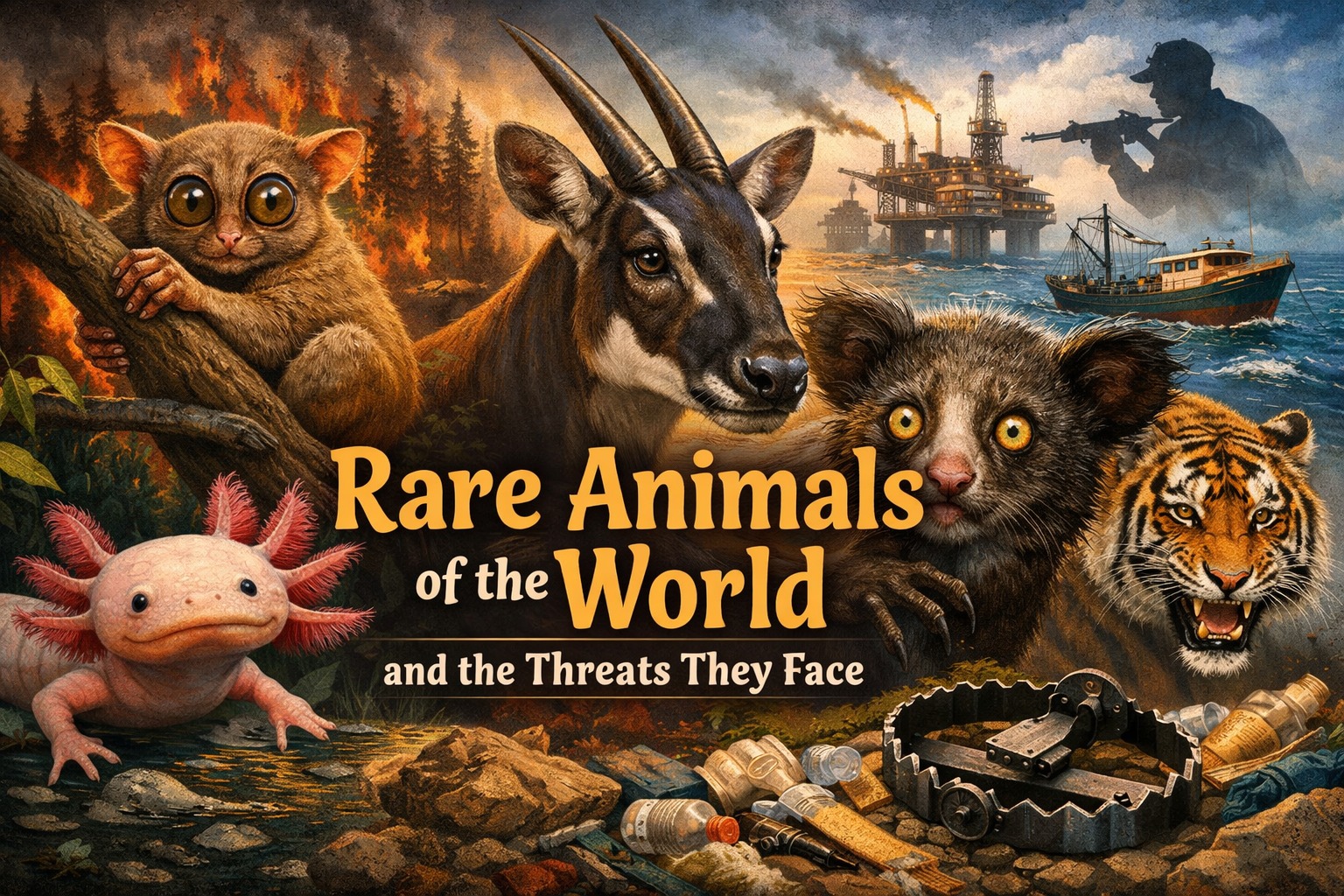
The world is home to countless unique animal species, many of which are now facing extinction due to human activity and environmental changes. Rare animals are not only important for maintaining ecological balance, but they also represent the incredible diversity of life on Earth. Unfortunately, habitat destruction, illegal hunting, climate change, and pollution continue to threaten their survival. Understanding these animals and the dangers they face is essential to protecting the planet for future generations.
WHY RARE ANIMALS ARE IMPORTANT
Rare animals play a significant role in maintaining healthy ecosystems. Every species has a specific function in nature, whether it helps control populations, spreads seeds, or supports the food chain. When one species disappears, the balance of the ecosystem can be disrupted.
In addition, rare animals are valuable for scientific research, tourism, and education. Many people travel around the world to see unique wildlife in their natural habitats. Protecting endangered species also helps preserve forests, oceans, and other natural environments that humans depend on.
RARE ANIMALS THAT ARE CLOSE TO EXTINCTION
AMUR LEOPARD
The Amur leopard is one of the rarest big cats in the world. It lives mainly in the forests of eastern Russia and northeastern China. This animal is threatened by habitat loss, forest fires, and illegal hunting for its beautiful fur.
JAVAN RHINOCEROS
The Javan rhinoceros is among the rarest mammals on Earth. It is found only in a protected national park in Indonesia. Poaching and shrinking habitats have greatly reduced its population over the years.
VAQUITA
The vaquita is a small marine mammal that lives in the Gulf of California in Mexico. It is critically endangered because of illegal fishing activities. Many vaquitas accidentally become trapped in fishing nets, causing their population to decline rapidly.
SAOLA
Known as the “Asian unicorn,” the saola is an extremely rare animal discovered in the forests of Laos and Vietnam. Very little is known about this species because it is rarely seen in the wild. Hunting and habitat destruction are major threats to its survival.
MAIN THREATS TO RARE ANIMALS
HABITAT DESTRUCTION
Forests are often cleared for agriculture, mining, roads, and urban development. As natural habitats disappear, animals lose places to live, hunt, and reproduce. This is one of the biggest reasons many species become endangered.
ILLEGAL HUNTING AND POACHING
Some animals are hunted for their fur, horns, meat, or body parts that are sold illegally. Poaching remains a serious problem in many countries despite international laws and conservation programs.
CLIMATE CHANGE
Global warming affects ecosystems across the world. Rising temperatures, melting ice, and changing weather patterns make it difficult for many animals to adapt. Species living in polar regions and oceans are especially vulnerable.
POLLUTION
Plastic waste, chemicals, and industrial pollution harm wildlife on land and in the sea. Marine animals often mistake plastic for food, while polluted water can damage entire ecosystems.
EFFORTS TO PROTECT ENDANGERED SPECIES
Governments, environmental organizations, and local communities are working together to protect rare animals. National parks and wildlife reserves help preserve natural habitats. Anti-poaching laws and stricter environmental regulations are also important steps.
Education and public awareness campaigns encourage people to care about wildlife conservation. In addition, breeding programs and scientific research help increase populations of endangered species.
Individuals can also contribute by reducing plastic use, supporting conservation organizations, and avoiding products made from endangered animals.
THE FUTURE OF WILDLIFE CONSERVATION
Protecting rare animals requires global cooperation and long-term commitment. Without immediate action, many species could disappear forever. Conservation efforts not only save animals but also protect the environment and human life.
By respecting nature and supporting sustainable practices, people around the world can help ensure that future generations will continue to witness the beauty and diversity of Earth’s wildlife.
Tentang Penulis
Gusti Ayu Tita
Penulis — Universitas STEKOM
Penulis aktif yang berfokus pada isu-isu akademik, teknologi pendidikan, dan pengembangan sumber daya manusia di lingkungan kampus.