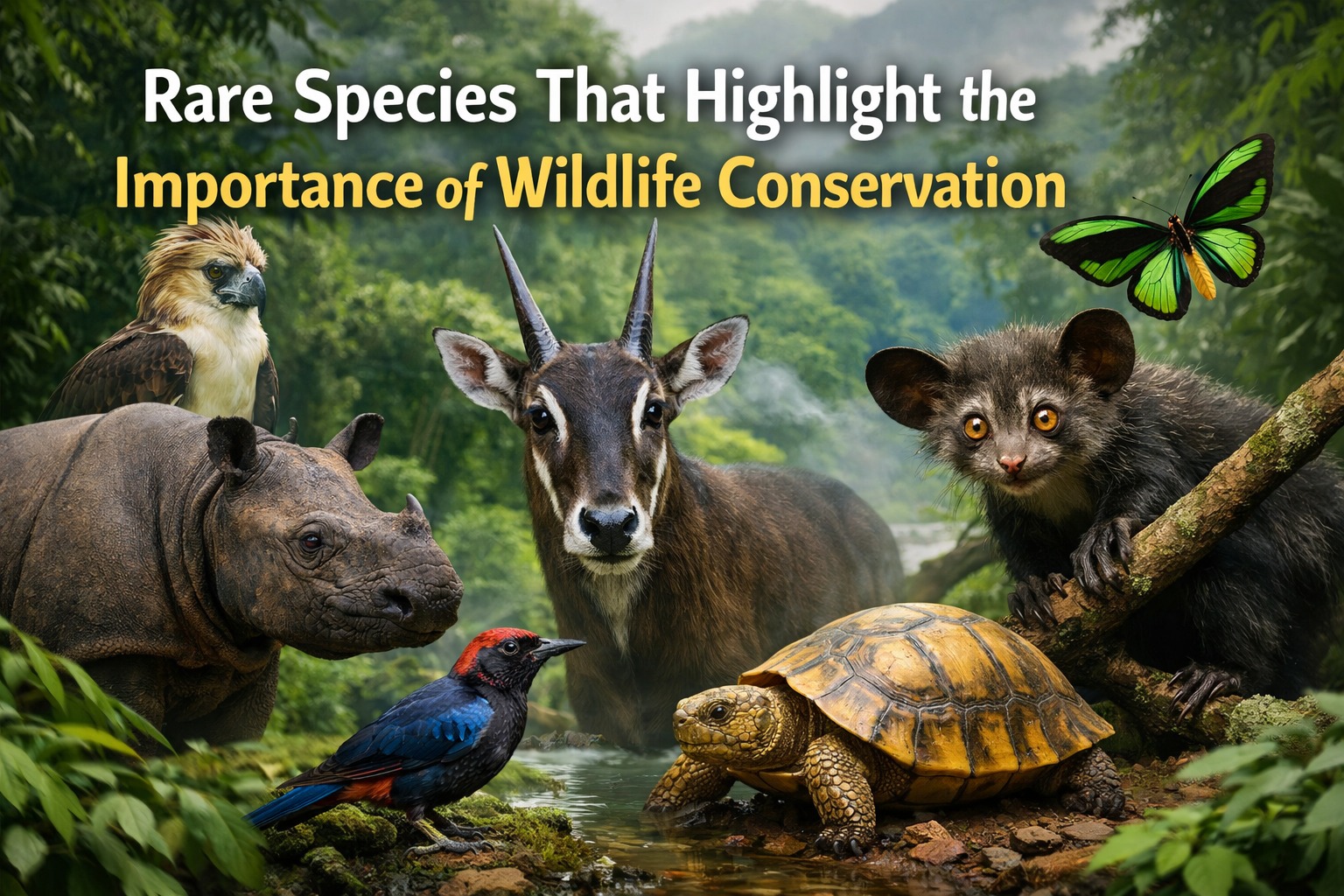
Wildlife conservation has become one of the most urgent global issues in modern times. Many rare species around the world are facing extinction due to habitat destruction, climate change, illegal hunting, and pollution. These animals are not only valuable for biodiversity, but they also play an essential role in maintaining ecological balance. Protecting rare species is a responsibility shared by governments, organizations, and individuals to ensure a healthier planet for future generations.
WHY RARE SPECIES MATTER
Rare species are often indicators of environmental health. When certain animals begin to disappear, it signals that ecosystems are under threat. Every species contributes to the food chain and supports the survival of other living organisms. Losing even one species can create a domino effect that harms entire ecosystems.
In addition, many rare animals have scientific, cultural, and economic value. Some species help scientists develop medicines, while others attract eco-tourism that benefits local communities. Preserving wildlife also protects natural heritage and strengthens environmental sustainability.
ENDANGERED ANIMALS THAT NEED PROTECTION
AMUR LEOPARD
The Amur leopard is one of the rarest big cats in the world. Native to the forests of eastern Russia and northeastern China, this leopard is critically endangered due to deforestation and poaching. Conservation programs and protected reserves have helped increase its population, but it still remains highly vulnerable.
JAVAN RHINOCEROS
The Javan rhinoceros is among the rarest mammals on Earth. Found only in Indonesia, particularly in Ujung Kulon National Park, the species faces threats from habitat loss and natural disasters. Strict protection efforts are necessary because the remaining population is extremely limited.
VAQUITA
The vaquita is a small porpoise living in the Gulf of California, Mexico. Illegal fishing activities are the primary reason for its rapid decline. Conservationists continue to campaign for safer fishing practices to prevent the species from disappearing forever.
MOUNTAIN GORILLA
Mountain gorillas inhabit forests in Central Africa. Despite being endangered, their numbers have slowly increased thanks to anti-poaching campaigns, conservation funding, and responsible tourism. Their recovery proves that conservation efforts can succeed when communities work together.
MAJOR THREATS TO WILDLIFE
HABITAT DESTRUCTION
Deforestation, urban development, and agricultural expansion continue to destroy natural habitats. Animals lose food sources, breeding grounds, and shelter, making survival difficult.
CLIMATE CHANGE
Rising temperatures and changing weather patterns affect migration, reproduction, and food availability for many species. Polar animals, marine creatures, and tropical wildlife are especially vulnerable.
ILLEGAL HUNTING AND TRADE
Poaching remains a serious threat to rare species. Animals are hunted for fur, horns, ivory, or exotic pet markets. Stronger laws and enforcement are needed to stop illegal wildlife trade.
POLLUTION
Plastic waste, chemicals, and industrial pollution damage ecosystems worldwide. Marine animals are particularly affected because they often mistake plastic for food.
HOW CONSERVATION EFFORTS HELP
Wildlife conservation programs focus on habitat restoration, breeding programs, anti-poaching patrols, and public education. National parks and wildlife sanctuaries provide safe environments for endangered species to recover.
International cooperation is also important because wildlife protection often crosses borders. Organizations around the world collaborate to monitor endangered populations and promote sustainable environmental practices.
Technology now plays a significant role in conservation. Drones, satellite tracking, and camera traps help researchers monitor animal populations and prevent illegal activities more effectively.
WHAT INDIVIDUALS CAN DO
Everyone can contribute to wildlife conservation through simple daily actions. Supporting eco-friendly products, reducing plastic use, and avoiding items made from endangered animals can make a difference. People can also support conservation organizations and spread awareness through education and social media.
Responsible tourism is another important step. Visiting wildlife destinations ethically helps fund conservation projects while protecting natural habitats.
CONCLUSION
Rare species remind humanity of the importance of protecting nature before it is too late. Animals such as the Amur leopard, Javan rhinoceros, vaquita, and mountain gorilla represent the fragile beauty of Earth’s biodiversity. Through conservation efforts, stronger environmental policies, and public awareness, future generations can continue to experience the richness of wildlife. Protecting endangered species is not only about saving animals, but also about preserving the balance of life on our planet.
Tentang Penulis
Gusti Ayu Tita
Penulis — Universitas STEKOM
Penulis aktif yang berfokus pada isu-isu akademik, teknologi pendidikan, dan pengembangan sumber daya manusia di lingkungan kampus.