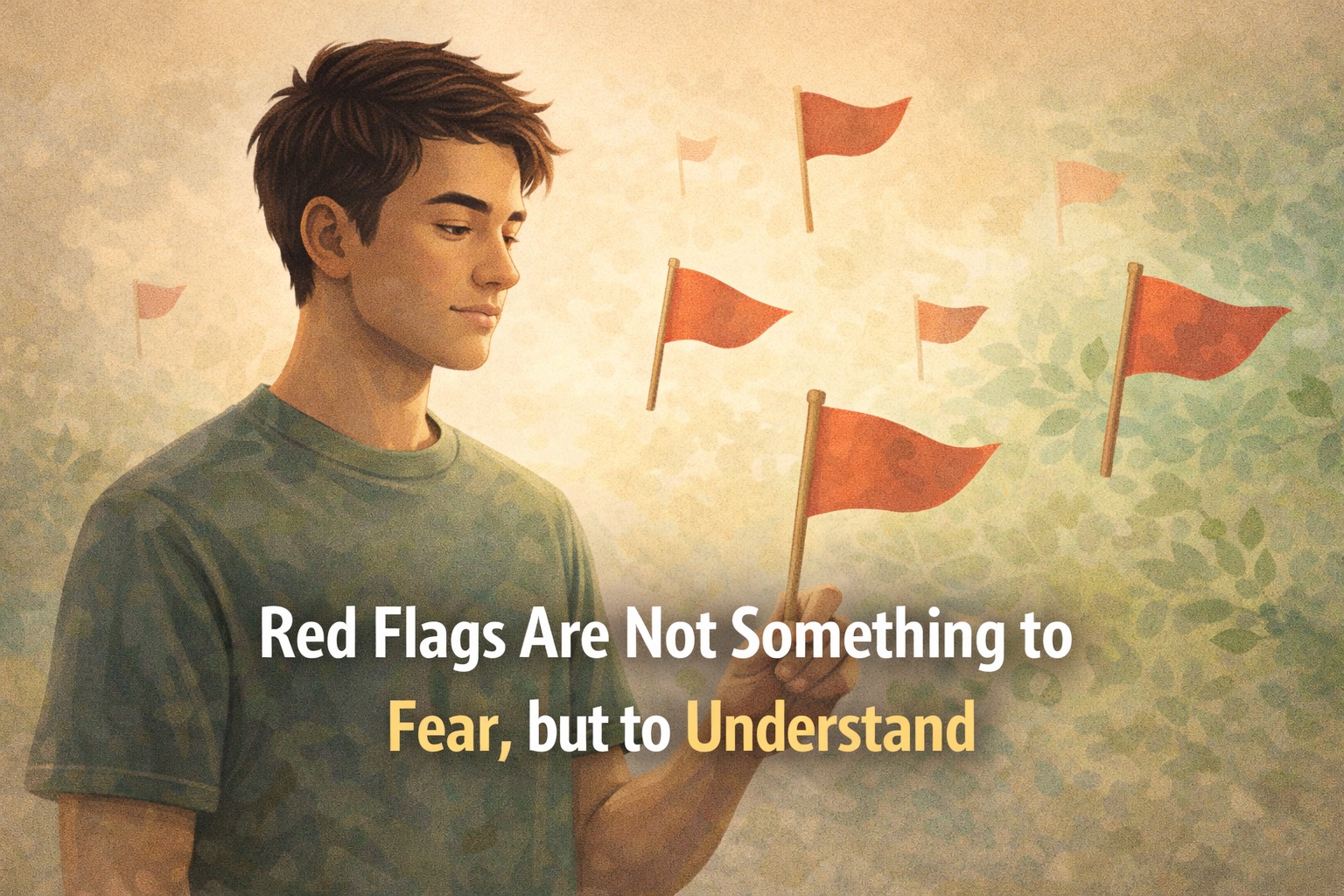
The term *red flag* is increasingly common in discussions about relationships, both on social media and in everyday conversations. Unfortunately, red flags are often seen as something that must be immediately avoided or feared. In reality, understanding red flags properly can help us build healthier and more conscious relationships.
A red flag is not a final verdict, but a signal to pause, observe, and think more clearly before moving forward.
UNDERSTANDING THE MEANING OF RED FLAGS OBJECTIVELY
A red flag is a warning sign that indicates potential problems in a relationship. These signs can appear through attitudes, communication patterns, or how someone treats others.
It is important to understand that a red flag does not always mean someone is entirely bad. In many cases, red flags reflect habits, past experiences, or emotional unpreparedness that may not yet be fully recognized.
With this perspective, red flags become tools for reflection rather than sources of fear.
WHY ARE RED FLAGS OFTEN CONSIDERED SCARY?
Many people fear red flags because they are afraid of getting trapped in a painful relationship. In addition, social media content often portrays red flags in extreme ways, as if a single small mistake is enough to end everything.
As a result, overthinking and excessive fear arise. In reality, not every sign needs to be met with a reactive response. What matters most is understanding the context and the overall impact.
DIFFERENTIATING RED FLAGS FROM HUMAN IMPERFECTIONS
Not all flaws are red flags. Everyone has weaknesses, habits that need improvement, and their own learning processes.
Red flags deserve attention when:
- Negative behavior patterns occur repeatedly
- There is no effort to improve
- The behavior negatively affects emotional well-being
- Personal boundaries are not respected
If there is still room for communication and change, the issue may not necessarily be serious.
RED FLAGS AS A TOOL FOR SELF-AWARENESS
Rather than being feared, red flags should be used as tools to recognize our own needs and boundaries. Our reactions to red flags often reflect our personal values and priorities.
By understanding red flags, we learn to:
- Recognize non-negotiable boundaries
- Set healthy limits
- Be more honest with ourselves
- Make conscious decisions
This self-awareness is the key to building healthy relationships.
THE ROLE OF COMMUNICATION IN DEALING WITH RED FLAGS
Red flags do not always require drastic decisions. In some situations, open communication can be a wise first step.
Expressing discomfort honestly and calmly creates space for change. A person’s response to this communication often determines whether a red flag can be addressed or should be taken more seriously.
MAINTAINING BALANCE BETWEEN CAUTION AND OPENNESS
Being cautious is important, but being overly defensive can also hinder potentially healthy relationships. Balancing awareness and openness allows us to stay realistic without closing ourselves off.
Healthy relationships are not about perfection, but about willingness to learn, understand, and grow together.
CONCLUSION
Red flags are not something that must always be feared or instantly avoided. With proper understanding, red flags help us recognize ourselves and evaluate the quality of the relationship we are in.
Understanding red flags gives us the opportunity to make wiser, more conscious choices that support long-term emotional well-being.
**Keywords:**
Tentang Penulis
Gusti Ayu Tita
Penulis — Universitas STEKOM
Penulis aktif yang berfokus pada isu-isu akademik, teknologi pendidikan, dan pengembangan sumber daya manusia di lingkungan kampus.