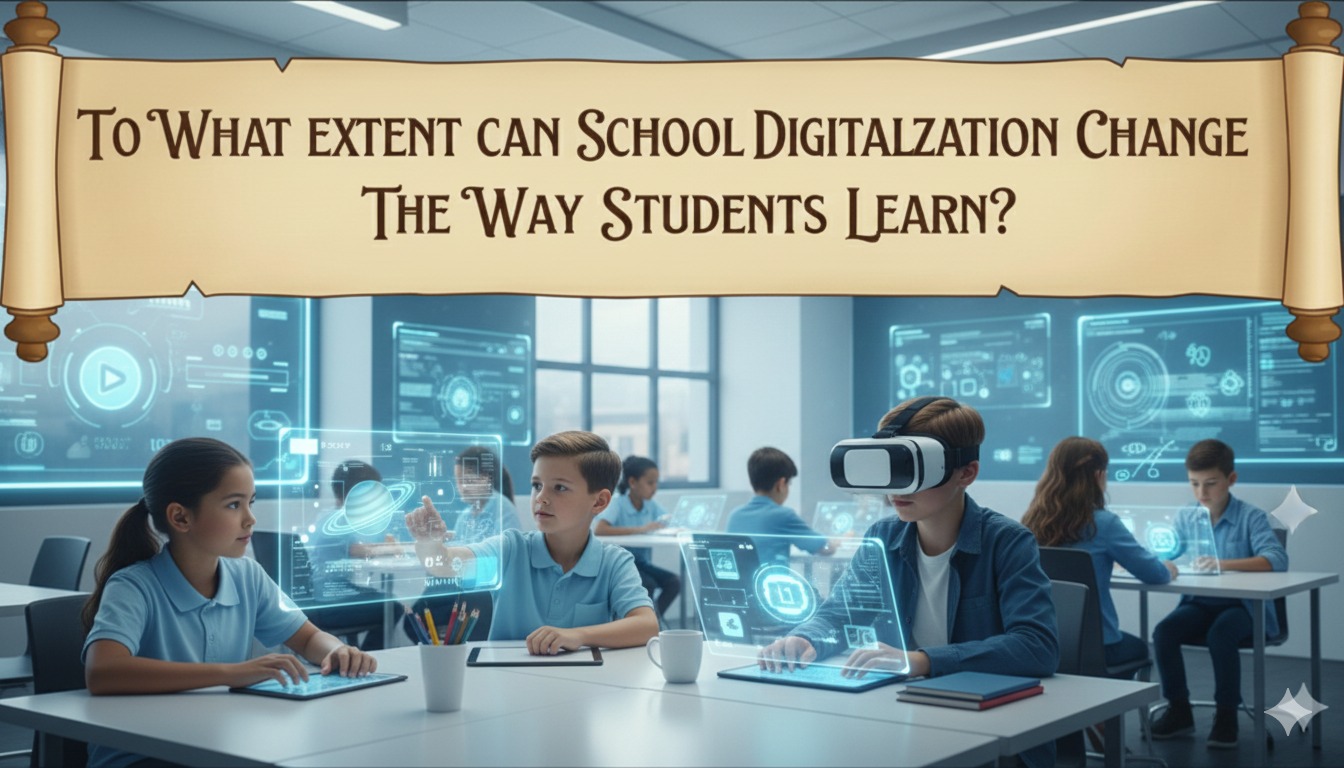
Technological advancement has brought major changes across various fields, including education. Today, the digitalization of schools has become an unavoidable trend. From the use of Learning Management Systems (LMS) to video-based learning and interactive applications, the way students learn is gradually shifting. However, the question remains: to what extent can digitalization truly transform how students learn in schools?
TRANSFORMATION OF LEARNING STYLES IN THE DIGITAL ERA
In the past, the learning process was largely teacher-centered and relied heavily on textbooks. Today, digitalization opens new opportunities for students to learn independently and collaboratively.
Through technology, students are no longer limited by classroom walls. They can access learning materials anytime, engage in discussions through online forums, or learn via interactive simulations that make lessons more engaging.
Digitalization has shifted the learning paradigm from teacher-centered to student-centered learning, where students become active participants in the learning process.
POSITIVE IMPACTS OF DIGITALIZATION ON STUDENTS
School digitalization not only makes learning more efficient but also offers tangible benefits, such as:
Unlimited Access to Knowledge
The internet allows students to learn from a wide range of global resources, not only from textbooks.
More Interactive Learning
Educational videos, learning games, and simulation-based applications make lessons easier to understand and more enjoyable.
Flexibility of Time and Place
With online learning systems, students can adjust their study time according to their own learning pace.
Development of Digital Skills
Technology-based learning helps students become more familiar with using digital tools wisely and productively.
CHALLENGES BEHIND DIGITALIZATION
Despite its many benefits, this transformation does not always run smoothly. Some of the challenges include:
The digital divide between urban and rural schools.
Lack of student discipline and focus during online learning.
Limited digital literacy among teachers and parents in supporting students.
The risk of technology misuse if not properly supervised.
Without proper guidance, digitalization may cause students to become more passive or overly dependent on technology.
STEPS TOWARD EFFECTIVE DIGITAL LEARNING
For digitalization to positively transform students’ learning experiences, concrete strategies are needed, such as:
Training teachers and students in digital literacy.
Utilizing engaging and relevant learning platforms.
Combining online and face-to-face learning (hybrid learning).
Parental involvement to maintain student motivation and discipline.
With these steps, digitalization becomes not merely a tool, but a means to build a new learning culture that is more active, creative, and collaborative.
CONCLUSION
School digitalization has brought significant changes to the way students learn. They are becoming more independent, critical, and digitally literate. However, the success of this transformation depends on how schools, teachers, and parents guide the use of technology so that it truly becomes a meaningful learning tool.
When implemented wisely, digitalization is not just a trend, but a gateway to a more adaptive and inspiring future of education.
Tentang Penulis
Gusti Ayu Tita
Penulis — Universitas STEKOM
Penulis aktif yang berfokus pada isu-isu akademik, teknologi pendidikan, dan pengembangan sumber daya manusia di lingkungan kampus.