
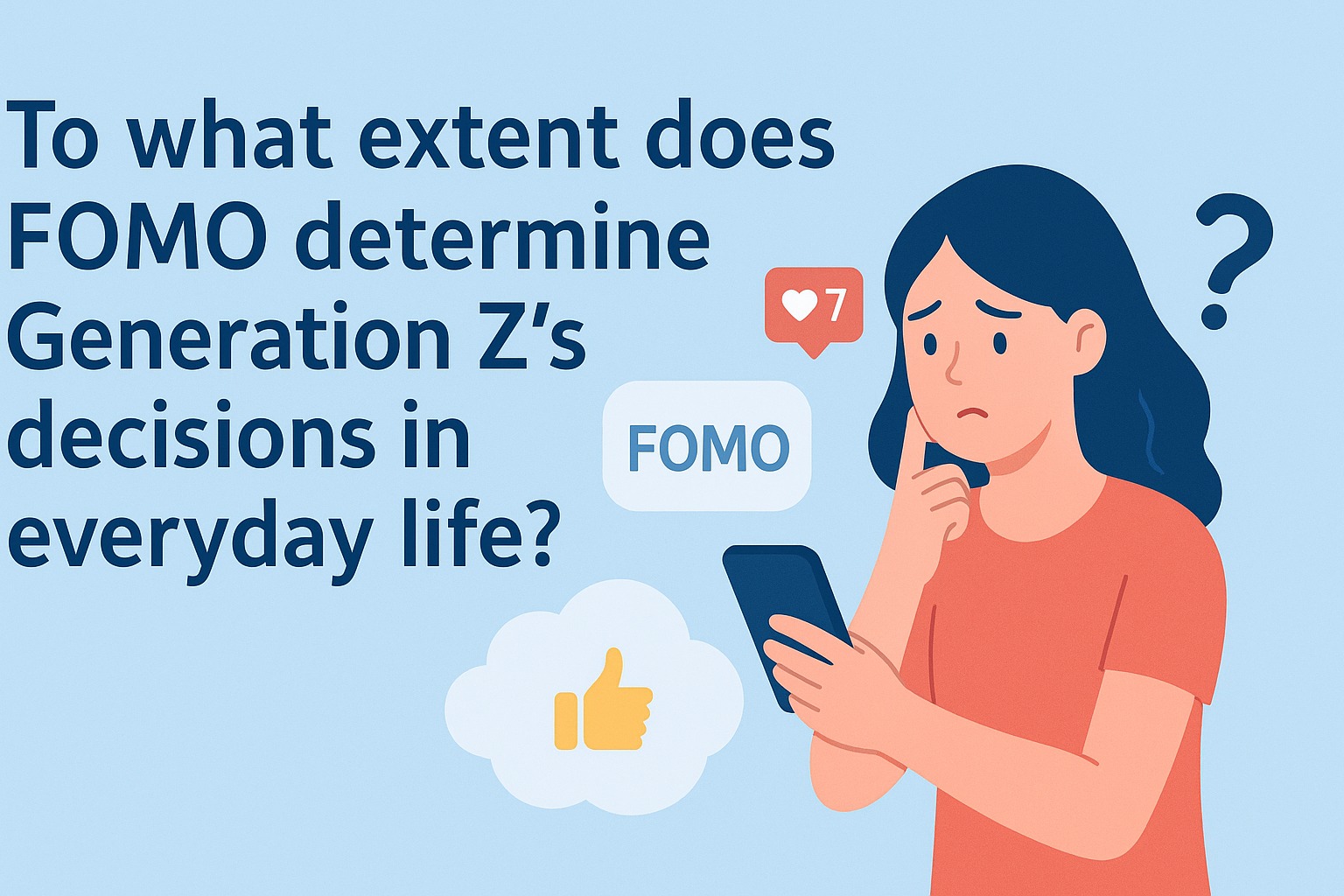
The phenomenon of *Fear of Missing Out* (FOMO) has become a strong psychological factor shaping the mindset of Generation Z. In the midst of rapid information flow and constantly shifting digital trends, many Gen Z individuals make decisions not only based on their needs, but also out of a desire to stay relevant, avoid being left behind, and remain part of the crowd. This article explores how far FOMO influences their decision-making in everyday life.
FOMO AND DAILY DECISION-MAKING
Generation Z grows up in a highly dynamic digital environment. The decisions they make each day are often shaped by the content, opinions, and trends circulating on social media.
For example:
* Choosing a café simply because it’s viral on TikTok.
* Buying products just because everyone is talking about them.
* Joining events or classes because friends are participating.
FOMO can shift rational decision-making into impulsive choices driven by social pressure.
THE INFLUENCE OF FOMO ON CONSUMPTION PATTERNS
Gen Z’s consumption habits are strongly connected to digital trends. FOMO encourages them to buy something merely to avoid feeling left out.
Common behaviors include:
* Shopping based on trends rather than needs.
* Purchasing event or concert tickets to gain online validation.
* Joining promotions or flash sales even when the items are unnecessary.
This lifestyle fuels a consumer-driven culture, often accompanied by anxiety over missing whatever is currently popular.
FOMO AND DECISION-MAKING IN ACADEMICS AND CAREER
FOMO also influences bigger life decisions such as education and career. Many Gen Z individuals feel pressured by peers’ achievements displayed online.
Some common examples are:
* Choosing majors or courses because they are trending.
* Pursuing “trendy” careers to appear successful at a young age.
* Feeling inadequate when others achieve milestones faster.
These pressures can lead to psychological stress when decisions are not aligned with personal interests or potential.
THE ROLE OF FOMO IN SOCIAL RELATIONSHIPS
In their social lives, FOMO pushes Gen Z to stay involved in group activities to avoid feeling left out.
Consequences include:
* Difficulty saying “no” even when tired.
* Participating in activities unrelated to their interests just to fit in.
* Prioritizing online image over personal comfort.
This demonstrates how significantly FOMO affects social decision-making.
THE EMOTIONAL IMPACT OF FOMO
FOMO-based decisions often create emotional strain due to:
* Fear of being judged as outdated.
* Feelings of inadequacy when not participating.
* Constant comparison with others’ achievements.
If left unmanaged, these conditions may reduce overall life quality and cause long-term stress.
HOW GEN Z CAN MAKE HEALTHIER DECISIONS
Gen Z can reduce the influence of FOMO by:
* Understanding personal needs before following a trend.
* Setting limits on digital consumption to reduce comparison triggers.
* Focusing on long-term goals rather than short-term trends.
* Making decisions based on personal values rather than pressure.
With these steps, decisions become more stable, mature, and aligned with personal priorities.
CONCLUSION
FOMO plays a major role in shaping Gen Z’s decisions—from consumption and social interaction to educational and career choices. Although difficult to avoid, FOMO can be managed through self-awareness, reduced digital exposure, and focus on what truly matters. By doing so, Gen Z can achieve a more balanced life without being controlled by social media trends.
Tentang Penulis
Gusti Ayu Tita
Penulis — Universitas STEKOM
Penulis aktif yang berfokus pada isu-isu akademik, teknologi pendidikan, dan pengembangan sumber daya manusia di lingkungan kampus.



