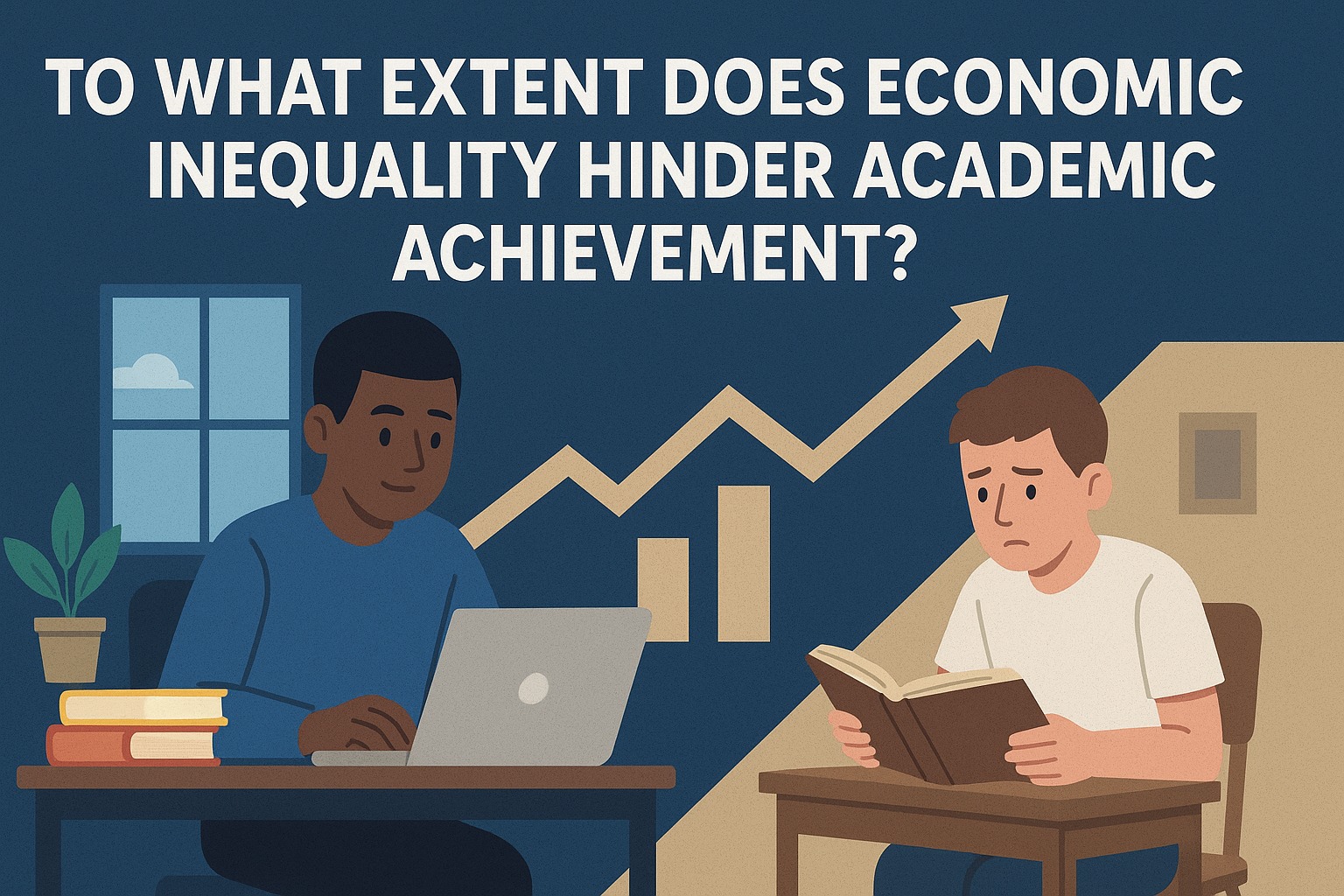
Academic achievement is often seen as an indicator of student success in school. However, behind these numbers are various factors that shape the learning process, one of which is economic inequality. The key question is: to what extent does economic status truly hinder academic performance? This article discusses the impact of economic inequality in depth, based on current educational realities.
UNDERSTANDING ECONOMIC INEQUALITY IN EDUCATION
Economic inequality arises when there are significant differences in financial capacity between families. In the educational context, this creates disparities in:
- Access to learning facilities
- School quality
- Availability of time and learning support
- Students’ psychological stability
These differences create a wide gap in students’ ability to perform optimally.
THE IMPACT OF ECONOMIC INEQUALITY ON ACADEMIC ACHIEVEMENT
a. Limited Access to Learning Resources
Students from low-income families often struggle to meet essential learning needs such as:
- Books and stationery
- Laptops or gadgets
- Internet data or stable connectivity
- Tutoring or enrichment programs
These limitations directly affect comprehension and learning pace.
b. Unequal School Quality
Schools with limited financial support often face challenges such as:
- A limited number of teachers
- Incomplete laboratory and library facilities
- Non-conducive classrooms
- Few self-development programs
Unequal learning quality produces differing academic results between schools.
c. Psychological Pressure Caused by Family Economics
Economic hardship often causes additional stress for students, such as:
- Helping parents earn a living
- Unstable home environments
- Worrying about basic necessities
- Limited emotional support
These factors reduce focus, motivation, and learning stamina.
d. Poor Nutrition and Health
Economic limitations can affect dietary quality. The effects are clear:
- Reduced concentration
- Higher risk of illness
- Low energy during class
Poor health directly affects academic performance.
HOW SIGNIFICANT IS THE IMPACT?
Economic inequality has been proven to significantly hinder academic performance, particularly by:
- Creating unequal learning opportunities
- Reducing learning effectiveness
- Hindering students’ potential development
However, its impact is not absolute. Some students from low-income families still excel due to:
- Strong motivation
- School support
- A positive social environment
- Scholarships or educational aid
This means economic inequality is a major barrier, but not an absolute one.
EFFORTS TO ADDRESS OBSTACLES CAUSED BY ECONOMIC INEQUALITY
- Equalizing access to technology and learning facilities
- Improving teacher competency
- Strengthening support programs and scholarships
- Collaboration between communities and educational institutions
- Educating parents to create supportive learning environments
CONCLUSION
Economic inequality has a major impact on academic achievement, from access to facilities and school quality to the mental well-being of students. However, these obstacles can be minimized through proper support, equitable policies, and strong learning motivation.
Tentang Penulis
Gusti Ayu Tita
Penulis — Universitas STEKOM
Penulis aktif yang berfokus pada isu-isu akademik, teknologi pendidikan, dan pengembangan sumber daya manusia di lingkungan kampus.