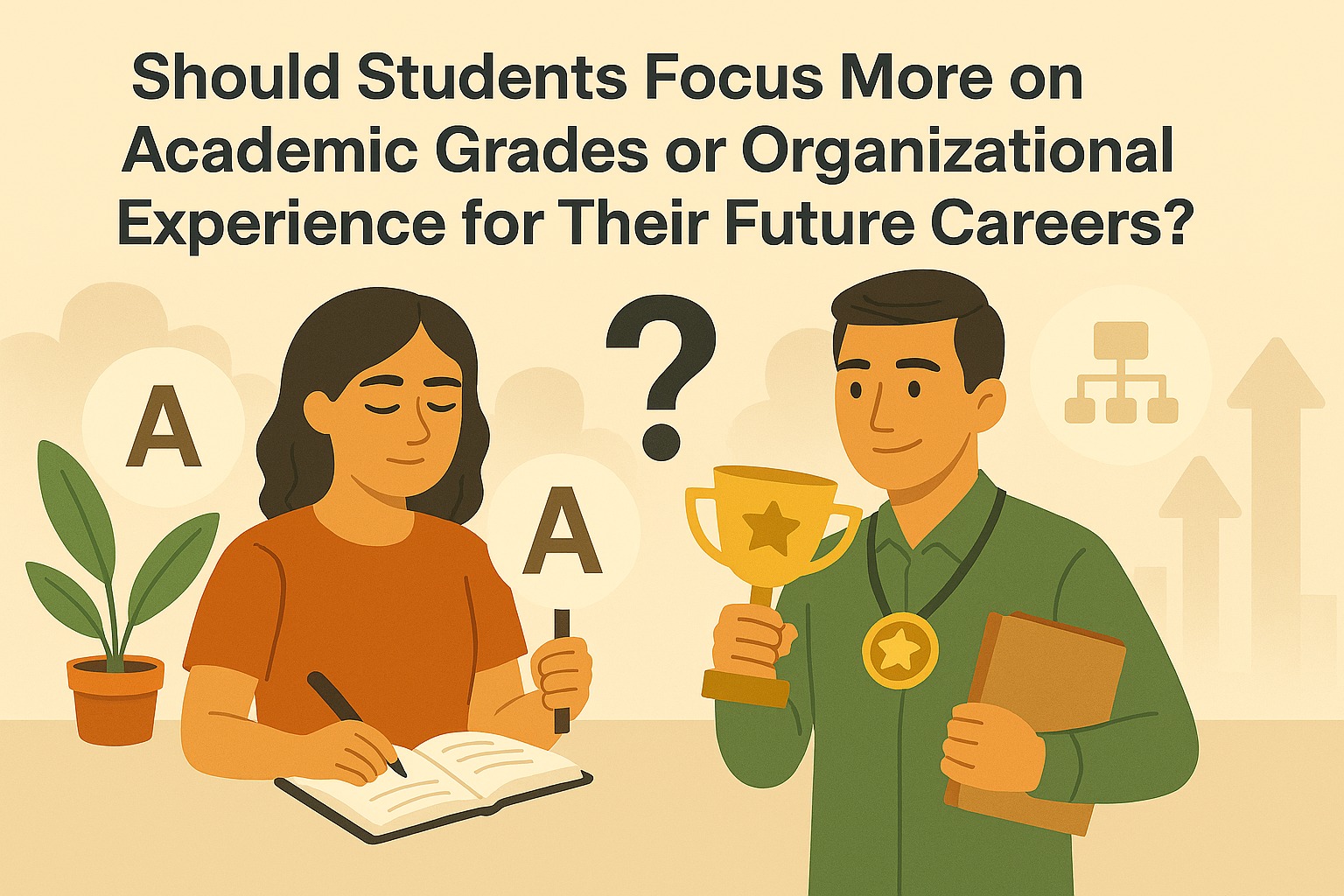
For many students, college life often presents a classic dilemma: is it more important to pursue high academic grades or to actively participate in campus organizations? Both are widely considered important in preparing for a successful future career. However, many students find it difficult to balance the two.
Some people believe that a high GPA is the main key to getting a job, while others argue that organizational experience provides practical skills that are more relevant in the workplace. So, which one is actually more important for students?
This article discusses how academic performance and organizational experience contribute to students' career development after graduation.
THE IMPORTANCE OF ACADEMIC PERFORMANCE FOR STUDENTS
Academic grades are often used as a primary indicator of a student’s ability to understand course material. Many companies still consider GPA as one of the requirements during the recruitment process, especially for fresh graduate programs or employee training programs.
Students with strong academic performance are often seen as having several advantages, such as:
- Consistent learning ability
- Discipline in completing assignments
- Strong theoretical understanding
- Good analytical skills
In addition, a high GPA can also open opportunities for scholarships, student exchange programs, or continuing education at higher levels. Therefore, maintaining strong academic performance remains important during college years.
However, the professional world requires more than academic ability alone.
THE ROLE OF ORGANIZATIONAL EXPERIENCE IN DEVELOPING SOFT SKILLS
Being active in campus organizations provides experiences that are not always gained in the classroom. Through organizational activities, students can develop many practical skills that are highly valued in the workplace.
Some of the skills commonly developed through organizational experience include:
- Communication skills
- Teamwork
- Leadership
- Time management
- Problem-solving
Students who actively participate in organizations are often involved in activities such as organizing events, leading teams, and resolving conflicts within groups. These experiences are highly relevant to situations commonly encountered in professional environments.
It is not surprising that many companies view organizational experience as an added value during the recruitment process.
DIFFERENT REQUIREMENTS BETWEEN GRADES AND EXPERIENCE
In practice, the importance of academic grades and organizational experience may vary depending on the field of work.
Certain fields such as research, academia, or highly technical professions usually emphasize strong academic ability. Meanwhile, fields like management, marketing, communication, and business often place greater value on interpersonal skills and leadership experience.
This shows that a combination of academic ability and soft skills is an important factor in building a well-balanced career.
FINDING A BALANCE BETWEEN ACADEMICS AND ORGANIZATIONAL ACTIVITIES
Instead of choosing one over the other, students can try to find a balance between academic achievement and organizational involvement.
- Some steps that can help include:
- Managing study schedules and organizational activities in a structured way
- Choosing organizations that provide meaningful experiences
- Avoiding taking on too many responsibilities at once
- Treating organizational activities as learning opportunities
rather than just additional commitmentsWith good time management, students can maintain strong academic performance while gaining valuable organizational experience.
WHICH IS MORE IMPORTANT FOR FUTURE CAREERS?
Ultimately, the question of whether students should focus on academic grades or organizational experience does not have a single answer. Both play complementary roles in preparing students for the professional world.
Academic performance reflects intellectual ability and discipline in learning, while organizational experience helps students develop soft skills that are essential in professional environments.
Students who can combine academic achievements with organizational experience often have greater opportunities to succeed after graduation. They not only understand theoretical concepts but also possess the ability to collaborate, lead, and solve problems.Therefore, the key during college years is to use time wisely to develop both academic knowledge and practical skills.
Tentang Penulis
Gusti Ayu Tita
Penulis — Universitas STEKOM
Penulis aktif yang berfokus pada isu-isu akademik, teknologi pendidikan, dan pengembangan sumber daya manusia di lingkungan kampus.