Who Truly Benefits from the KIP Kuliah Program?
The Kartu Indonesia Pintar (KIP) Kuliah program is one of the government’s initiatives aimed at creating more equitable access to higher education. By providing tuition assistance and living allowances, KIP Kuliah is expected to help prospective students from underprivileged families pursue higher education without being burdened by financial constraints.
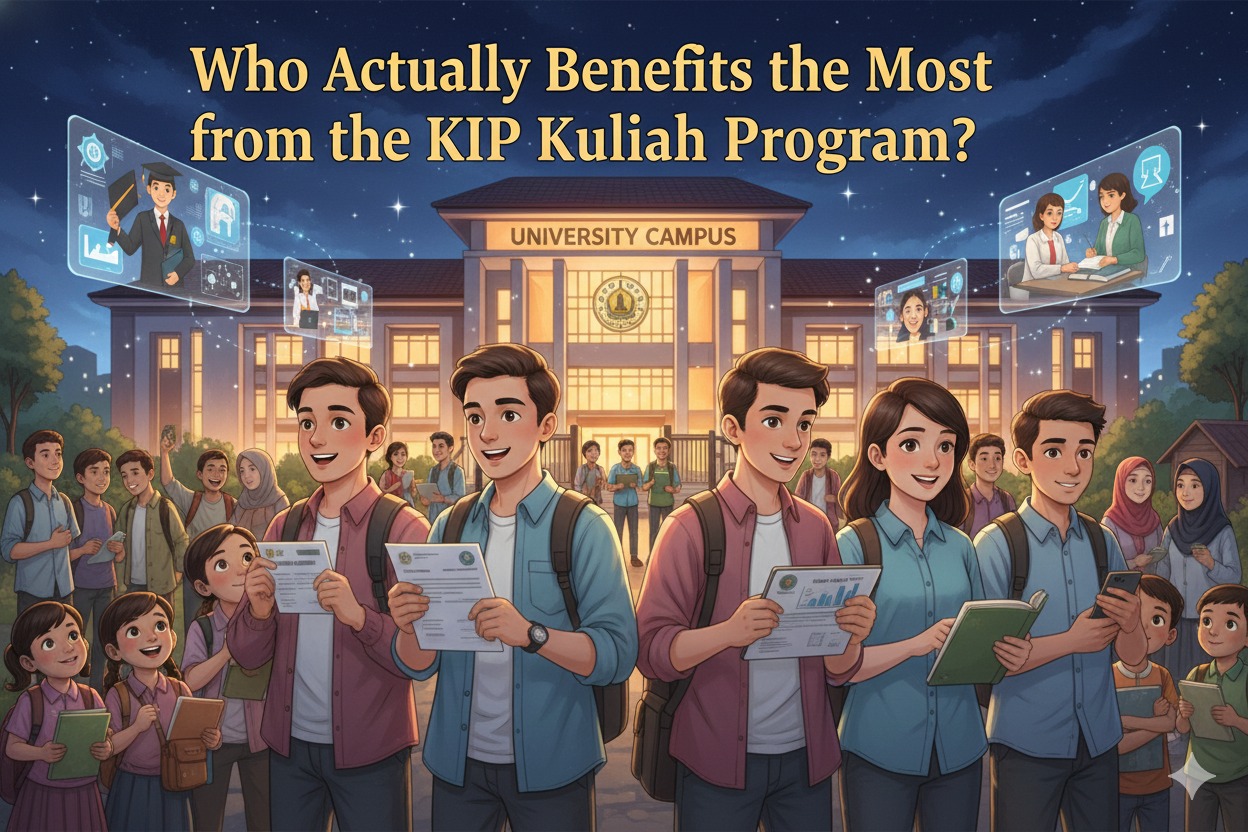
However, an important question arises: who actually benefits the most from the KIP Kuliah program? Is it only the student recipients, or does the program create broader impacts on society and the education system as a whole?
1. UNDERPRIVILEGED STUDENTS AS THE PRIMARY BENEFICIARIES
The most direct beneficiaries of KIP Kuliah are students from economically disadvantaged backgrounds. Through this program, they receive:
* Full coverage of tuition fees (including registration and semester fees).
* Living allowances each semester to support daily needs during college.
* Equal opportunities to pursue higher education without financial pressure.
This assistance not only eases economic burdens but also opens doors to a better future for students and their families. Many KIP Kuliah recipients have gone on to build successful professional careers, proving that opportunity can truly change lives.
2. HIGHER EDUCATION INSTITUTIONS ALSO BENEFIT
While students are the primary recipients, universities and colleges also gain significant advantages from the program. With KIP Kuliah in place:
* Campuses become more socially and economically diverse, fostering inclusivity.
* Higher education participation rates increase, which positively impacts institutional performance indicators.
* Both public and private universities can reach talented students from various regions.
This program encourages higher education institutions to be more competitive, inclusive, and actively involved in expanding access to education.
3. LONG-TERM BENEFITS FOR SOCIETY AND THE STATE
The impact of KIP Kuliah extends beyond individuals and universities. In the long term, society and the nation also benefit when more young people gain access to higher education, including:
* Improved national human resource quality, which is essential for global competitiveness.
* Reduced poverty rates, as education opens pathways to better employment opportunities.
* Greater social equity, aligned with the constitutional mandate that every citizen has the right to education.
In this sense, KIP Kuliah is a long-term social investment rather than merely financial assistance.
4. CHALLENGES AND FUTURE EXPECTATIONS
Despite its many benefits, the KIP Kuliah program still faces several challenges:
* Limited awareness among students in remote areas regarding registration procedures and administrative requirements.
* Misconceptions that KIP Kuliah is only applicable to public universities, even though many private institutions also participate.
* The need for transparency and equal dissemination of information to ensure the program reaches eligible students.
Moving forward, it is hoped that the government and educational institutions will continue to expand outreach efforts and ensure that no young person is left behind due to financial barriers.
CONCLUSION: KIP KULIAH BENEFITS ALL STAKEHOLDERS
So, who truly benefits from the KIP Kuliah program?
The answer is **everyone**—students, universities, society, and the state.
Students gain opportunities, campuses gain diversity, society gains an educated generation, and the nation gains high-quality human resources for the future.
KIP Kuliah is not merely a financial aid program; it is a concrete manifestation of equal access to education in Indonesia. With collective support and proper oversight, this program can continue to serve as a gateway of hope for thousands of young Indonesians striving to achieve their dreams.
Tentang Penulis
Gusti Ayu Tita
Penulis — Universitas STEKOM
Penulis aktif yang berfokus pada isu-isu akademik, teknologi pendidikan, dan pengembangan sumber daya manusia di lingkungan kampus.