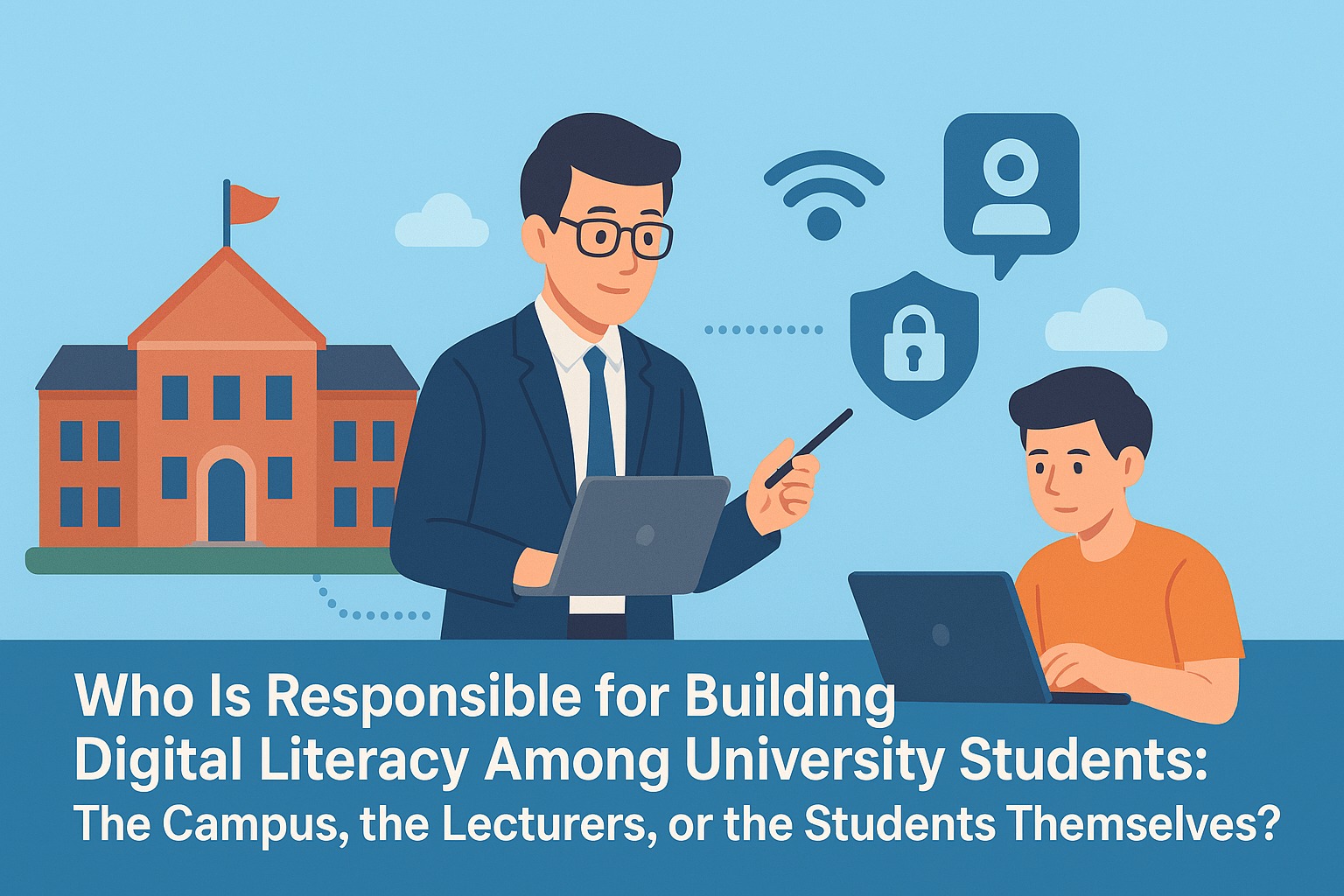
In today’s digital era, the ability to use technology and information wisely is no longer optional—it is a fundamental necessity. Digital literacy has become one of the essential skills that students must possess to adapt to an academic and professional world that is increasingly online.
However, an important question arises: who is actually responsible for building students’ digital literacy—the university, the lecturers, or the students themselves?
THE ROLE OF UNIVERSITIES: CREATING A SMART DIGITAL LEARNING ENVIRONMENT
Universities play a strategic role as educational institutions that shape students’ character and abilities.
Several ways universities can contribute to improving digital literacy include:
* Providing technological facilities and access such as internet networks, e-learning systems, and digital libraries.
* Organizing digital literacy workshops or seminars so students can understand ethics, security, and productive use of technology.
* Implementing digital-based academic policies, such as online assignment submissions or interactive learning platforms.
Through these efforts, the university becomes not just a place of learning, but also a center for developing students’ digital competencies.
THE ROLE OF LECTURERS: GUIDES AND ROLE MODELS IN DIGITAL ETHICS
Aside from universities, lecturers play a crucial role as mentors and role models for students.
Lecturers are not merely transmitters of knowledge—they also shape students’ critical thinking in using digital information.
Lecturers’ roles in digital literacy include:
* Encouraging students to use valid scientific sources instead of relying solely on social media information.
* Teaching proper citation methods and strategies to avoid plagiarism.
* Demonstrating polite and professional digital communication, whether through email or learning platforms.
In this way, lecturers serve not only as educators but also as role models of digital ethics in academic settings.
THE ROLE OF STUDENTS: AN INEVITABLE PERSONAL RESPONSIBILITY
Although universities and lecturers play significant roles, the primary responsibility still lies in the hands of the students themselves.
Students are active users of technology, so they must be wise and critical when consuming information.
Steps students can take include:
* Self-learning about digital literacy through online courses, articles, or educational videos.
* Thinking critically about information found on the internet.
* Maintaining a responsible digital footprint and behaving ethically on social media.
* Avoiding the spread of hoaxes or negative content.
When students understand their digital responsibilities, they grow into resilient individuals with integrity—ready to compete in the professional world.
COLLABORATION OF THREE PARTIES: THE KEY TO DIGITAL LITERACY SUCCESS
Digital literacy cannot be developed by one party alone.
Collaboration between universities, lecturers, and students is needed to create a healthy digital culture.
The university provides facilities and policies, lecturers instill values and guidance, and students apply and develop these skills independently.
This synergy creates an academic environment that is smart, safe, and digitally ethical.
CONCLUSION
So, who is responsible for building digital literacy among students?
The answer is: all parties have their own roles. Universities and lecturers act as the main supporters, while students serve as the primary actors.
With cooperation and shared awareness, digital literacy becomes not just an additional skill but a crucial foundation for students’ academic and professional future in the digital era.
Tentang Penulis
Gusti Ayu Tita
Penulis — Universitas STEKOM
Penulis aktif yang berfokus pada isu-isu akademik, teknologi pendidikan, dan pengembangan sumber daya manusia di lingkungan kampus.