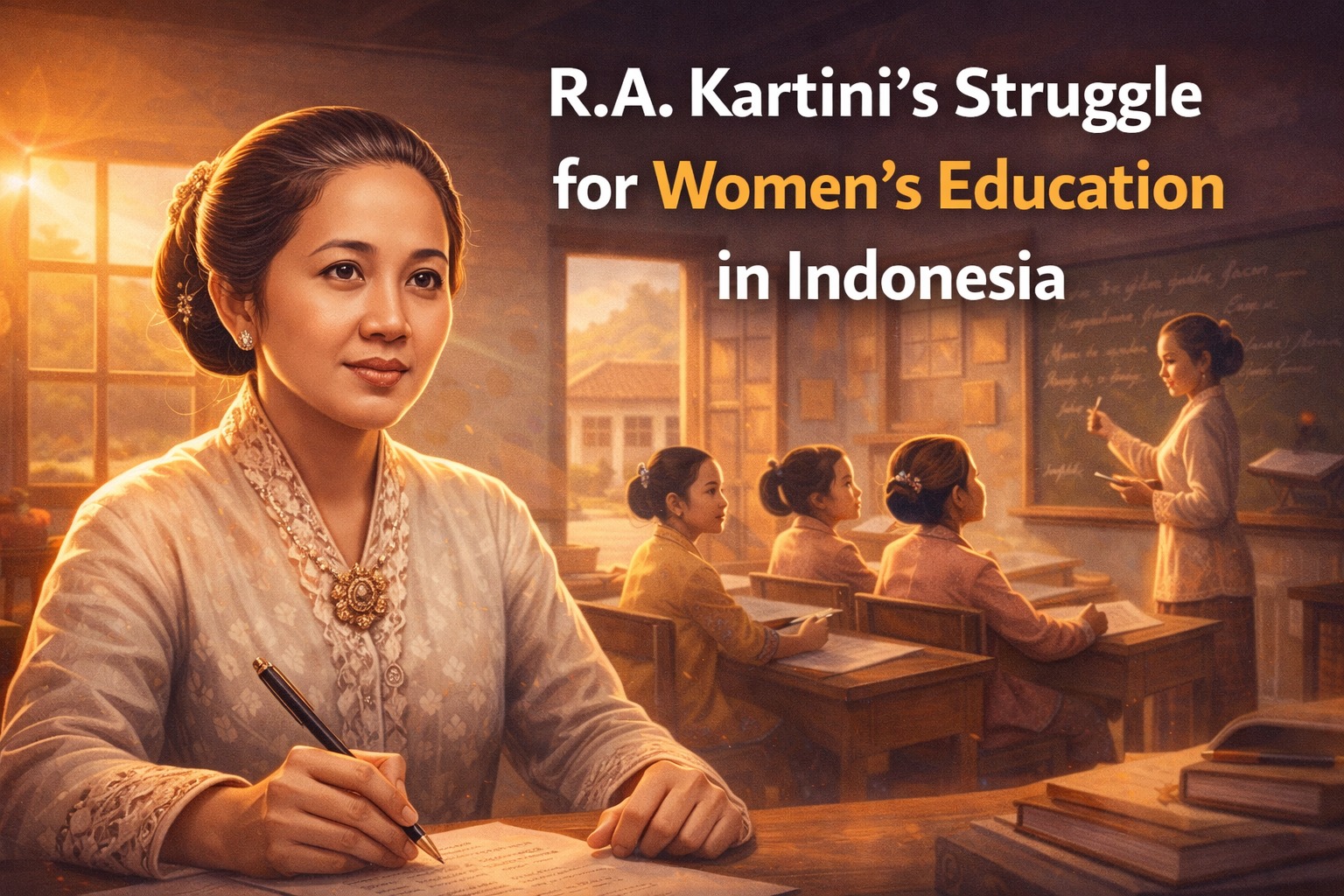
Women’s education in Indonesia cannot be separated from the struggle of an inspiring female figure, R.A. Kartini. Amid strong patriarchal culture during the Dutch colonial era, Kartini boldly advocated the importance of education for women. Her ideas became a turning point in how society viewed women’s roles and rights, particularly in education.
The Condition of Women’s Education During Kartini’s Era
At the end of the 19th century, indigenous women in Indonesia faced significant barriers to accessing education. Social traditions confined women to domestic roles, and many were forbidden from pursuing higher education or were married off at a young age. These conditions motivated Kartini to fight injustice through her thoughts and writings.
Kartini’s Struggle in Education
Kartini did not fight with weapons but through critical thinking and letters to her friends in the Netherlands. In her correspondence, she emphasized that education was the key to liberating women from backwardness. She also established a small school at her home, providing girls with opportunities to learn reading, writing, and basic skills.
Kartini’s Views on Gender Equality
For Kartini, education was not merely a means of acquiring knowledge but a way to develop critical and independent thinking. She believed that educated women would be better equipped to raise future generations. Her ideas on gender equality became a foundation for the women’s emancipation movement in Indonesia.
The Impact of Kartini’s Struggle on Women’s Education
Kartini’s struggle significantly changed societal views on women’s education. After her death, her ideas continued to inspire the establishment of schools for women across Indonesia. Today, her spirit is reflected in the increasing participation of women in education at all levels.
The Relevance of Kartini’s Struggle in the Modern Era
In the modern era, Indonesian women enjoy broader access to education. However, challenges such as educational inequality and gender stereotypes remain. Kartini’s values remain relevant as a reminder that education is a right for everyone, regardless of gender.
Kartini’s struggle transformed public perceptions of women’s education in Indonesia. Through her ideas, writings, and actions, she paved the way for equal educational rights. Her legacy remains an enduring inspiration for building a just, educated, and progressive society.
Tentang Penulis
Gusti Ayu Tita
Penulis — Universitas STEKOM
Penulis aktif yang berfokus pada isu-isu akademik, teknologi pendidikan, dan pengembangan sumber daya manusia di lingkungan kampus.