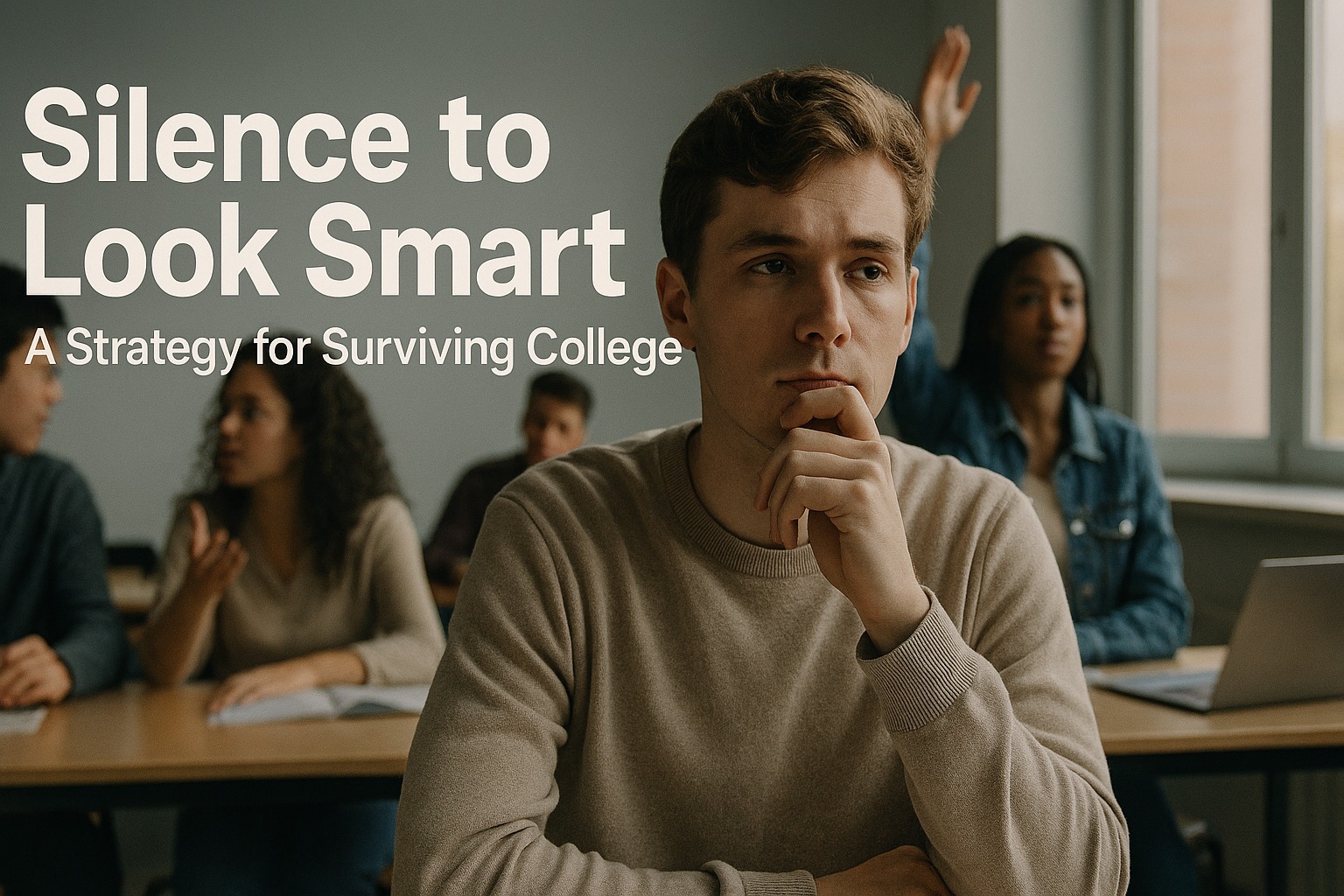
College life often feels like a stage where everyone is expected to perform intelligence. In classrooms filled with ambitious students, speaking confidently can seem like the ultimate proof of competence. As a result, many students adopt a subtle survival tactic: staying silent to appear smart. Silence becomes a shield, a way to avoid mistakes, criticism, or exposure.
At first glance, this strategy may seem effective. When you do not speak, you cannot be wrong. You avoid awkward pauses, incorrect answers, and the fear of being judged. In competitive academic environments, silence can feel safer than participation.
However, is silence truly a smart strategy for surviving college? Or does it slowly limit growth, confidence, and learning opportunities? Understanding the psychology behind this habit can help students find a healthier balance between thoughtful listening and active engagement.
WHY STUDENTS CHOOSE SILENCE
Many students choose silence not because they lack ideas, but because they fear negative evaluation. Academic settings can amplify self-doubt, especially when surrounded by peers who appear articulate and confident. Social comparison becomes intense, and silence feels like protection.
Another reason is perfectionism. Students often believe they must present flawless arguments before speaking. If their thoughts are not perfectly structured, they prefer to keep them to themselves. This mindset creates unnecessary pressure and discourages spontaneous contribution.
Cultural and educational backgrounds also play a role. Some students were raised in environments where questioning authority or speaking out was discouraged. When they enter college, they carry these habits with them, interpreting silence as respect and safety.
Additionally, the fast-paced nature of discussions can intimidate students. When conversations move quickly, it may feel impossible to formulate responses in time. Rather than risk saying something incomplete, they choose to remain quiet.
THE ILLUSION OF LOOKING SMART
Silence can create an illusion of intelligence. Quiet students are sometimes perceived as thoughtful or mysterious. Professors and classmates may assume they are deeply processing information. This perception can feel validating.
However, this image is fragile. Over time, consistent silence can be misinterpreted as disengagement or lack of preparation. What once seemed strategic may start to undermine academic credibility.
Moreover, intelligence in college is not only measured by internal understanding but also by communication skills. Being able to articulate ideas, debate respectfully, and ask meaningful questions is a critical academic competency.
Relying solely on silence prevents others from recognizing your strengths. If your ideas stay in your head, they cannot contribute to collaborative learning. The illusion of looking smart may come at the cost of real academic visibility.
THE HIDDEN COST OF STAYING QUIET
Remaining silent can gradually reduce confidence. The less you speak, the harder it becomes to start. Anxiety builds, and participation feels increasingly intimidating. Silence turns into a cycle that reinforces itself.
Academic growth also suffers. Learning is not only about absorbing information but also about testing ideas. By expressing thoughts, students receive feedback that sharpens critical thinking. Without this interaction, understanding may remain superficial.
Networking opportunities are another hidden loss. Class discussions often lead to connections with peers and lecturers. When students consistently stay quiet, they miss chances to build relationships that could support internships, research projects, or recommendations.
Emotionally, prolonged silence can create isolation. Feeling unheard or invisible in class may reduce a sense of belonging. Over time, this can impact motivation and overall college satisfaction.
WHEN SILENCE CAN BE STRATEGIC
Silence is not always negative. Intentional silence can be powerful when used wisely. Listening carefully before responding allows students to provide more thoughtful contributions.
In certain situations, observing classroom dynamics helps students understand different perspectives. By paying attention to how arguments are structured, they can learn effective communication techniques.
Silence can also serve as emotional regulation. When discussions become heated or overwhelming, pausing before speaking prevents impulsive reactions. This type of silence reflects maturity rather than fear.
The key difference lies in intention. Strategic silence is chosen consciously to enhance understanding. Fear-based silence is automatic and driven by anxiety. Recognizing this distinction empowers students to make deliberate choices.
BUILDING CONFIDENCE TO SPEAK UP
Overcoming the habit of staying silent does not require becoming the most talkative person in the room. It begins with small steps. Asking one question per class or sharing a brief opinion can gradually build confidence.
Preparation is another effective strategy. Reviewing materials beforehand and noting key points reduces uncertainty. When students feel prepared, they are more likely to participate.
Reframing mistakes as learning opportunities is crucial. College is a space for intellectual growth, not perfection. Incorrect answers often spark meaningful discussions that benefit everyone.
Finally, practicing communication outside the classroom can help. Joining student organizations, study groups, or presentation workshops strengthens public speaking skills. As confidence grows, silence shifts from a defensive habit to a deliberate choice.
REDEFINING WHAT IT MEANS TO BE SMART
True intelligence in college is not about appearing flawless. It is about curiosity, adaptability, and resilience. Students who ask questions demonstrate engagement, not weakness.
Being smart also means being open to feedback. Participation exposes gaps in understanding, but it also accelerates improvement. Growth requires visibility.
In modern academic culture, collaboration is increasingly valued. Group projects, peer reviews, and interdisciplinary discussions reward those who communicate effectively. Silence alone cannot sustain long-term success.
Ultimately, surviving college is not about hiding behind quietness. It is about learning when to listen and when to speak. Smart students understand that their voices matter and that participation is part of the educational journey.
Silence may feel like a safe strategy at first, but sustainable academic success requires balance. By transforming fear-based silence into intentional communication, students can build both confidence and competence throughout their college experience.
Tentang Penulis
Gusti Ayu Tita
Penulis — Universitas STEKOM
Penulis aktif yang berfokus pada isu-isu akademik, teknologi pendidikan, dan pengembangan sumber daya manusia di lingkungan kampus.